1. Home
  2. Cars
  3. Computing
  4. News

Nvidia’s Drive PX has the power that driverless cars need

Add as a preferred source on Google

Although most well known for its high end add-in GPUs, Nvidia has been working with cars for a number of years already, with manufacturers utilising its Tegra line of processors to power infotainment systems like Audi’s navigation and the giant display in Tesla’s Model S. Now though it’s pushing something new: Drive PX, a system designed to give automated vehicles the processing power they need to detect obstacles, make decisions and ultimately handle the practice of going from A to B for us.

Initially unveiled at CES, but shown off for the first time this week at the 2015 GPU technology conference, Drive PX is a bit of a monster. Looking like a heatsink-free GPU of old, it combines two Tegra X1 processors, giving it 2.3 teraflops of processing power. According to Nvidia’s estimations, this should allow it to handle up to 12 separate camera inputs and process that information, allowing for advanced autonomous emergency braking (AEB) systems, blind spot monitoring and obstacle detection.

Recommended Videos

If that sounds like overkill, think again, as the driverless vehicles of today – which will be quickly outstripped by their descendants – are already fitted with multiple HD cameras that operate in the visual and infrared spectrums, as well as 360 radar and LIDAR.

Going hand in hand with the Drive PX is Nvidia’s Digits software, which it claims is able to learn over time and could theoretically be trained to avoid new types of obstacles rarely encountered. If Nvidia’s plans come to fruition, car makers will load the Digits devbox into their prototype vehicles and allow the system to learn through specific exercises and repetition. When it’s ready for the big time, the software can be loaded into production vehicles, giving them instantly updated detection and avoidance algorithms.

Nvidia’s Drive PX system will be available to car makers in May.

Jon Martindale
Jon Martindale covers how to guides, best-of lists, and explainers to help everyone understand the hottest new hardware and…
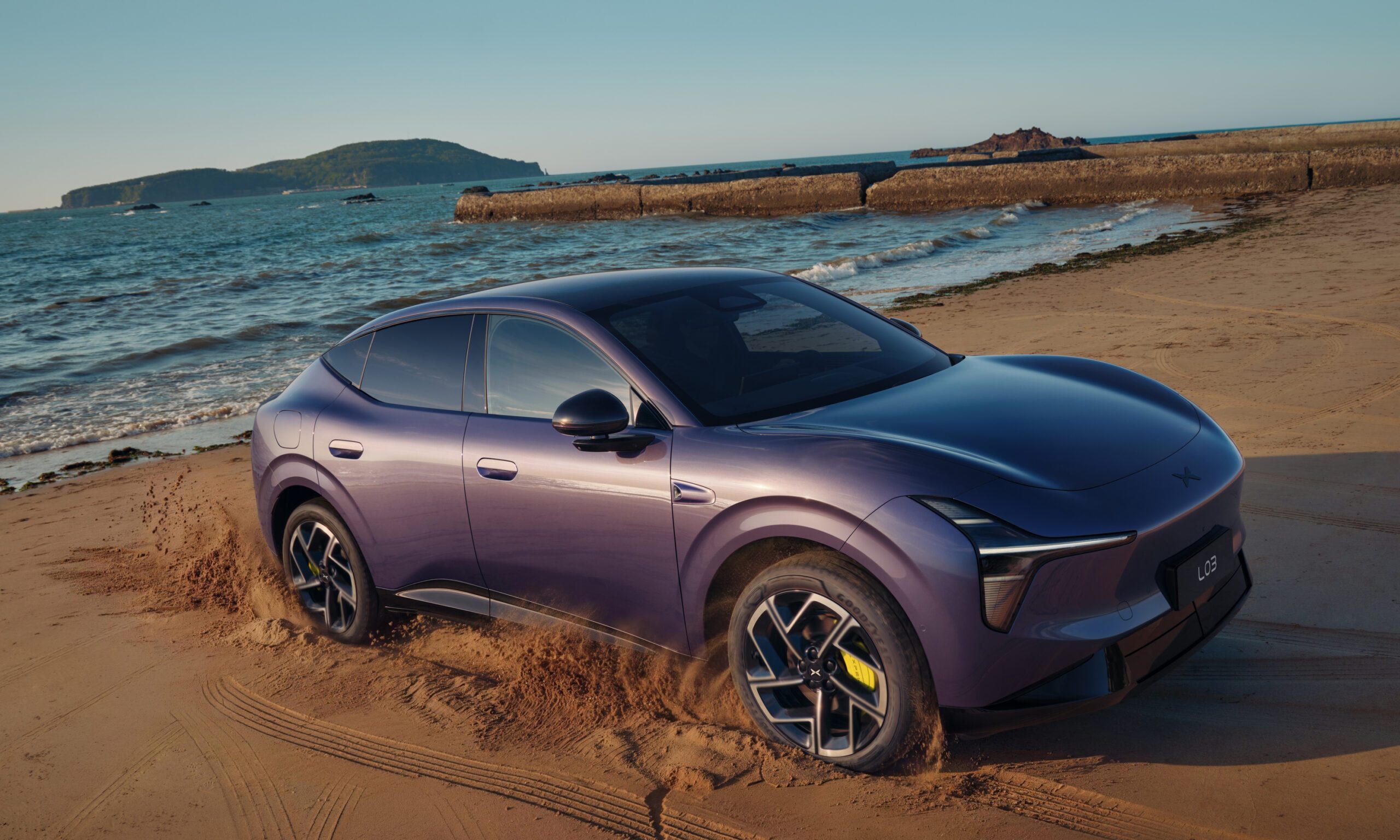
This sleek Chinese EV pairs supercar styling with three AI brains
The Xpeng L03 is an AI supercomputer disguised as a stylish family SUV
Xpeng L03

Xpeng’s latest electric vehicle carries enough processing power to make the term "smart car" actually sound more realistic than it actually is. The new Xpeng L03 debuted simultaneously in Europe and China on July 16, with the company presenting it across 65 markets. Available as a fully electric vehicle and an L03 Power X range-extender, the coupe-SUV is Xpeng’s most internationally focused model so far. Market-specific prices and sales dates remain unannounced.

Three AI chips and Google Maps built right in

Read more
A new sodium battery posts wild four-minute charging numbers, but don’t expect it in an EV yet
The breakthrough could improve fast charging and battery life, but the study hasn’t demonstrated those results in a production-sized pack
EV Charger

A new sodium-metal battery has posted a charging number that makes today’s EVs look painfully slow. In laboratory testing, the cell operated at a 15C rate, equivalent to completing a charge or discharge in roughly four minutes.

That doesn’t mean researchers plugged in an electric car and watched it fill up before the driver finished buying coffee. The result came from a small experimental cell using a new quasi-solid electrolyte, while the larger pouch-cell prototype delivered far less dramatic performance.

Read more
The Apple Car may be dead, but it became the foundation of Apple Intelligence
A decade of work on a canceled car project reportedly laid the groundwork for Apple Intelligence.
Apple Intelligence in Apple Car

The Apple Car may have never left the garage, but it apparently gave birth to Apple's AI ambitions. According to Bloomberg's Mark Gurman, Apple's canceled autonomous vehicle project, one that consumed more than a decade of work and over $10 billion before being scrapped in 2024, ended up laying the technological foundation for Apple Intelligence. In a rather ironic twist, one of Apple's most expensive failures may also become one of its most important long-term investments.

The Apple Car forced Apple to think like an AI company

Read more