1. Home
  2. Emerging Tech
  3. Smart Home
  4. News

Toss that filthy sponge for an antimicrobial 3D printed scrubber

Add as a preferred source on Google

This may be one of the more useful things created with 3D printing so far: an antimicrobial kitchen scrubber that’s better than a sponge.

The scrubber is made out of Purement, an antimicrobial filament produced by Korean firm BnK. Creator Jacob Stanton, a Chicago-based product designer, devised it for a 3D design competition for MyMiniFactory that was intended to show off the benefits of Purement.

Recommended Videos

“Some quick research indicated that kitchen sponges are in fact one of the dirtiest things in a household, the typical sponge is about 200,000 times dirtier than a toilet seat. There are about 10 million bacteria per square inch in a kitchen sponge,” Stanton says.

Objects created with 3D printing can be pretty filthy as well. The layered constructions of 3D printing can be breeding grounds for bacteria like staphylococcus, colon bacillus, and salmonella, according to BnK. The company says that with Purement, “bacteria and germs find that the tiny nooks and crannies of 3D printed items aren’t so appealing, and thus the risk of spreading germs to your family is greatly reduced.”

BnK asserts that the antibacterial material in Purement has been certified by the SIAA (Society of Industrial technology for Antimicrobial Articles), and is antimicrobial-registered by the FDA and ROHS.

Stanton printed several designs with the filament, some of which sported undulating lines and spirals, and tested them out. He ultimately found that the one that worked best featured staggered protrusions. It could contour to nearly any surface, offered the most scrubbing area, was easy to clean, and held up to bending better than the other three designs.

The scrubber doesn’t hold soap very well, but “I have found that it works best as an abrasive scrubbing pad, for removing stuck-on debris from the dishes,” Stanton told 3Dprint.com. “I find that it works nicely on cutting boards, and I also lay it flat and use it to take gunk off of my nicer kitchen knives.”

The design files for the 3D printed scrubber are available to download on Thingiverse.

Steve Castle
Former Digital Trends Contributor
Steve Castle’s fascination with technology began as a staff writer for luxury magazine Robb Report, where he reported on…
Google just canceled its AI Studio mobile app, and it’s not all bad news
Logo, Symbol, Disk

Google AI Studio was on track to make its way to Android and iPhone, giving developers and AI enthusiasts a dedicated place to build prompts and experiment with Google's latest models from their phones.

That's no longer happening. In a post shared by the official Google AI Studio account on X, Google confirmed that it's canceling the standalone AI Studio mobile app before launch. The announcement comes despite the company saying nearly 800,000 people had already pre-ordered the app across iOS and Android.

Read more
Google Earth’s AI misadventure lasted only a day. It was a tale of dangerous ignorance.
Nuclear reactors, tanks, and historical destruction on a life-like satellite map? Yeah, that's bad.
Nano Banana AI image generator representation.

Technology behemoths are clearly not reading the room, or they are just moving faster than they should when it comes to AI deployment. Google has already stuffed its Gemini AI in every corner of its software stack, from Android to daily productivity tools like Gmail that are used by hundreds of millions of users every day. AI is everywhere. Not all of it is bad, mind you. But in a few places, it just feels forced.

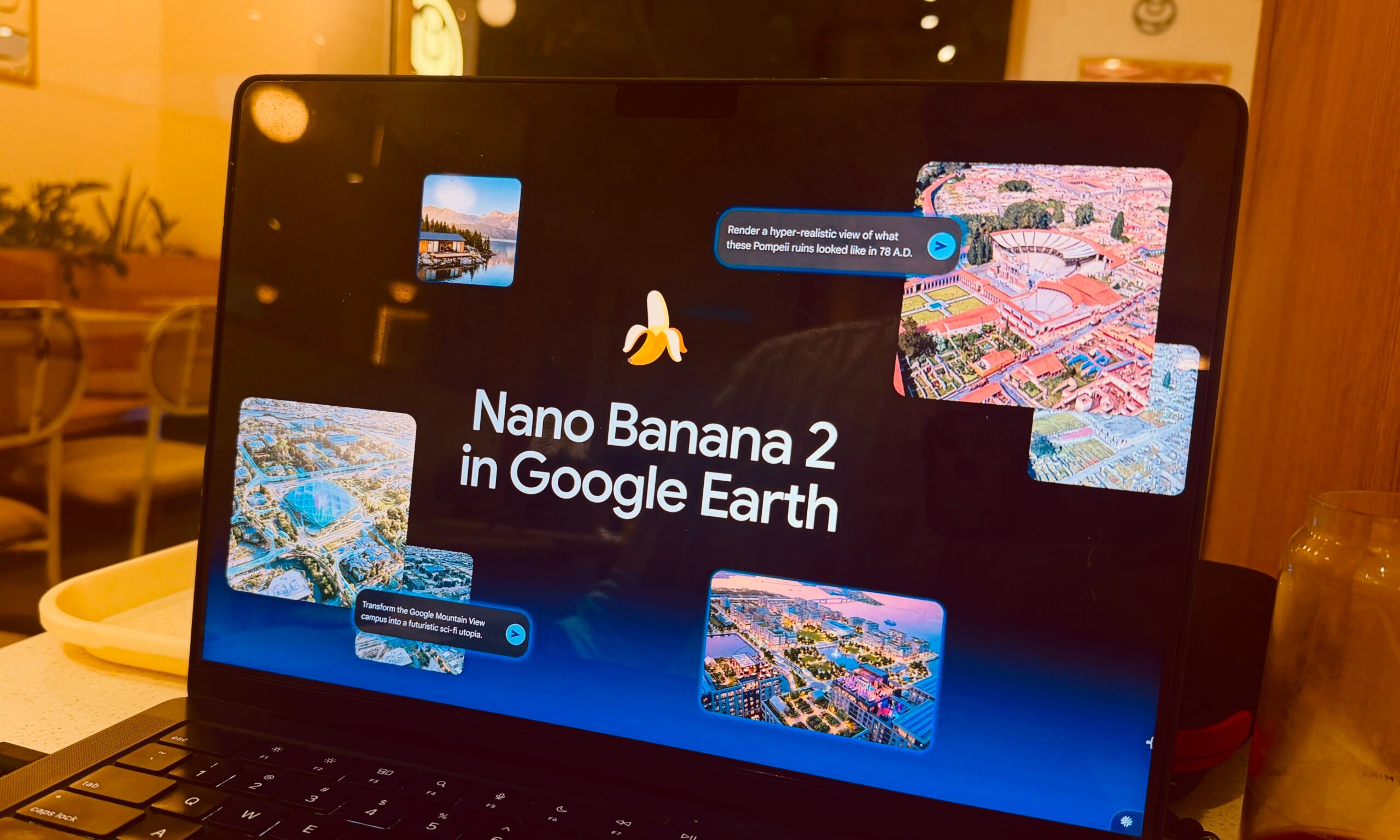
In its latest AI-fication experiment, the company targeted Google Earth. The idea was to let the audience use its Nano Banana 2 AI image generator and make images that can be placed on the map view. On paper, it's a cool idea. What would the Colosseum of Rome look like in your urban neighborhood? Yeah, fun stuff like that.

Read more
Google’s new AI gives robots better balance, smarter hands, and teamwork capabilities
Google just made robots a lot less clumsy and a lot more helpful.
Gemini robotics 2.0

Google DeepMind just brought sci-fi robots closer to reality, and it is very exciting. Building on its original Gemini Robotics model, the company has introduced Gemini Robotics 2, an AI system designed to help robots think, move, and even work together. Unlike most robots today, which rely on pre-programmed routines or someone controlling them remotely, this new system lets robots figure things out on their own when situations get unpredictable.

Can robots finally handle whole-body tasks?

Read more