1. Home
  2. Emerging Tech
  3. Smart Home
  4. News

Toilet of the future is flush with solar power, sensors

Add as a preferred source on Google

How do you build the toilet of the future, and one that can be used in developing countries where sanitation can be lacking?

About 2.5 billion people in the world live without basic sanitation, including toilets, resulting in a child dying about every 20 seconds, according to the U.N. World Water Development Report.

Recommended Videos

Clearly more toilets are needed. Here’s how researchers at the California Institute of Technology have been going about it, in seven high-tech steps.

1. Patent a design for “multilayered nanostructures doing electrochemical degradation,” which is exactly what Caltech environmental professor Michael Hoffmann did 20 years ago.

2. Employ the patent to design a system using a solar panel and battery to power an electrochemical reaction (sort an anaerobic digester) that breaks down solids into fertilizer and sanitizes the water to be reused for flushing or irrigation. Caltech says hydrogen for fuel pumps can also be produced.

3. Win the Bill and Melinda Gates Foundation’s Reinvent the Toilet Challenge in 2012 with the high-tech toilet design and receive a $400,000 grant.

4. Add sensors to monitor leaks, water clarity, particulates in the water, pressure, and voltage. This makes repair easy, because let’s face it: Poop happens and stuff happens where poop happens. Alerts are sent to an operator who gets a picture of exactly where the problem is, and what needs to be done. In a Fast Company article, Caltech engineers say this will reduce operating costs.

5. Sign on toilet innovator Kohler to provide plumbing parts and expertise.

Toilet of Future app
Image used with permission by copyright holder

6. Have trials of the toilets in a full bathroom treatment at Mahatma Gandhi University in India, pair it with Eram Scientific‘s self-cleaning “eToilet” in Northern India, and work with Chinese government on developing a toilet houses in shipping container to send to schools in South Africa.

7. Have as many people as possible use the toilets. Although the Chinese design may cost $15,000, a Caltech researcher says this meets the Gates Foundation’s original target of sanitation for five cents per person per day.

Happy flushing!

Self-Contained, PV-Powered Domestic Toilet & Wastewater Treatment System
Steve Castle
Former Digital Trends Contributor
Steve Castle’s fascination with technology began as a staff writer for luxury magazine Robb Report, where he reported on…
Google just canceled its AI Studio mobile app, and it’s not all bad news
Logo, Symbol, Disk

Google AI Studio was on track to make its way to Android and iPhone, giving developers and AI enthusiasts a dedicated place to build prompts and experiment with Google's latest models from their phones.

That's no longer happening. In a post shared by the official Google AI Studio account on X, Google confirmed that it's canceling the standalone AI Studio mobile app before launch. The announcement comes despite the company saying nearly 800,000 people had already pre-ordered the app across iOS and Android.

Read more
Google Earth’s AI misadventure lasted only a day. It was a tale of dangerous ignorance.
Nuclear reactors, tanks, and historical destruction on a life-like satellite map? Yeah, that's bad.
Nano Banana AI image generator representation.

Technology behemoths are clearly not reading the room, or they are just moving faster than they should when it comes to AI deployment. Google has already stuffed its Gemini AI in every corner of its software stack, from Android to daily productivity tools like Gmail that are used by hundreds of millions of users every day. AI is everywhere. Not all of it is bad, mind you. But in a few places, it just feels forced.

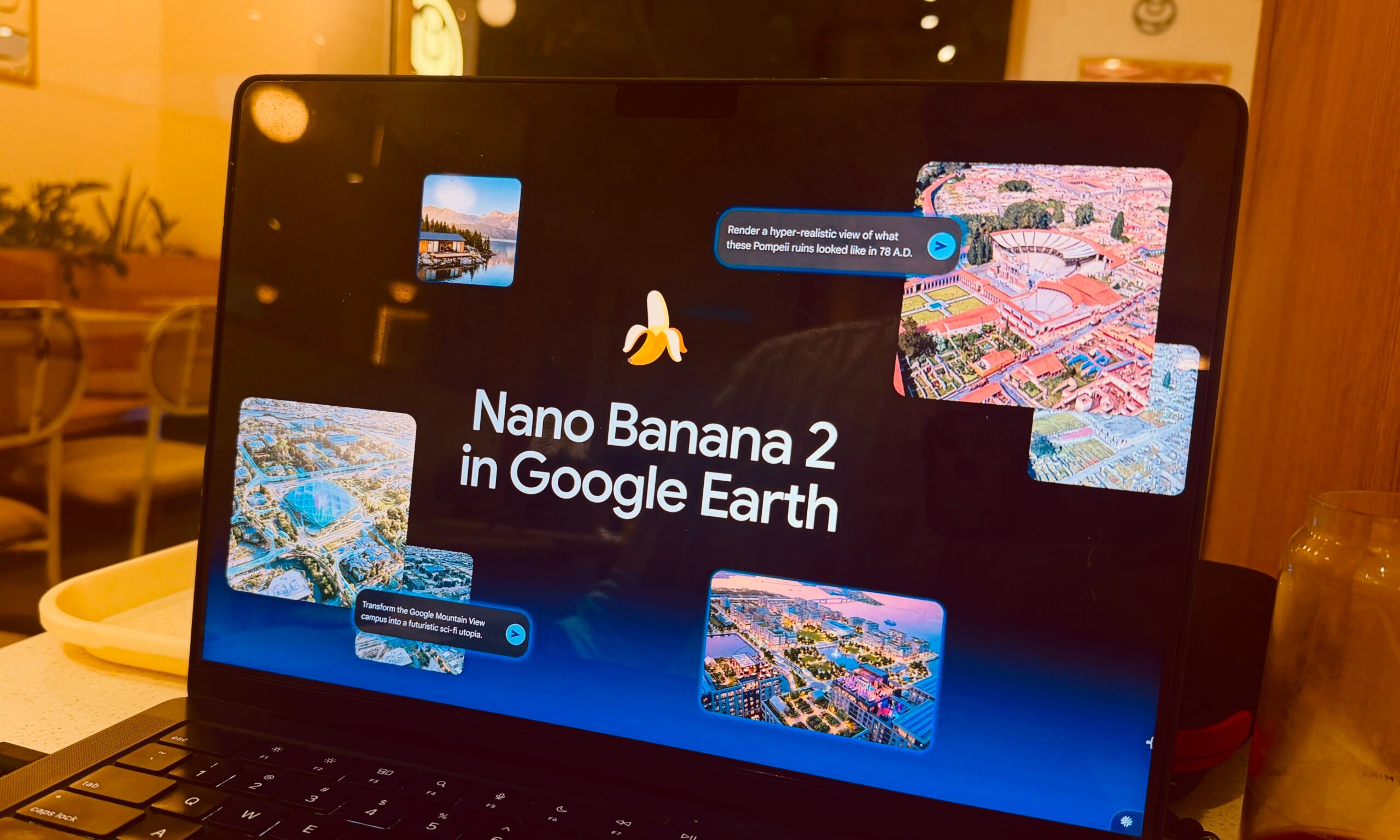
In its latest AI-fication experiment, the company targeted Google Earth. The idea was to let the audience use its Nano Banana 2 AI image generator and make images that can be placed on the map view. On paper, it's a cool idea. What would the Colosseum of Rome look like in your urban neighborhood? Yeah, fun stuff like that.

Read more
Google’s new AI gives robots better balance, smarter hands, and teamwork capabilities
Google just made robots a lot less clumsy and a lot more helpful.
Gemini robotics 2.0

Google DeepMind just brought sci-fi robots closer to reality, and it is very exciting. Building on its original Gemini Robotics model, the company has introduced Gemini Robotics 2, an AI system designed to help robots think, move, and even work together. Unlike most robots today, which rely on pre-programmed routines or someone controlling them remotely, this new system lets robots figure things out on their own when situations get unpredictable.

Can robots finally handle whole-body tasks?

Read more