1. Home
  2. Cars
  3. News

Google reportedly pursuing manufacturing partner for self-driving car

Add as a preferred source on Google

Google says its self-driving cars have covered about 1.2 million miles in testing on public roads, and the tech giant even built a few of those cars itself. But so far, Google has shown little apparent interest in actually selling cars to the public.

That may be changing, though. Google co-founder Sergey Brin says the company intends to partner with an existing manufacturer to bring self-driving cars to market, according to Autoblog. However, the firm may initially target car-sharing and ride-sharing services more than individual owners.

Recommended Videos

“We’re really focused on working with partners, Brin said. “I expect to bring it to scale, so more partnering, including with top-tier OEMs.”

The tiny pod-mobiles currently plying California and Texas roads could serve as the blueprint for a production self-driving car, but Google may have to make some alterations. Company officials originally wanted to eliminate the steering wheel and pedals, but California regulations required manual controls, and consumers may be uncomfortable with the idea of having no control over their vehicles, anyway.

Brin decided that cars will keep their steering wheels, for now at least. He also discussed the possibility of switching autonomous capability on and off. That could give people the opportunity to drive when they want to, or to hand over the controls if they don’t. It would also allow Google and its partner to preempt negative arguments about the loss of driving pleasure, or anxiety about robot overlords.

“I think we need to see both of those worlds, and I think there’s a future for both,” Brin said of the tension between the enjoyment of driving and the theorized efficiency benefits of autonomous cars. To some extent, it’s a future we’re already experiencing. Electronic aids like adaptive cruise control already augment human drivers, and the first wave of autonomous tech, including Tesla’s “Autopilot” and Cadillac’s “Super Cruise,” will still require humans to do a lot of the driving.

Stephen Edelstein
Stephen is a freelance automotive journalist covering all things cars. He likes anything with four wheels, from classic cars…
BMW could finally be building the electric convertible fans have always wanted
Good things come to those who wait, and apparently that means until 2028.
BMW convertible

There have been whispers about a two-door BMW i4 for years, and according to a new report from BMWBlog, at least one version is actually in the works. The outlet's sources close to BMW claim the automaker is readying an i4 Convertible under the internal codename NA3.

Why is BMW waiting until 2028 to launch it?

Read more
Waymo’s driverless cars keep getting parking tickets in Austin, and humans aren’t the only ones complaining
Waymo vehicles have collected $9,325 in Austin fines as repeated parking mistakes turn into a fleet-wide operational problem
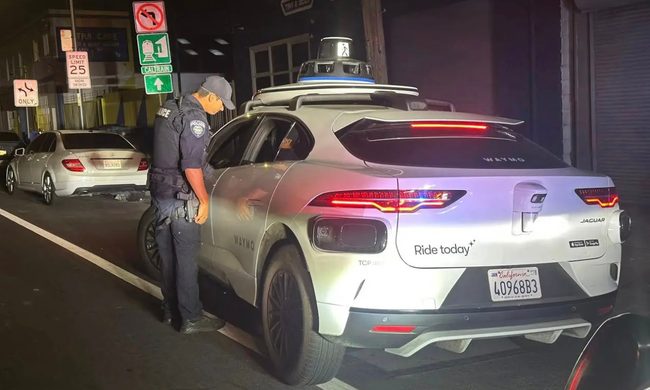
A police officer investigating an empty Waymo car.

Waymo’s 83 parking citations in Austin don’t amount to a financial crisis. They do reveal what happens when the same driving decisions are repeated across an autonomous fleet.

City records obtained by The Wall Street Journal show that Waymo vehicles have accumulated $9,325 in fines since arriving in 2024. The company has paid most of them, but the more revealing detail is how often its cars have made the same mistake.

Read more
Google Maps’ biggest Android Auto upgrade is reaching more users
Google Maps is finally giving Android Auto users directions with a little more drama.
Electronics, GPS, Car

Google is widening the rollout of two long-awaited Google Maps features for Android Auto users: Immersive Navigation and a built-in live speedometer. After months of limited availability, reports suggest both features are now reaching a broader group of users, including people running stable versions of Google Maps instead of beta builds.

The update is part of Google's ongoing effort to modernize the Android Auto navigation experience. While the company unveiled Immersive Navigation earlier this year as one of the platform's biggest upgrades in years, the feature has been trickling out slowly, leaving many users without access. That appears to be changing, with more devices now receiving the update through a server-side rollout.

Read more