1. Home
  2. Cars
  3. News

Let your Tesla Model S charge itself with Plugless' wireless charger

Add as a preferred source on Google

Major car makers like BMW and Volkswagen are investing substantial amounts of money into inductive charging technology that promises to make the charging cord a relic of the past. An aftermarket company named Plugless beat them all to the punch when it launched a wireless charger for the Nissan Leaf, the Chevrolet Volt, and the slow-selling Cadillac ELR. Now, Virginia-based Plugless is turning its attention to the Tesla Model S.

The wireless charger consists of a parking pad that can be installed either in a garage or on a driveway, sensors that help the driver position the S directly above the pad, and an adapter that’s bolted under the car. Designed to work between 0 and 122 degrees Fahrenheit, the pad can be either plugged into a 50-amp circuit or hardwired into a house’s electrical system. Either way, the adapter can be installed without making any software modifications to the Model S, and it doesn’t alter the sedan’s ability to charge using a conventional cord.

Recommended Videos

The 7.2kW charger provides approximately 20 miles of range for every hour of charging. In other words, it takes eight hours to top up a Model S equipped with a relatively small 60kWh battery pack, 10 hours to fully charge a midrange 70kWh model, and 12 hours to top up an 85kWh pack. It’s worth noting that the wireless charger is only compatible with the rear-wheel drive Model S, though Plugless is currently developing a charger for the all-wheel drive 70D, 90D, and P90D models. Similarly, the company plans on offering a wireless charger for the Roadster, for the recently-launched Model X, and for the upcoming Model 3.

Tesla owners looking to go hands-free can reserve Plugless’ wireless charger by making a $244 deposit online. Deliveries are scheduled to begin in April, but the company hasn’t revealed the total cost of the system yet. For what it’s worth, a wireless charger for a Nissan Leaf retails for $1,540.

Ronan Glon
Ronan Glon is an American automotive and tech journalist based in southern France. As a long-time contributor to Digital…
Tesla’s hidden door problem might end up fixing every car in America
This could permanently change how emergency exits are designed in American passenger vehicles.
Tesla Model Y Long Wheelbase Featured

Tesla's electronic door handles have been a safety talking point for years, mostly on Reddit threads and EV forums where people debate whether sleek design is worth the tradeoff when a car is on fire and power is out. 

Now the US government has formally weighed in (via The Washington Post). The outcome, I’d say, is bigger than most people think.

Read more
Ford’s UEV platform will feature Apple Maps built in
The integration will run through Apple's new MapKit for Automotive SDK and skip CarPlay's phone-mirroring approach.
Car, Transportation, Vehicle

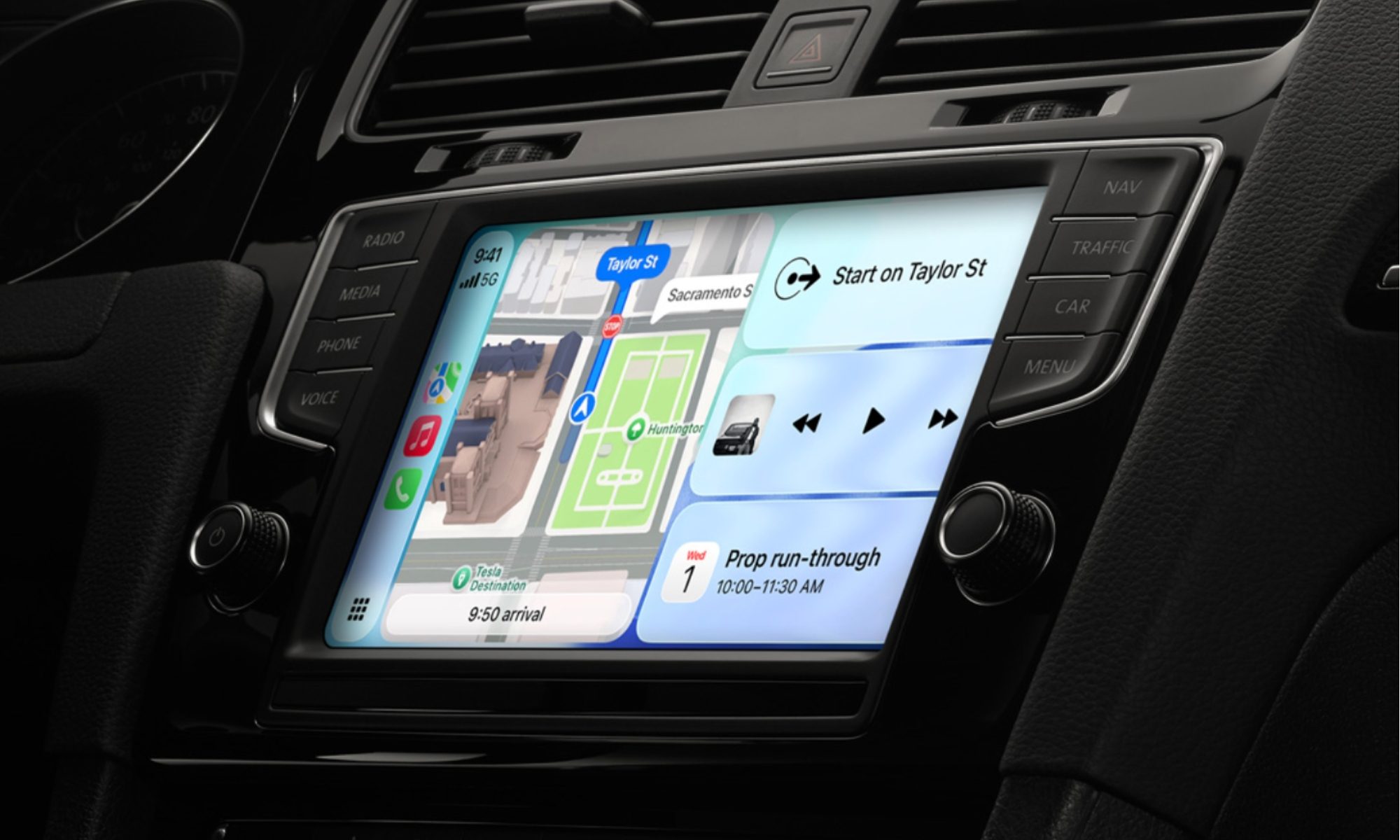
Ford's upcoming budget electric vehicle won't force you to choose between a built-in map and one borrowed from your phone. Apple announced today that Ford's Universal Electric Vehicle (UEV) platform will ship with Apple Maps running natively on the car's screens. The feature will arrive in 2027 through Apple's new MapKit for Automotive SDK, a toolkit that lets automakers build Apple Maps straight into their dashboards.

An infotainment system that doesn't need your phone plugged in

Read more
WhatsApp’s new in-car experience is built around hands-free control
CarPlay and Android Auto users can now hear and reply to messages, view call history, and reach favorite contacts without touching their phone.
WhatsApp new CarPlay experience featured

Meta is overhauling how WhatsApp works in the car, giving CarPlay and Android Auto users a lot more to do than just sending texts and making calls. The company announced the change in a newsroom post today, alongside several other updates rolling out to the messaging app.

WhatsApp finally works hands-free in the car

Read more