  1. Home
  2. Computing
  3. Emerging Tech
  4. News

Digital Trends may earn a commission when you buy through links on our site. Why trust us?

Glassouse lets users control a mouse cursor with their eyes — and mouth

Add as a preferred source on Google

A new wearable may soon help people engage with electronics without having to use their hands. Users don the Glassouse like they would a pair of glasses. The device connects to electronics via Bluetooth and responds to head movements to manipulate a cursor around the screen. The mouth piece – which curves in front of the face like a headset microphone – functions as a button. Users can bite or click the button to select items on the screen.

The simple looking device was created by Mehmet Nemo, a young electrical engineer who was inspired by his handicapped friend’s difficulty using technology. After positive feedback to the prototype, Nemo and his team decided to launch an Indiegogo campaign to promote their product. The first 100 devices are available at $149 plus $30 shipping – about half the price of the proposed eventual sale price. And people who don’t need a Glassouse but want to contribute to the cause can purchase “non-profit” perks. Through these donations, Nemo and his team hope to maintain an affordable price for their device while giving away one Glassouse for every $70 donated.

Glassouse Indiegogo campaign video

At just 1.6 ounces, the Glassouse is remarkably light and can apparently work for fifteen hours off a single charge. It’s currently compatible with Apple computers and most Android, Windows, and Linux devices, including TVs. Recognizing the wear and tear that the mouthpiece would experience, Nemo and his team subjected the button to 50,000 “clicks” and imply it was still operational.

Recommended Videos

The Glassouse is one of many assistive technology devices available for people with disabilities. For example, SmartNav is a popular device that attaches to the top of a computer monitor or laptop screen and uses an infrared camera to track head movements. These head movements allow for hands-free control of a cursor. However, SmartNav users still need to engage with keyboard hotkeys to select options on the screen. That’s where the Glassouse bite and click button really stands out.

Dyllan Furness
Former Contributor
Dyllan Furness is a freelance writer from Florida. He covers strange science and emerging tech for Digital Trends, focusing…
Claude Reflect is here. It’s your usual yearly Wrapped, but with Anthropic’s AI
It also makes you reflect on your usage and reminds you to take breaks.
Page, Text, Business Card

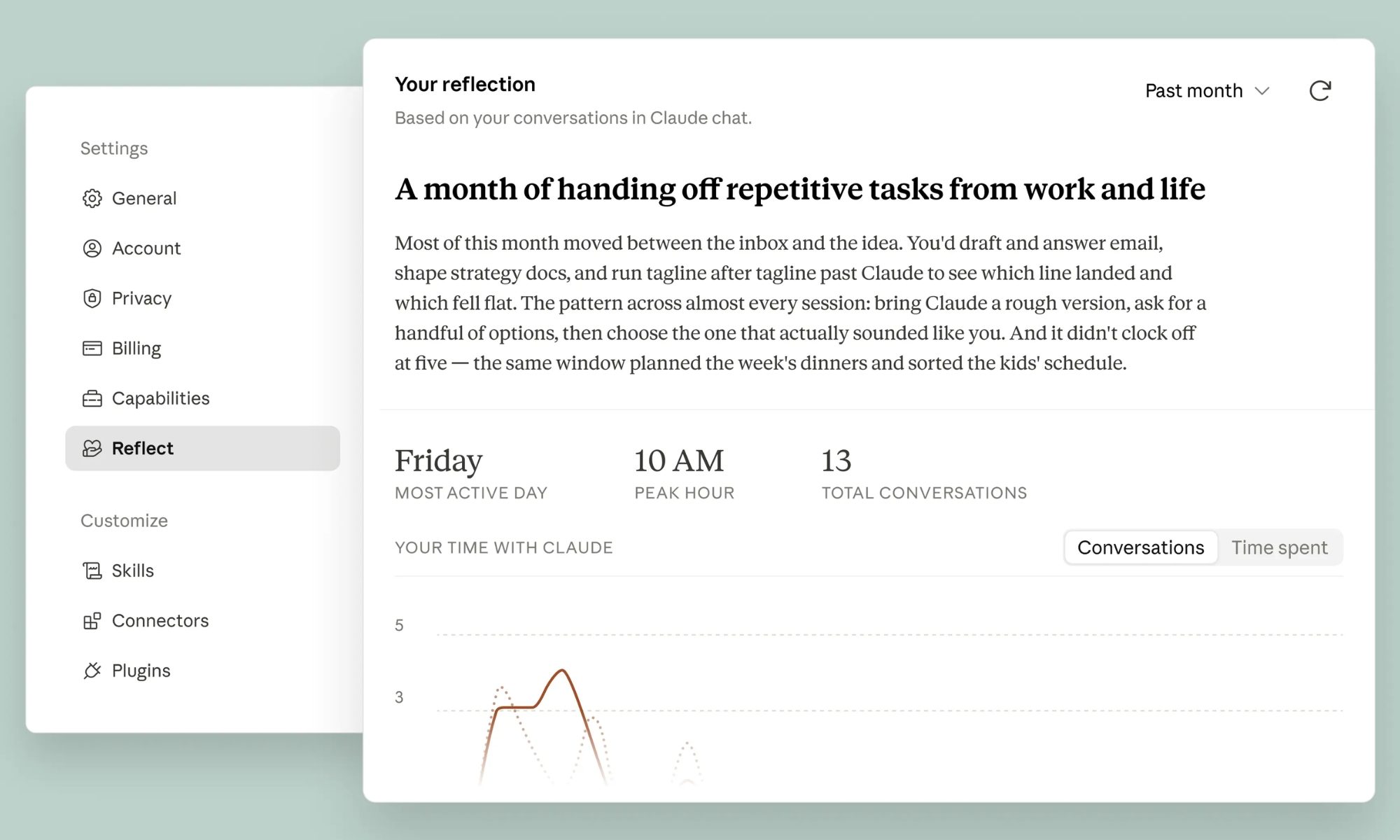
Anthropic just launched a usage analytics dashboard for Claude. It’s like the ‘Wrapped’ feature you see every major streaming or AI service announce at the end of a year, except it’s not called Claude Wrapped.

The feature is called Claude Reflect, as it does more than simply tell you what you’ve been using the AI for. Available in beta for free, Pro, and Max users who have enabled memory, the feature encourages mindful use of Claude or other AI tools. 

Read more
Parents worry AI is becoming a crutch for their kids while schools struggle to keep up, survey finds
Only 1 in 3 schools has AI guidelines as nearly 50% parents grow anxious about kids leaning on AI too much.
a boy using iPhone

Kids are using AI for their homework, and half of their parents are not sure that's a good thing. Deloitte's 2026 Back-to-School Survey, which polled 1,207 parents of K-12 students, found that 49% worry their child relies on AI too much.

The findings suggest AI adoption is moving far faster than the policies meant to guide it, leaving many parents unsure how these tools are being used in education.

Read more
Samsung wants to put its own chip in your next PC and it’s all about speeding up AI chores
Samsung Custom Chip

Samsung may be plotting a new entry into the PC chip business. A new report from the Korea Economic Daily says Samsung’s System LSI division is developing a dedicated AI accelerator for PCs called Gaia. The company has reportedly supplied early samples to Lenovo and HP for performance testing, with mass production potentially beginning as early as 2027.

Prominent Samsung leaker Ice Universe described the project as the company’s return to the PC processor market after roughly 13 years. However, the details point toward something slightly different from a traditional laptop processor. Gaia might be a specialized companion chip designed to handle artificial intelligence workloads rather than a complete replacement for an Intel, AMD, or Qualcomm CPU.

Read more