1. Home
  2. Emerging Tech
  3. Android
  4. Computing
  5. Mobile
  6. Wearables
  7. News

Google and LG built a gesture-controlled smartwatch using Project Soli

Add as a preferred source on Google

Google’s quietly making a ton of progress on one of its coolest technologies to date, which will change how we interact with our devices. The technology is called Soli, and it’s basically a tiny radar that can detect small hand gestures for controlling smart clothing, smartwatches, and other devices.

Soli is built by Google’s ATAP division, which is responsible for bringing some of its more out-there technology to the real world. Soli was first shown off at Google I/O last year, and since then, Google has worked with around 60 developers, shipping them dev kits to build object recognition, wearables, and so on. Perhaps the most interesting, however, was the creation of a smartwatch and speaker with Soli built-in.

Recommended Videos

Of course, the chip shown off last year wouldn’t have fit inside a normal smartwatch, so the team redesigned it. Like really redesigned it. The new chip reduces power consumption by a hefty 22 times, now sitting at 0.054 W. Radar also takes a lot of computer power — the new version, however, still runs 18,000 frames per second, and is a whopping 256 times more efficient.
soli-smartwatch
Image used with permission by copyright holder

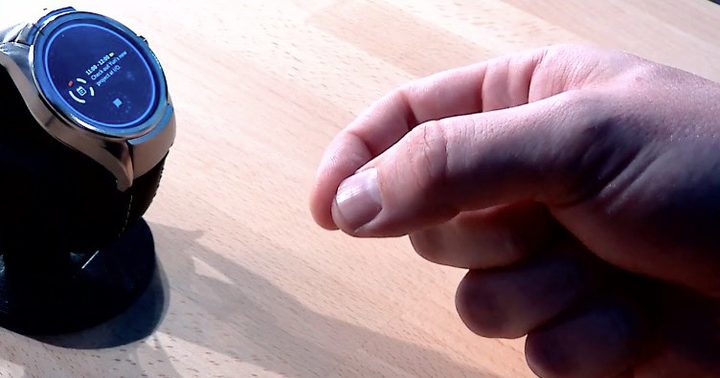
So what does that mean for the smartwatch? You can control it without even touching it. It uses radar to track gesture controls. For example, in the demo of a watch that was built in partnership with LG, we saw that if you move your hand closer and further away from the device, it can scroll through messages. With a little flick of your fingers, you can select a message to read in full. According to the team, the sensor can detect movement up to an impressive 15 meters away.

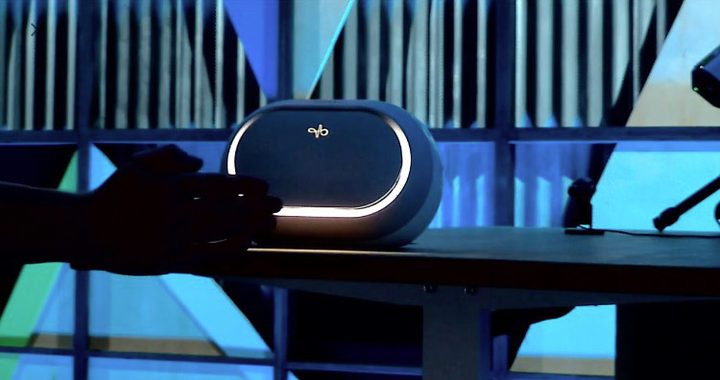
If that seems like quite a generous distance for smartwatch use, the sensor can of course be utilized in other devices. Case in point, another interesting demo showed Soli being used as a speaker, built by Harman’s JBL, which was shown cycling through tracks as the user gestured from across the stage.
soli-speaker
Image used with permission by copyright holder

Unfortunately it’s not yet known when we’ll see Soli products for consumers, however ATAP will be sending out a new developer kit next year. In the meantime check out the video below to see some of the other things Soli can do.

Project Soli: Alpha Developers Showcase
Christian de Looper
Christian de Looper is a long-time freelance writer who has covered every facet of the consumer tech and electric vehicle…
Starlink V5 is here, and it’s lighter, smarter, and far more efficient
The next-generation satellite internet kit promises improved efficiency while maintaining high-speed connectivity.
Starlink V4 vs V5

Not every hardware upgrade needs to be about speed. With Starlink V5, SpaceX is betting that a lighter design and lower power consumption matter just as much. The company has officially introduced its next-generation Starlink V5 kit, featuring a smaller and lighter design with significantly improved power efficiency.

Smaller, lighter, and far more efficient

Read more
Frontier joins the Starlink club with high-speed in-flight internet
The carrier plans to roll out SpaceX's satellite-powered Wi-Fi across its fleet starting in 2027.
Frontier Starlink partnership featured

If there's one thing budget airlines aren't exactly known for, it's great onboard Wi-Fi. In Frontier Airlines' case, it hasn't offered in-flight internet at all. That's about to change. Frontier Airlines has announced a partnership with SpaceX's Starlink to bring high-speed, low-latency internet across its fleet. Installations will begin in early 2027, making Frontier the first ultra-low-cost carrier in the United States to adopt Starlink's satellite-powered connectivity.

Streaming, browsing, and even gaming at 35,000 feet

Read more
OpenAI’s first hardware product sounds more like a companion than a speaker
The AI company is reportedly building a mobile home device that understands context and proactively helps users.
OpenAI press image

For months, rumors have suggested that OpenAI's first hardware product could be a wearable AI device, or perhaps even the beginning of its long-term smartphone ambitions. As it turns out, the company's first gadget may be something far simpler, yet arguably far more ambitious. It will help control smart-home appliances, play media, answer questions, respond to messages, and tap into the range of capabilities offered by OpenAI's ChatGPT, according to people familiar with the matter.

OpenAI's first AI device could end up being a speaker, following plenty of hype that the company is actually working on a wearable AI device and might even launch a smartphone down the road. According to a Bloomberg report, the speaker will serve as a human-like AI companion that will integrate directly with the smart home ecosystem.

Read more