1. Home
  2. Phones
  3. Android
  4. Apple
  5. Emerging Tech
  6. Mobile
  7. News

Digital Trends may earn a commission when you buy through links on our site. Why trust us?

ForcePhone uses sonar to add 3D Touch-like system to practically any phone

Add as a preferred source on Google

Over the past few months, Apple, Huawei, ZTE, and others have made splashes in the smartphone world with tech accurate enough to measure the amount of downward force on a screen, or “force touch,” as the capability’s become known.

Only a select few new phones sport it — short of a significant amount of soldering, older handsets can’t be retrofitted with the combo of sensors and motors required. But researchers at the University of Michigan may have discovered a low-cost, easy solution: a 3D Touch-like system of feedback that’s adaptable to practically any smartphone, recognizes when weight’s being applied to the touchscreen, and that can even tell when the phone’s being squeezed.

Recommended Videos

It sounds miraculous at first, but the engineers’ software prototype, ForcePhone, is grounded in clever audiology. Once booted, the app generates a constant, 18 kHz tone inaudible to human ears that the phone emits through its speakers. When force is applied to the phone’s touchscreen with a finger or object, the resulting acoustic shift — a nearly microscopic expansion and contraction of the tiny, cavernous spaces within the handset’s housing — alter the tonal frequency. The phone’s microphone picks up those changes, and ForcePhone translates them into commands that apps and games can interpret. It’s essentially sonar.

The squeeze of a hand could flip an eBook’s pages, for example, or pop open a previously hidden menu of options. And sequential squeezes could trigger preprogrammed applications, alarms, and other routines.

“You don’t need a special screen or built-in sensors to do this. Now, this functionality can be realized on any phone” said Kang Shin, a professor at the University of Michigan’s Department of Electrical Engineering and Computer Science and project lead on ForcePhone. “We’ve augmented the user interface without requiring any special built-in sensors.”

Shin, much like Apple, Huawei, and others, see force touch as a paradigm shift in interactivity.

“I think we’re offering a natural interface, like how you turn a knob,” said Yu Chih Tung, a doctoral student in the University of Michigan’s computer science program who partnered with Shin to create ForcePhone. “It’s the next step forward from a basic touch interface, and it can complement other gestured communication channels and voice.”

ForcePhone’s still in the experimental stages, but Shin and Tung plan to present an update at a conference in Singapore in late June. Here’s hoping that phone manufacturers take notice.

Kyle Wiggers
Kyle Wiggers is a writer, Web designer, and podcaster with an acute interest in all things tech. When not reviewing gadgets…
OnePlus is building another flagship monster for a shrinking audience, and its expected to launch in October
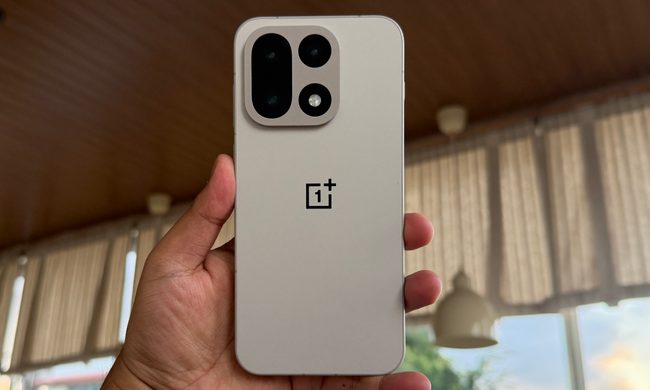
OnePlus 16 could launch in October, but it may not leave China
Rear shell of OnePlus 15.

While OnePlus may have exited the US and Europe, the brand is still alive in its home market and is already working on its next flagship smartphone. A fresh leak from Chinese tipster Digital Chat Station has now revealed more details about the OnePlus 16, including its design and a revised launch timeline.

The tipster previously claimed that the phone would arrive in September 2026, but the latest information points to an October launch in China (via Gizmochina). The global picture is far less clear, and there is now even some doubt over whether the OnePlus 16 will make it to India, which remains the company’s biggest market.

Read more
Samsung has another wild foldable phone lined up for 2027 and it will excite screen connoisseurs
Samsung wants another giant OLED folding inside your pocket
Samsung Galaxy TriFold unfolded

Samsung just gave foldable fans a wider 4:3 canvas with the Galaxy Z Fold 8. But that still isn't enough screen for the company. Samsung has reportedly begun early development of a successor to the Galaxy Z TriFold, its dual-hinged phone that unfolds into something much closer to a proper tablet.

According to Korean publication ETNews, Samsung has already shared information about the next-generation project with suppliers, but its final specifications have yet to be decided. One detail should immediately grab the attention of anyone who buys a foldable primarily for its display. A source familiar with the project told ETNews that Samsung is currently targeting a screen size similar to the original TriFold.

Read more
Android’s most powerful app permission could soon come with a much scarier warning
New Android 17 language spells out how trusted apps may interact with your screen while your device remains locked
Electronics, Mobile Phone, Phone

Android 17 could make one of its most powerful app permissions harder to approve without a second thought. New warning text explains that trusted apps may view and interact with screen content, even while the phone is locked.

Nerd’s Chalk uncovered the language in an APK teardown of Android 17 QPR2 Beta 1. The feature isn’t active, but Google’s description now leaves considerably less to the imagination.

Read more