  1. Home
  2. Cars
  3. News

Tesla has installed its 500th Supercharger station

Add as a preferred source on Google

As a brand, Tesla Motors is still relatively new. Its first vehicle was revealed only nine years ago. But like the cars it produces, the company itself likes to move quickly. Just how quickly? According to the automaker’s website, Tesla has officially installed its 500th Supercharger station in Moers, Germany.

If you’re tuned in to the world of Tesla (we like to call it the Elon Muskosphere), you’ll know that the automaker hasn’t been producing Superchargers since the beginning. In fact, the brand starting installing the charging stations less than three years ago, which makes the feat all the more impressive. Each station features multiple Superchargers as well, totaling some 2,832 individual units around the globe.

Recommended Videos

Part of the reason the Supercharger network is so appealing is its ability to give Tesla owners a lot of charge in a little time. The company claims an 85 kWh Model S can be replenished to 80 percent capacity in just 40 minutes, which gives the car over 170 miles of driving range. Unlike standard outlets, the stations use multiple chargers working in tandem to provide up to 120 kW of DC power directly to the battery.

If you have a flair for the unconventional, you’ll love Tesla’s prototype “Snakebot” charger, which was revealed in a slightly creepy testing video in early August. The device appears to automatically locate the charging port on a Model S once the door has been opened, and then slowly but surely plug itself in and replenish the car’s batteries autonomously.

It’s still in the development stage for now, but you may very well see this product available for sale one day. Back in December 2014, Elon Musk wrote on Twitter, “Btw, we are actually working on a charger that automatically moves out from the wall & connects like a solid metal snake. For realz.”

Andrew Hard
Andrew first started writing in middle school and hasn't put the pen down since. Whether it's technology, music, sports, or…
Volvo is rolling out Apple Music to over 2 million cars with a simple OTA update
Your Volvo may soon get Apple Music without needing CarPlay
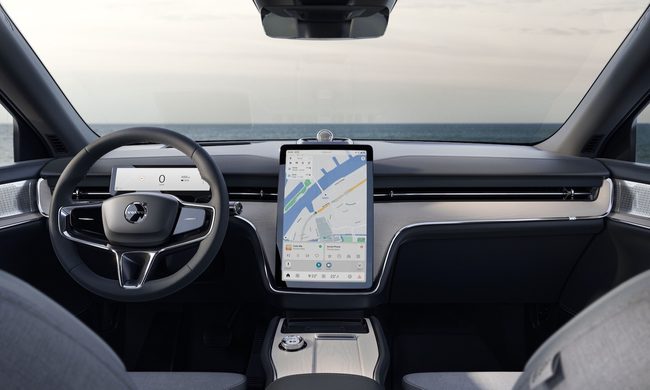
Interior view of the 2024 Volvo EX90.

The line between your smartphone and your car continues to blur. Volvo has announced that it is rolling out an over-the-air software update that brings Apple Music directly to the infotainment systems of more than 2 million vehicles worldwide. Instead of relying on Apple CarPlay or plugging in an iPhone, eligible drivers will be able to stream music natively from their car's built-in system, making Apple Music another integrated feature of Volvo's software experience.

The update is arriving for a wide range of Volvo models, including the EX90, ES90, XC90, S90, V90, XC60, S60, V60, XC40, EX40 and EC40, covering model year 2020 onwards. Availability, however, may vary depending on the vehicle.

Read more
Chery’s latest EV packs flagship tech for the price of a base Tesla, but you can’t buy it
Here's everything packed into Exeed's 2027 Exlantix ES, from its 27-sensor autonomous driving suite to its 860 km range, all starting under $31,000.
Car, Transportation, Vehicle

Chery's premium arm just dropped a sedan that makes you wonder why American EVs cost twice as much for half the tech.

Exeed's 2027 Exlantix ES ships with a driver-assist system called Falcon 700. It is built around an Nvidia Orin-Y chip and a genuinely stacked sensor suite.

Read more
A new AI model wants self-driving cars to think before they swerve
Forget guessing games, this self-driving AI actually shows its work.
Self driving car

Self-driving cars have gotten pretty good at driving. The harder problem is teaching them to drive safely in situations nobody planned for. We have heard horror stories of self-driving cars, behaving erratically in emergency situations, often times delaying first responders from reaching the scene.

A team at Seoul National University, led by professor Jun Won Choi from the Department of Electrical and Computer Engineering, thinks they have cracked part of that puzzle with a new AI model called SafeDrive. The research was recently selected as a highlight paper at CVPR 2026, a distinction that goes only to roughly 3% of all submissions.

Read more