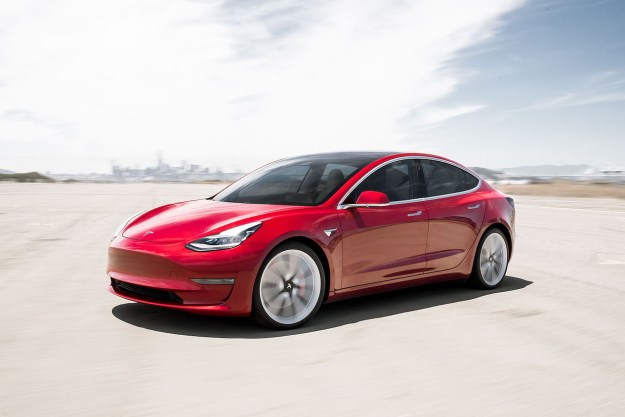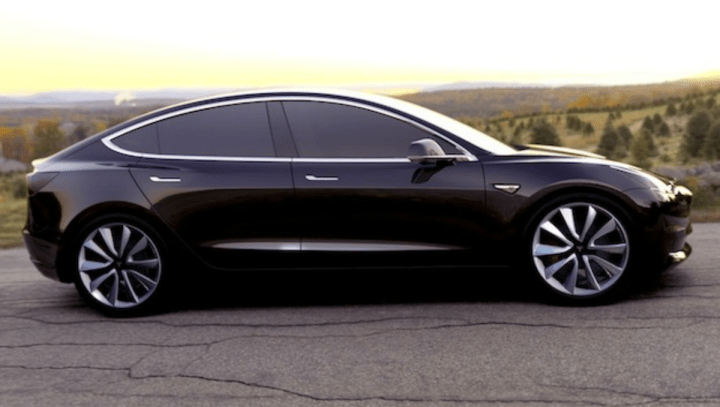
All Model 3s will be equipped with Tesla’s full autonomous driving suite of sensors and hardware, as are all newly built Model S and X vehicles. That doesn’t mean every Model 3 will be self-driving, however. Without unlocked assist or autonomous features option payments, Teslas have the potential of functioning at the company’s then-current level of assistance or autonomy, but cannot access them.
The current Autopilot option or upgrade fee for Tesla Model S and X is $6,000 for the Enhanced Autopilot. This feature enables four on-board cameras and 12 ultrasonic sonar sensors for driver assistance capability plus ongoing over the air (OTA) software upgrades and updates. The Full Self-Driving Capability option is another $4,000 upgrade.
Self-driving ability will be only usable when software validation and regulatory approval are granted at some uncertain future time. So with the currently available Tesla Model S and X, the tab is $10,000 for access to the full suite of hardware and autonomous functionality.
If Tesla maintains the current upgrade strategy at the same prices with the upcoming Model 3, as Electrek points out, the market temperature will be very different. There’s a huge difference in vehicle starting prices. The Model 3 starts at $35,000 and the S and X begin at about twice that price and beyond. Expecting a $35,000 car buyer to have the same regard for a $10,000 option as a $70,000 car buyer doesn’t float, no matter how appealing the extra features.
Musk said from the beginning and reiterated in last year’s annual meeting that vehicle prices will start high to pay for the development of lower-priced models. He maintains that the upper-level models will have greater luxury and feature sets, but in the case of autonomous hardware and capabilities, the company stated that the hardware will be the same. Indeed Musk doesn’t want people to think of “safe” and “even safer” Tesla models, because he knows that would immediately be turned around to “safe” and “not-so-safe.”
Musk has stated and confirmed that the Model 3 will have a single user display located in the center of the dashboard. When queried on Twitter by Electrek about the plan for a single display without regulatory approval for autonomous software, Tusk reiterated, “It still has one display.”
It may be that Musk has another card up his sleeve for price adjustments or feature enhancements. Regardless of vehicle and option price strategies, it’s clear Musk has his eyes firmly on being the first for both disruptive technologies.
Editors' Recommendations
- Tesla faces new rival as a tech giant launches its first EV
- Tesla Model 3 Highland: release date, range, design update, and more
- Volkswagen ID.4 vs Tesla Model Y
- Tesla launches more affordable Model S and Model X, but there’s a catch
- Tesla shows off first Cybertruck after two years of delays