1. Home
  2. Cars
  3. News

The 2016 Toyota Mirai FCV may “procreate” into a family of vehicles

Add as a preferred source on Google

The Toyota Mirai FCV (fuel cell vehicle) may follow in the Prius’s footsteps to establish a family of cars for eco-minded consumers. According to Autocar, chief engineer Yoshikazu Tanaka said that he would like to see the Mirai “procreate” into a full line of vehicles, similar to the variants of the Prius that include the Prius Plug-in Hybrid, Prius v wagon, and the subcompact Prius c. He gives a window of 10-20 years for FCVs to attain the sale volumes enjoyed by hybrids today.

Related: First Drive: 2016 Toyota Mirai

Recommended Videos

Toyota’s family of hybrid and electric vehicles includes models from Lexus, its luxury division arm. With eight million global sales, Toyota sells more alternative fuel vehicles than any other manufacturer, far head of Honda and Ford, who hold the number two and three spots.

Tanaka did not discuss details regarding the Mirai’s configurations, but according to a source, a wagon, hatchback, MPV, and SUV may be considered. The Mirai is being built at the low-volume Motomachi Plant in Japan, where the Lexus LFA supercar was assembled.

Extracting hydrogen from renewable resources is a costly process, and it is one of the main roadblocks for the mass production hydrogen FCVs. The infrastructures needed to extract the gas also burn fossil fuels.

Toyota Mirai
Image used with permission by copyright holder

Progress has been advancing in other areas. In 2008, a fuel cell that weighed 240 pounds and produced 121 horsepower now weighs 125 pounds and produces 154 horsepower.

Toyota stated in a press release that production of the Mirai will be limited to 200 vehicles this year, initially available only in California. The cars were made available for order at eight dealerships in July, and will be delivered to customers this month. The world’s biggest car manufacturer plans to have 3,000 units on the road by the end of 2017.

Albert Khoury
Former Weekend Editor
Al started his career at a downtown Manhattan publisher, and has since worked with digital and print publications. He's…
This sleek Chinese EV pairs supercar styling with three AI brains
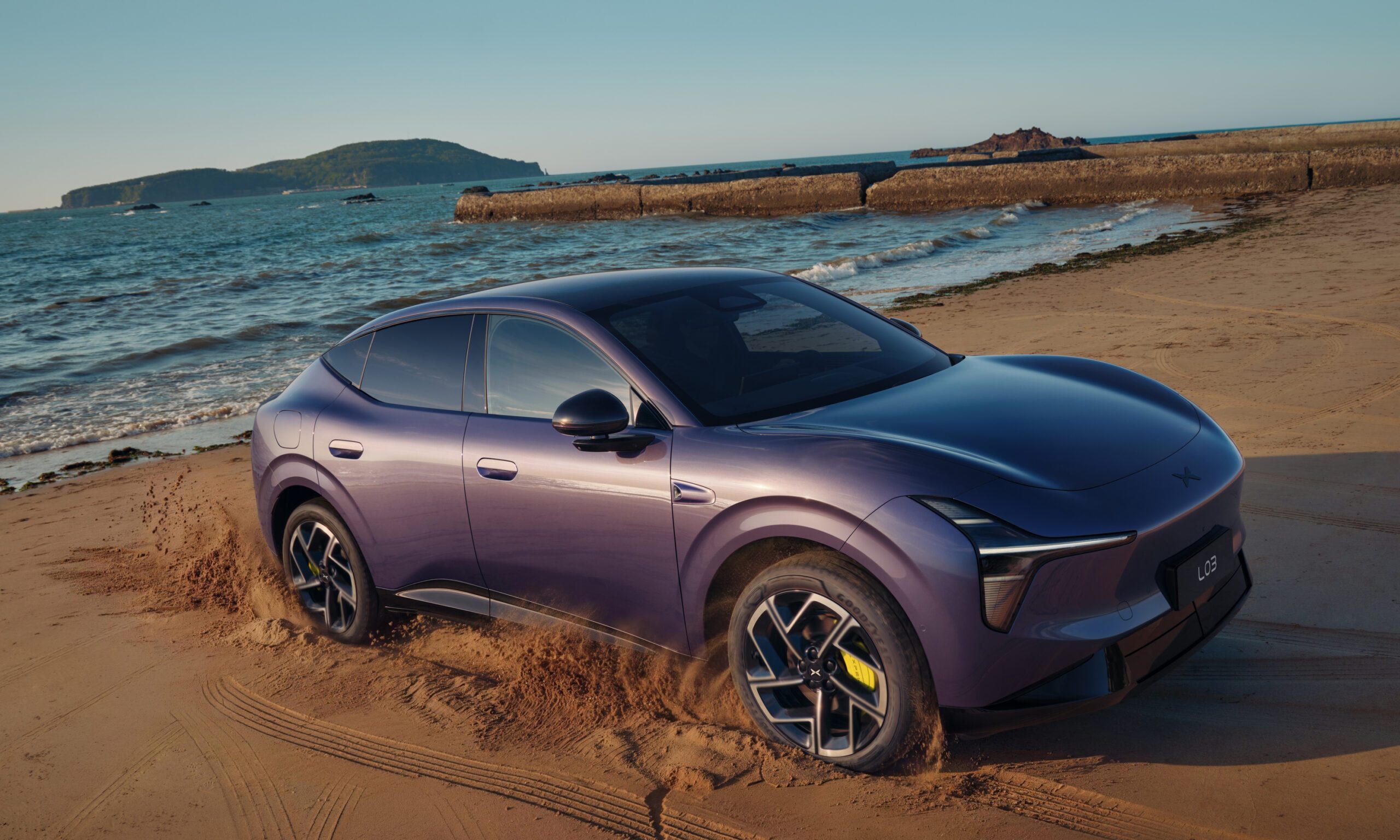
The Xpeng L03 is an AI supercomputer disguised as a stylish family SUV
Xpeng L03

Xpeng’s latest electric vehicle carries enough processing power to make the term "smart car" actually sound more realistic than it actually is. The new Xpeng L03 debuted simultaneously in Europe and China on July 16, with the company presenting it across 65 markets. Available as a fully electric vehicle and an L03 Power X range-extender, the coupe-SUV is Xpeng’s most internationally focused model so far. Market-specific prices and sales dates remain unannounced.

Three AI chips and Google Maps built right in

Read more
A new sodium battery posts wild four-minute charging numbers, but don’t expect it in an EV yet
The breakthrough could improve fast charging and battery life, but the study hasn’t demonstrated those results in a production-sized pack
EV Charger

A new sodium-metal battery has posted a charging number that makes today’s EVs look painfully slow. In laboratory testing, the cell operated at a 15C rate, equivalent to completing a charge or discharge in roughly four minutes.

That doesn’t mean researchers plugged in an electric car and watched it fill up before the driver finished buying coffee. The result came from a small experimental cell using a new quasi-solid electrolyte, while the larger pouch-cell prototype delivered far less dramatic performance.

Read more
The Apple Car may be dead, but it became the foundation of Apple Intelligence
A decade of work on a canceled car project reportedly laid the groundwork for Apple Intelligence.
Apple Intelligence in Apple Car

The Apple Car may have never left the garage, but it apparently gave birth to Apple's AI ambitions. According to Bloomberg's Mark Gurman, Apple's canceled autonomous vehicle project, one that consumed more than a decade of work and over $10 billion before being scrapped in 2024, ended up laying the technological foundation for Apple Intelligence. In a rather ironic twist, one of Apple's most expensive failures may also become one of its most important long-term investments.

The Apple Car forced Apple to think like an AI company

Read more