While displays aren’t as glamorous or exciting as new CPUs, GPUs, virtual reality (VR) gaming, and augmented reality (AR) systems, they’re nevertheless the things that we stare at the most when using our PCs. Displays therefore probably have the most impact on the overall computing experience.
If CES 2017 has accomplished nothing else, it’s at least brought to light a number of new products that demonstrate just how seriously manufacturers are taking displays. We’re going to highlight the five examples that best demonstrate just how much better displays are becoming, with higher 4K resolutions, high dynamic range (HDR), and a wider color gamut ensuring that what we are staring at all day is as pleasant as possible.
Dell Ultrathin 27
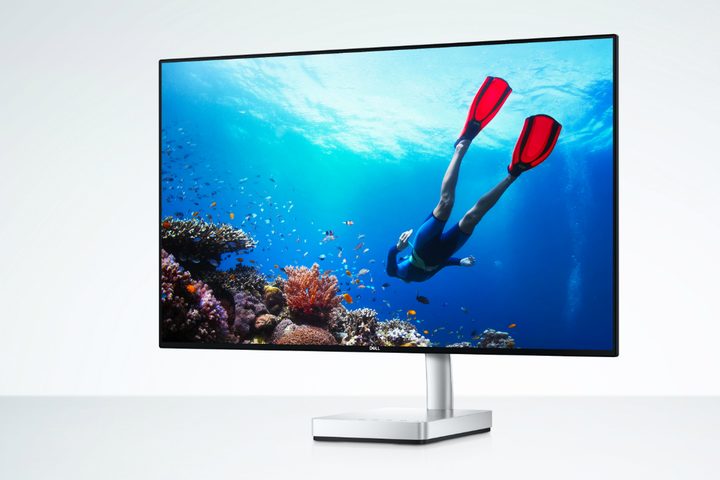
First up is Dell’s new S2718D Ultrathin 27 display, which it bills as the “world’s overall thinnest monitor.” The 27-inch IPS display uses the same InfinityEdge concept as Dell’s popular XPS 13 and XPS 15 notebooks to pack a larger screen into a smaller overall footprint. And, Dell does it all while also providing a display with excellent specifications.
The Ultrathin 27 sports a 1,000:1 contrast ratio, up to 400 nits of brightness, and 98 percent coverage of the sRGB color gamut. A wide 178-degree viewing angle makes it a great option for sharing, and its QHD (2,560 x 1,440) resolution ensures a sharp image. Finally, the display also features the increasingly common HDR feature for impressively bright colors.
Dell is making sure it’s supporting the latest connectivity trends as well with the USB Type-C connection that supports power, audio, and video in a single cable. The rear of the stand houses a cable organizer to keep things uncluttered.
The Dell Ultrathin 27 will retail for $700, and the company hasn’t yet provided information on when the new display will hit the market.
Dell UP3218K

Dell is also attacking high-end displays with its UP3218K UltraSharp 32 Ultra HD 8K monitor. That mouthful of a moniker denotes the display’s more impressive feature: Dell has shoved 7,680 x 4,220 resolution into the 32-inch monitor, which is a crazy 33.2 million pixels and an official “8K” certification. For the mathematically challenged, that equates to more than 16 times the content of a Full HD display, and an incredibly sharp 280 pixels-per-inch.
In addition, the UltraSharp 32 provides excellent colors, with 100-percent coverage of the Adobe RGB and sRGB gamuts and 1.07 billion colors. Contrast ratio is also excellent at 1,300:1, with 400 nits of brightness keeping up with the brightest ambient lighting. Connectivity is also strong, with four USB 3.0 ports, two DisplayPort 1.3 connections, and an audio line out. Interestingly, Dell has skipped the HDMI support.
Dell should begin shipping the UltraSharp 32 in March 2017, when you’ll have to pay a pretty penny for it. Retail pricing is set at $5,000, so you’ll be making a serious investment to put the new display on your desktop.
Asus Swift PG27UQ
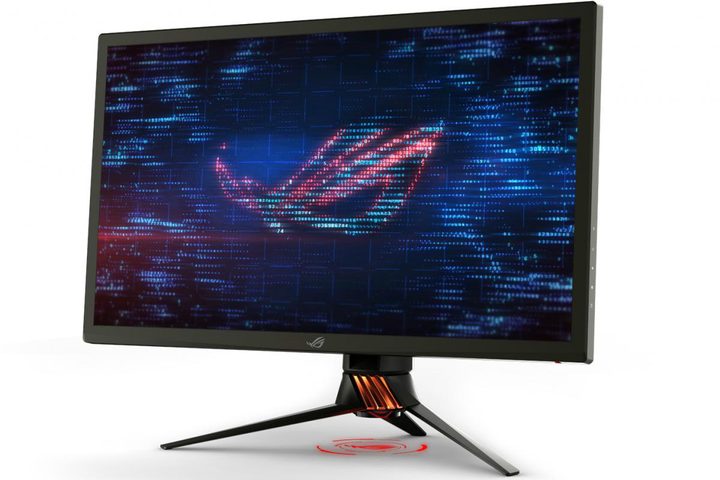
Next up is Asus, which is setting its sights on the high end of the gaming display market with its new Swift PG27UQ monitor. The 27-inch IPS display pushes 4K Ultra HD (3,840 x 2,160) resolution to support extra-detailed gaming, with an extremely high 144Hz refresh rate to avoid tearing. Nvidia G-Sync support rounds out the company’s effort to ensure that the PG27UQ can support the frame rates provided by today’s top-end Nvidia and AMD GPUs.
Asus also paid some attention to colors with the PG27UQ. HDR support is included, to ensure support for the growing library of HDR-enabled titles. The display supports DCI-P3, which provides a 25-percent wider color range than the sRGB color standard. Backlighting is guaranteed to be uniform and to provide for high contrast and natural dark colors thanks to the 384 dynamically controlled LED lighting zones.
Connectivity includes two DisplayPort 1.4 connections and an HDMI port for versatility. Pricing and availability hasn’t yet been provided, but once it arrives, the PG27UQ should enjoy its place among the best gaming monitors on the market.
LG 32UD99
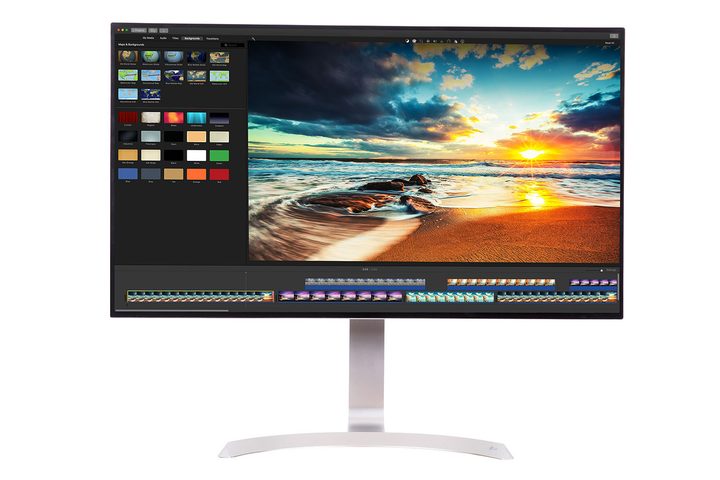
LG didn’t wait for CES 2017 to officially introduce its latest 32-inch IPS display, the 32UD99. This well-rounded monitor is aimed at providing a good experience no matter how you’re using it, with 4K UltraHD (3,840 x 2,160) resolution and a thin bezel, which is becoming increasingly common.
In terms of color brightness and saturation, LG has not only implemented HDR in the 32UD99, but it’s gone with the HDR10 standard to make it more future-proof than some competitors. The display covers more than 95 percent of the CDI-P3 color space, so it’s virtually guaranteed to produce excellent color accuracy. In addition, brightness peaks at 550 nits, with typical brightness running 350 nits.
In terms of connectivity, the 32UD99 offers two HDMI ports, a single USB Type-C connection, and two downstream USB 3.0 ports. LG hasn’t yet released pricing or availability for the new display.
Samsung CH711
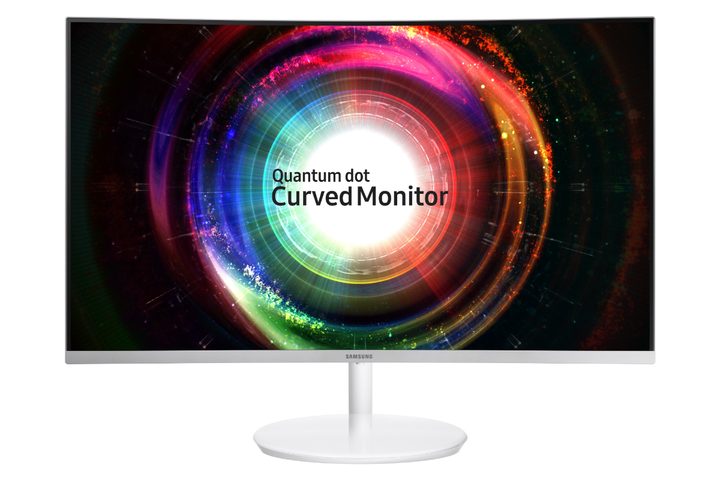
Last on our list is Samsung’s latest quantum dot display, the CFG711 monitor. The display offers a curved design with an 1,800R curvature that promises a 178-degree viewing angle and a 360-degree design that looks good from every direction. The CH711 will come in two sizes, 27 and 31.5 inches, and Samsung has paid some serious attention to overall image quality.
The CFG711 monitor offers WQHD (2,560 x 1,440) resolution and covers 125 percent of the sRGB color gamut. Because it utilizes quantum dot technology, it should provide extremely accurate and vibrant colors while still utilizing LED panels for backlighting.
In addition, the CGG711 should fit well in any decor with its “boundless” design that uses minimal bezels to keep viewers focused on what’s being displayed. An overall clean look is ensured by Samsung’s hiding of the power and HDMI cables inside the stand. Samsung hasn’t yet provided pricing or availability for the CFG711.