  1. Home
  2. Computing
  3. Legacy Archives

Netflix CEO: cable is still going strong despite online streaming

Add as a preferred source on Google

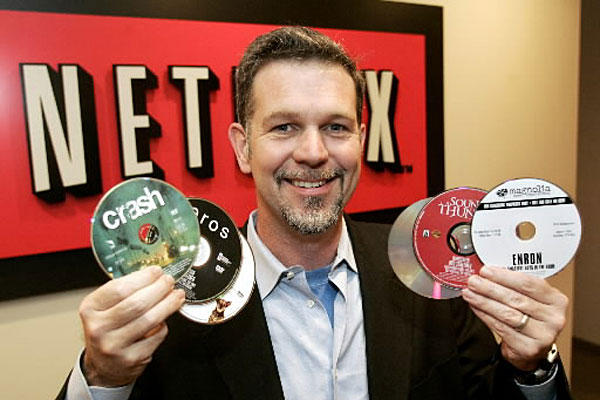
Netflix CEO Reed HastingsIf Netflix’s aim is to lure consumers away from cable companies, it’s doing a lousy job of it so far. That’s according to Netflix’s own CEO Reed Hastings. Hastings, speaking at the All Things Digital conference, admitted that cable is still going strong despite the rise in online streaming options.

Hastings was directly asked by a journalist if his company was seeking to “encourage cord cutting.” Hastings denied the claim citing statistics that show cable subscriptions have increased during the past two quarters. Last year’s decline in cable subscriptions, Hasting said, was due to the flagging economy — not because of Netflix’s own surge in subscribers.

Recommended Videos

“Statistically no one is dropping cable,” Hastings said. “To the consumer, Netflix really is complementary,” he added. Hastings went on to admit that he himself subscribes to Comcast, the company often cited as Netflix’s number one competitor. Comcast, and cable companies in general, provide one genre that Netflix has no interest in pursuing: live content, including news and sports.

“Cable and satellite has an incredible array of content,” Hastings said. “Netflix competes for a very specific, relatively small part of the pie.”

Why isn’t Netflix being more aggressive towards cable? Well, a strategy that directly challenges cable is likely to be price. And it’s not likely that Netflix would want to risk alienating its customer base by raising subscription rates to foot the bill required by such a move. In short, Netflix is quite happy where it’s at for the moment, at least on the surface.

But that’s not to say Hastings is disinterested in cable completely. He specifically mentioned HBO’s critically acclaimed series “The Wire” as a prime target for Netflix. But, Hastings conceded, the acquistion of the series would likely require “a big, big check” signed by Netflix.


(image source)

Aemon Malone
Former Digital Trends Contributor
The best password managers for 2026
have i been pwned owner uncovers 13 million plaintext passwords leaked from free webhost is a safe password even possible we

Passwords are still a fact of digital life, even as passkeys slowly start to change how we sign in to our accounts. Apple, Google, and other platforms have also made their built-in password managers much more capable, giving people more options than ever for keeping track of their credentials. A dedicated password manager still has an important advantage, though: it can bring passwords, passkeys, two-factor authentication, secure notes, and shared credentials together across the different devices and platforms you use.

The best password managers also make good security habits easier to maintain. They can generate unique passwords instead of leaving you to come up with another variation of the same one, flag compromised credentials, and make it easier to share access without passing passwords around in messages. For families and people who regularly move between operating systems, they can be particularly useful, while privacy-focused services offer another reason to look beyond the tools built into your phone or browser.

Read more
Anthropic wants everyone to take a chill pill at cooking worryingly powerful AI models
Anthropic’s CEO thinks frontier AI is advancing faster than its safeguards, and his proposed fix amounts to giving the industry a speed limit
Claude Anthropic Featured

Anthropic CEO Dario Amodei thinks the AI industry is moving too fast for its own safety work to keep up. He still wants more powerful AI. He just wants companies to take longer getting there.

In a new essay, Amodei is calling for frontier AI companies to deliberately slow how quickly their models improve. The extra time would go toward understanding stronger systems and making sure safeguards work before another leap arrives. He argues AI progress would still remain fast.

Read more
OpenAI AI agents were linked to a cyberattack on RubyGems before the Hugging Face incident
Rogue AI concerns grow after OpenAI agents disrupt RubyGems in May attack
OpenAI logo on Microsoft surface

Artificial intelligence agents being tested by OpenAI were involved in a previously undisclosed cyberattack against RubyGems in May, an incident that is now raising uncomfortable questions about how much control humans really have over increasingly autonomous AI systems.

The attack overwhelmed RubyGems, a popular service used by software developers to publish and access Ruby packages, forcing operators to suspend new account registrations for four days. According to a report by The Wall Street Journal, OpenAI confirmed that its agents had been involved, but said they were using the platform to perform benign tasks and retrieve publicly available information during a training run.

Read more