  1. Home
  2. Computing
  3. Web
  4. Legacy Archives

Good deal: Google to buy Provo, Utah’s $39M fiber network for $1 (Updated)

Add as a preferred source on Google
google-fiber_dt
Image used with permission by copyright holder

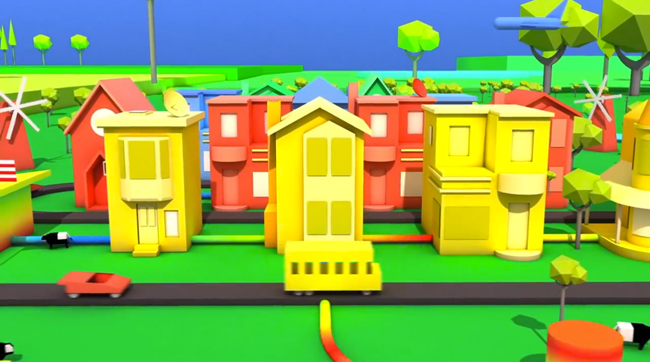
Go go Google Fiber! Coming on the heels of last week’s announcement that Google will build its Fiber service in Austin, Texas, the company announced Wednesday that Provo, Utah will be the third city in the U.S. to receive superfast Internet service. If you live anywhere besides Kansas City or Austin, you may be wondering, “Why Provo?” 

Provo is home to numerous tech companies and startups including, Novell software, and Ancestry.com. Oddly enough, the city also came in first on a survey of community optimism in 2012. Maybe it was the city’s glass-half-full attitude that brought Fiber to fruition?

Recommended Videos

However, the immediate answer is that Provo is one of the easier places for Google to build its Fiber network. The company’s plan is to use the existing infrastructure from iProvo, a fiber-optic network originally built by the city that proved to be a money drain, and upgrade it to full Google Fiber connectivity. According to the Associated Press, Google is in talks to buy the $39 million municipal fiber-optic system for $1. Yep, just $1. On top of that, the AP reports that Provo will also have to pay off loans for the project’s construction for “another dozen years.” But, Provo thinks it’s getting a good deal since its current service wasn’t able to support itself. So, it appears that everyone in Provo wins.

The mayor of Provo, John Curtis, announced the Google Fiber deal on his blog earlier this week along with mentioning that it will have to pass a city council vote next Tuesday before the project is considered a done deal. However, we doubt that Provo’s city council will vote against it. Once the deal is complete, Google will begin building out the network.

Homes that are currently connected with iProvo will be upgraded to seven years of free 5 Mbps service from Google Fiber with a $30 activation fee. As Google has done in its other two connected cities, hospitals, public libraries, and schools will be connected to the full-speed Fiber service for free. Like Kansas City and Austin, Google will also sell gigabit Internet packages and bundled TV and Internet packages. 

We’re willing to bet that Google’s going to increase the frequency of its Fiber announcements going forward, especially since AT&T announced a fiber network of its own in Austin last week and has plans to continue building out its fiber network. What city would you like to see get Google Fiber next? 

[Originally posted 4/17/13 and updated on 4/19/13 to reflect Google’s $1 deal.]

Meghan McDonough
Former Contributor
Meghan J. McDonough is a Chicago-based purveyor of consumer technology and music. She previously wrote for LAPTOP Magazine…
What happens when AI detectors fail? Researchers say we must be trained to spot fake AI faces
Researchers say spotting AI faces may soon depend more on people than software
Zuckerberg Deepfake

Artificial intelligence has become remarkably good at creating fake human faces. So good, in fact, that the old tricks people relied on - counting fingers, spotting warped earrings, or looking for distorted backgrounds - are quickly becoming obsolete. According to a new study highlighted by the BBC, the next line of defence may not be a better AI detector at all. It might simply be a better-trained human.

Researchers from the University of Aberdeen, working alongside Australia's National University, found that people can dramatically improve their ability to distinguish AI-generated faces from real ones after a relatively short period of structured training. Instead of hunting for obvious visual glitches, participants were taught to recognise subtle patterns that modern image generators still struggle to replicate consistently.

Read more
Google’s new Magic Pointer Play Store listing reveals a Gemini shortcut built for Googlebooks
The unannounced app turns the cursor into a contextual AI tool for search, image creation, and shopping
Plant, Text, Business Card

Google has quietly published a new Play Store listing for Magic Pointer, an unannounced app built for Googlebooks. Updated on July 10, the app turns the cursor into a Gemini shortcut that can act on whatever a user selects on screen.

Magic Pointer can send an image to Lens, generate a related image, or surface a shopping action without forcing users to open a separate chatbot. Regular Android devices currently show as incompatible, so the listing offers an early preview rather than a broad release.

Read more
You can stop using AI, but this new report says you probably can’t escape it
A UK survey found that most people feel AI exposure is unavoidable, raising harder questions about consent, privacy, and whether opting out is still realistic
AI Chatbots

More people are trying to use less AI, but avoiding it altogether may already be impossible.

A survey of 2,055 UK adults found that 42% deliberately limit how much AI they use. Another 70% said avoiding AI exposure would be difficult or impossible, even when they actively wanted less of it.

Read more