1. Home
  2. Computing
  3. Emerging Tech
  4. Entertainment
  5. Photography
  6. News

Machine learning algorithm puts the words of George W. Bush in Barack Obama's mouth

Add as a preferred source on Google

What if you could sit down and interact with your favorite celebrity — without that person being present, either in real life or online? That seems the realm of science fiction, but a team of researchers from the University of Washington has moved it one step closer to reality.

Over the past five years a group led by assistant professor Ira Kemelmacher-Shlizerman has constructed a machine learning algorithm that can piece together a digital persona of anyone from just a few hundred photographs. Celebrities, being frequently photographed, are a perfect target for this treatment. They can be mimicked using only publicly available photos.

Recommended Videos

The team’s latest breakthrough makes it possible to manipulate the expressions of anyone scanned by the algorithm. It can even transfer expressions from one individual to another. This technique is demonstrated in a number of disturbing yet hilarious videos. One clip shows Daniel Craig speaking alongside virtual representations of Ian McKellen and Tom Hanks uttering the same words. Another clip puts the words of former president George W. Bush in the mouth of current president Barack Obama.

As you might expect, the juxtaposition isn’t entirely convincing. The team is working to prove the concept, so the models it uses to replicate various celebrities don’t have the resolution and texture detail you’d find in a cutting-edge game or movie CGI.

Still, the 3D puppets get the broad strokes right, which means facial expressions are transferred with remarkable accuracy. Seeing the smile of George W. Bush on Barack Obama’s face is a bit hair-raising, to say the least.

The work is part of an ongoing effort that the researchers hope will provide the ability to fully recreate a person, to a high degree of detail, using photos alone. It’s already possible to recreate celebrities using computer animation, of course, but the techniques involved require the person to be present and involve tens or hundreds of man-hours to properly capture, animate and detail the digital persona. A machine learning algorithm, on the other hand, might be able to generate similar results with a fraction of the effort.

It might also open privacy concerns. Most people have several hundred photos uploaded to Facebook. That’s potentially enough to create an avatar using this technique. But don’t fret just yet. The technology is still in the realm of academic research, with no timeline for its completion.

Matthew S. Smith
Matthew S. Smith is the former Lead Editor, Reviews at Digital Trends. He previously guided the Products Team, which dives…
Apple’s 2026 Back to School promo saves you up to $150 on a new Mac or iPad
The exact amount depends on which device you buy, but the offer doesn't apply to all Mac and iPad models.
Apple Back to School 2026 featured

Apple has kicked off its 2026 Back to School promotion, and this year's offer swaps out the free accessory bundle from last year with gift cards. Eligible buyers who purchase a MacBook Pro get a $150 gift card, while a MacBook Air, iPad Pro, or iPad Air earns a $100 gift card. The promotion runs through August 27 in the US, with international versions rolling out on different timelines and, in some regions, different rewards entirely.

Not every device is eligible

Read more
OpenAI made a tiny $230 keyboard that lets you turn up an AI’s brainpower
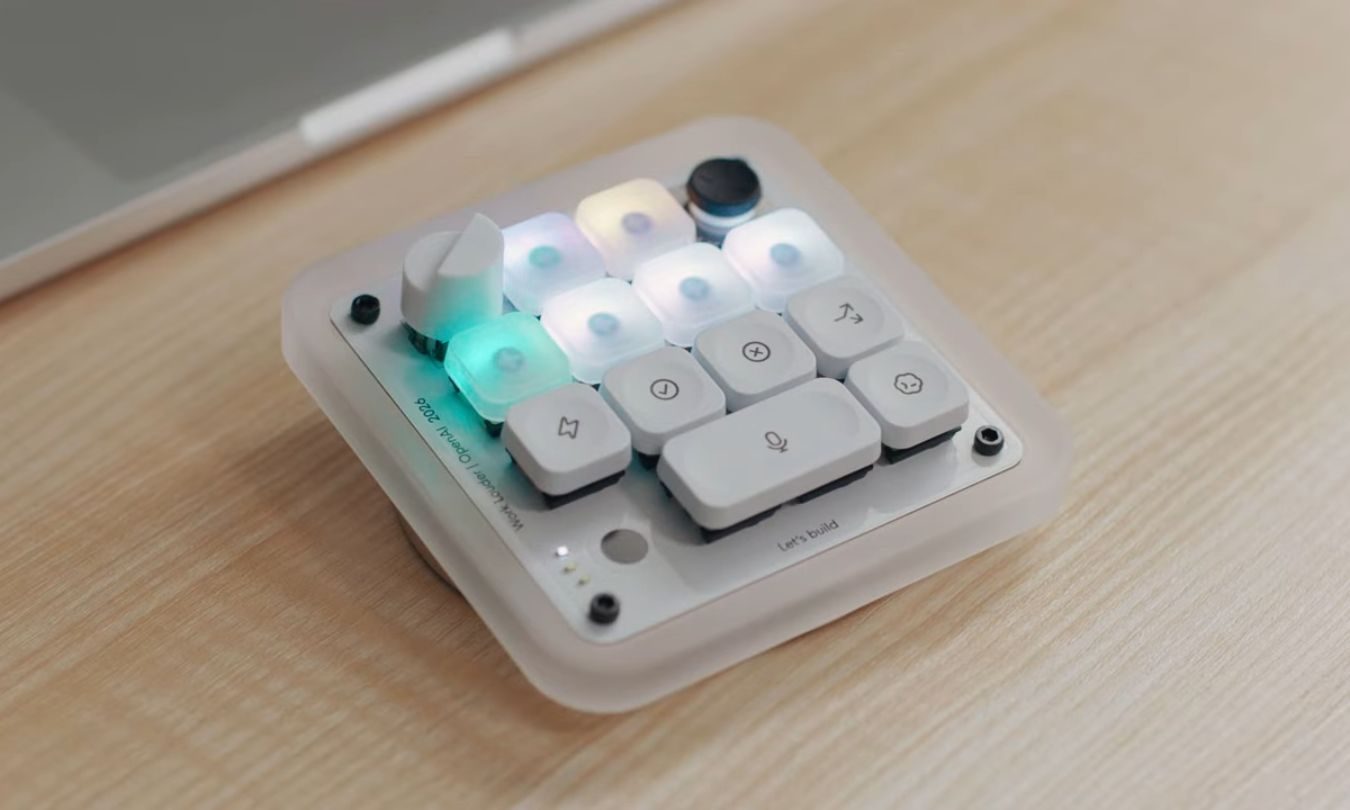
The Codex Micro puts reasoning settings, agent status lights, and programmable AI shortcuts directly on your desk
Electronics, Phone, Mobile Phone

OpenAI has made a $230 mini keyboard that lets Codex users adjust how hard its AI thinks with a physical dial. The Codex Micro also provides dedicated buttons for launching workflows and checking on active agents without bouncing between chats.

Developed with keyboard maker Work Louder, the compact Mac and Windows accessory connects over Bluetooth or USB-C. OpenAI’s store currently lists it as out of stock, although the company says more units are coming.

Read more
Google rejects alarming report that says its Search AI tools are unsafe for kids
The company says it couldn’t reproduce many of the responses cited and argues that the testing doesn’t reliably measure product safety
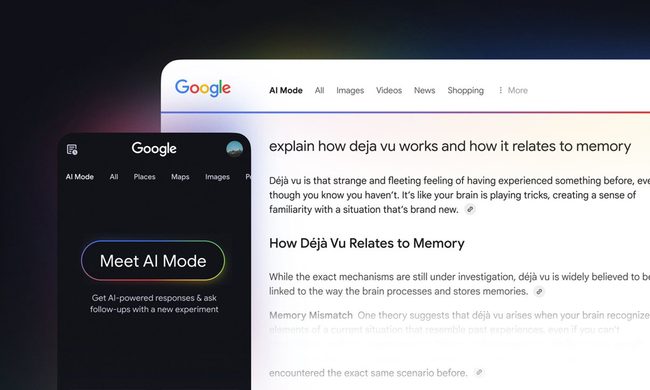
Google AI Mode on mobile and desktop

Google has rejected a new report that labels its AI-powered Search features an “unacceptable risk” for children and teenagers.

Common Sense Media’s Youth AI Safety Institute gave AI Overviews and AI Mode its lowest overall rating. The two tools performed poorly against seven of the institute’s eight AI safety principles and failed every category involving potentially severe harm. Google says those findings came from searches that don’t resemble how people normally use its products.

Read more