  1. Home
  2. Computing
  3. Legacy Archives

YouTube brings in talent to develop content-specific channel programming

Add as a preferred source on Google
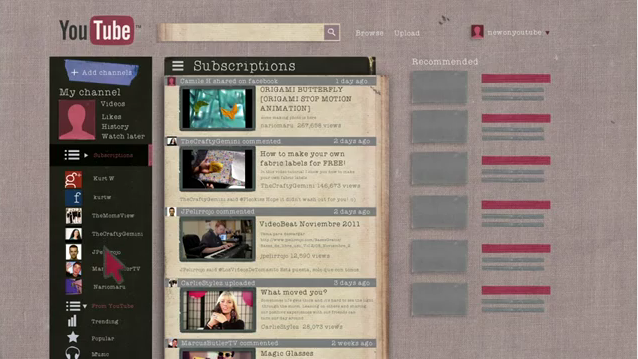
new youtube
Image used with permission by copyright holder

With services like Netflix and Hulu convincing web surfers to settle in for streaming video programming, the Wild West of cute cat and “dude gets hit in the crotch” videos that is YouTube is being forced to adapt. A new profile of the video portal and one of its top figures, Google‘s Robert Kyncl, in The New Yorker explores the history of the service and looks at how a coming change will take shape in 2012 and beyond.

In short, YouTube is going to embrace a mentality that nurtures dedicated content channels, with talent being approached to tailor audience-specific chunks of programming. These producers are expected to plan for multiple hours of video in a given week. Google seems to be making that content commitment an attractive prospect too, as recognizable names like The Onion, Slate, The Wall Street Journal, C.S.I. creator Anthony Zuiker, Tony Hawk, Madonna, Amy Poehler are all signed on.

Recommended Videos

Kyncl sees a “more immersive” appeal in this niche-oriented approach to content creation that YouTube is adopting. “For example, there’s no horseback-riding channel on cable. Plenty of people love horseback riding, and there’s plenty of advertisers who would like to market to them, but there’s no channel for it, because of the costs. You have to program a 24/7 loop, and you need a transponder to get your signal up on the satellite. With the Internet, everything is on demand, so you don’t have to program 24/7—a few hours is all you need.”

Don’t be surprised to read that ad sales are a driving force behind this initiative. Network and cable TV are still very attractive destinations for advertisers due to the relative number of hours per day your average person spends channel flipping versus YouTube surfing. A YouTube user, on average, spends around 15 minutes per day streaming the content that’s already there. A more audience-tailored approach would go a long way toward raising that number and drawing in those all-important advertising dollars.

Check out the full and quite lengthy profile for more details, explored in The New Yorker’s typical deep-dive fashion.


Adam Rosenberg
Former Gaming/Movies Editor
Previously, Adam worked in the games press as a freelance writer and critic for a range of outlets, including Digital Trends…
Apple’s 2026 Back to School promo saves you up to $150 on a new Mac or iPad
The exact amount depends on which device you buy, but the offer doesn't apply to all Mac and iPad models.
Apple Back to School 2026 featured

Apple has kicked off its 2026 Back to School promotion, and this year's offer swaps out the free accessory bundle from last year with gift cards. Eligible buyers who purchase a MacBook Pro get a $150 gift card, while a MacBook Air, iPad Pro, or iPad Air earns a $100 gift card. The promotion runs through August 27 in the US, with international versions rolling out on different timelines and, in some regions, different rewards entirely.

Not every device is eligible

Read more
OpenAI made a tiny $230 keyboard that lets you turn up an AI’s brainpower
The Codex Micro puts reasoning settings, agent status lights, and programmable AI shortcuts directly on your desk
Electronics, Phone, Mobile Phone

OpenAI has made a $230 mini keyboard that lets Codex users adjust how hard its AI thinks with a physical dial. The Codex Micro also provides dedicated buttons for launching workflows and checking on active agents without bouncing between chats.

Developed with keyboard maker Work Louder, the compact Mac and Windows accessory connects over Bluetooth or USB-C. OpenAI’s store currently lists it as out of stock, although the company says more units are coming.

Read more
Google rejects alarming report that says its Search AI tools are unsafe for kids
The company says it couldn’t reproduce many of the responses cited and argues that the testing doesn’t reliably measure product safety
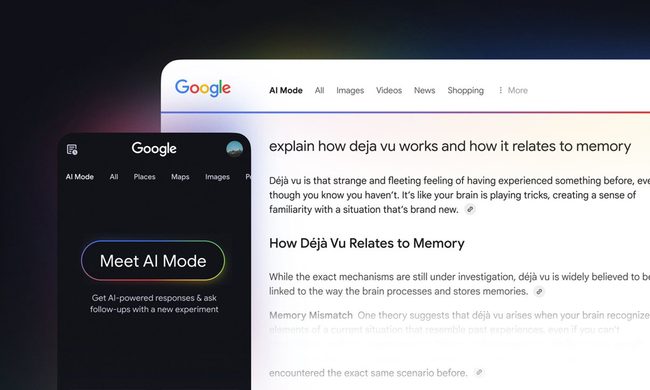
Google AI Mode on mobile and desktop

Google has rejected a new report that labels its AI-powered Search features an “unacceptable risk” for children and teenagers.

Common Sense Media’s Youth AI Safety Institute gave AI Overviews and AI Mode its lowest overall rating. The two tools performed poorly against seven of the institute’s eight AI safety principles and failed every category involving potentially severe harm. Google says those findings came from searches that don’t resemble how people normally use its products.

Read more