  1. Home
  2. Emerging Tech
  3. Buying Guides
  4. Evergreens

The best drones under $100

Fly your local skies on a budget with these drones under $100

Add as a preferred source on Google
Best Product Promotional Image
Get straight to the top tech—no junk, just the best.

Drone flying is a popular hobby, even despite government regulation and angry neighbors outright shooting at drones, but newcomers might find it daunting to get started, given how expensive drones can be. Thankfully, you don’t need to drop $2000 on a drone with all the bells and whistles; you don’t even need to spend $200. There are some great, functional drones available at $100 or less, and while they may not be the flashiest or the most powerful, they’ll give you a lot of the features you would want in a premium drone.

Further reading

The best

DJI Tello
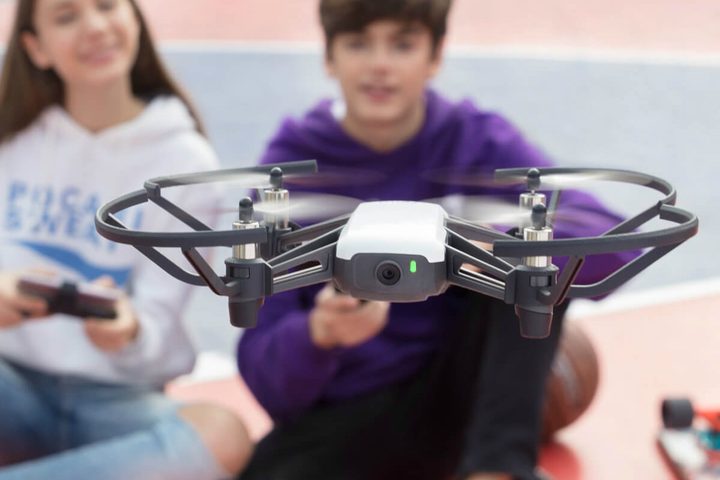
Image used with permission by copyright holder

One of our favorite drones in general, the DJI Tello packs in all the power and features possible while keeping the price under $100. Although it doesn’t come with a controller (you can buy one separately) the Tello is easy to control via smartphone, thanks to its DJI flight controller, and its sturdy frame means that, even if you crash, your drone won’t shatter on the living room floor. You can do tricks and flips with the Tello, and getting it airborne is as simple as just tossing it up. The Tello has a flight distance of up to 100 meters (nearly 330 feet) and a flight time of 13 minutes. In addition to all its flight tech, this quadcopter also sports a 5 megapixel camera capable of shooting 720p video.

The rest

Horizon Hobby Blade Nano QX ($60+)
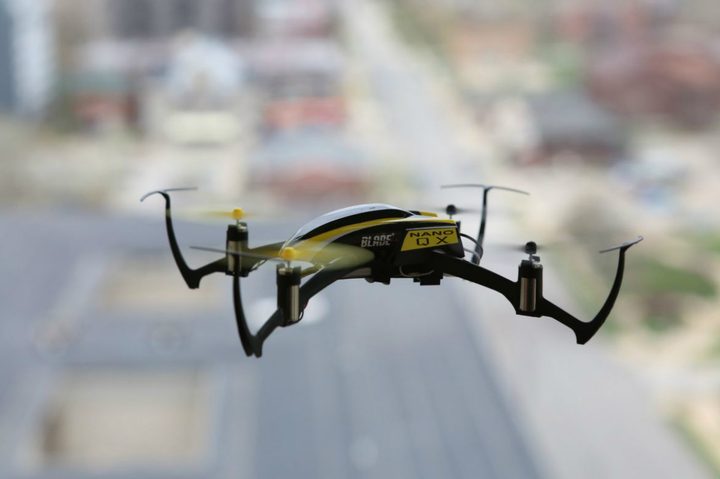
Image used with permission by copyright holder

At a little under 0.6 ounces, the Nano QX is a petite drone, but a powerful one. Set up is quick and easy, and after charging the battery via USB, the drone gets up to eight minutes of flight time. It’s a great drone for beginners, particularly since you can fly in “agility mode” or a more fail-proof “stability mode.” Even if you do crash, the Nano QX is tough enough to survive probably any impact you’ll put it through. For a beginner who wants a drone that’s easy to fly, with no need for fancy gadgetry like cameras, there’s a lot to love in the Nano QX.

Parrot Swing ($65+)
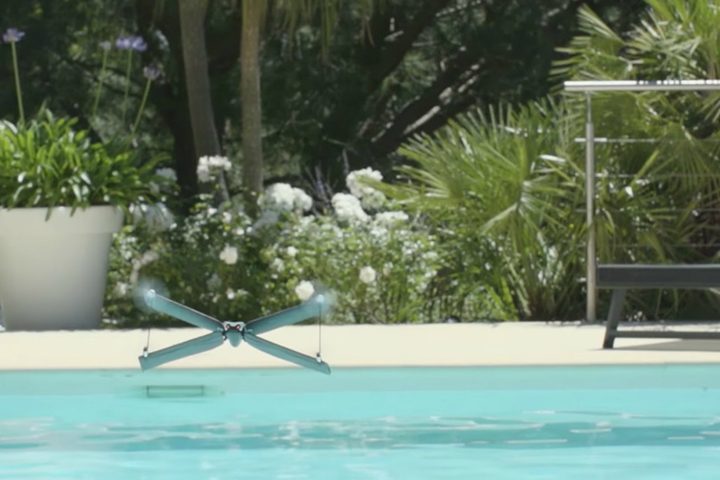
Image used with permission by copyright holder

A lot of budget drones go the quadcopter route, but the Parrot Swing takes a radically different form, with X-shaped wings that allow the drone to fly like a plane. The Swing has four propellers and can glide around in quadcopter mode, but when you shift into plane mode, it zips around at a blistering 18 mph. Although it only has a range of 20 meters (65 feet) when controlling with a smartphone, using the Flypad controller boosts it to 60 (nearly 200 feet).

Hubsan X4 Plus ($24+)
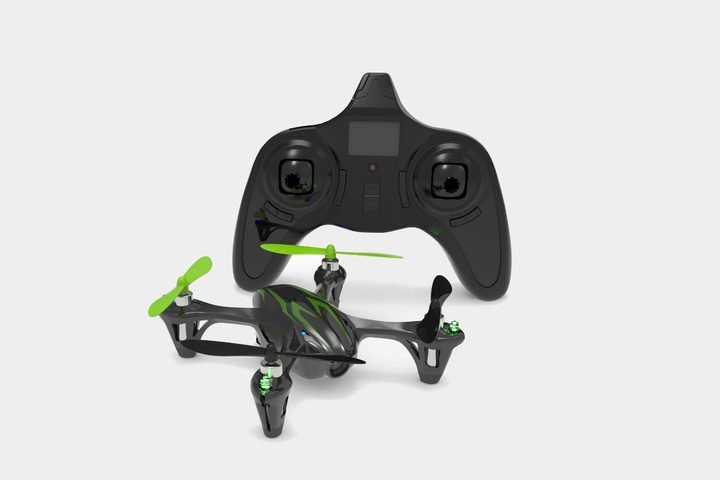
Image used with permission by copyright holder

A small quadcopter for the drone enthusiast on a tight budget, the Hubsan X4 is a fun little device that can dart around quickly and even take decent video. At a mere 2.75 x 2.75 inches, the X4 Plus easy to carry around, and its small, light frame is suitable both indoors and out. The X4 includes a controller for intuitive flying, and it has a surprisingly high quality camera given the price range.

QCopter HD ($80)
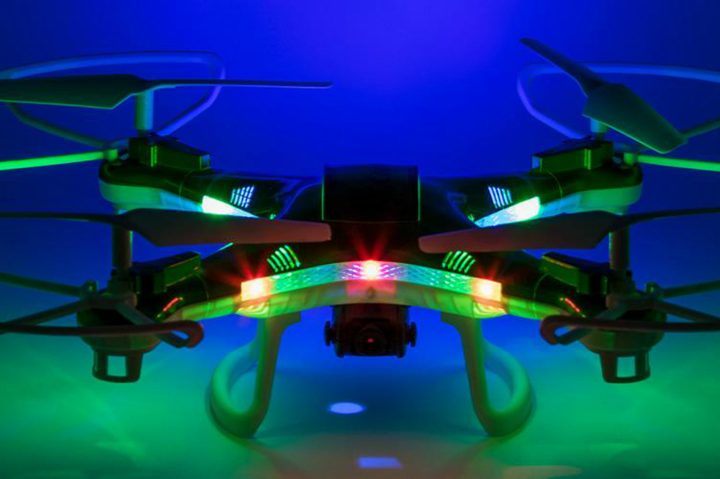
Image used with permission by copyright holder

Although it’s not the sturdiest drone ever made, the QCopter HD is a good example of what a sub-$100 drone can do. It has a camera that can shoot video, and you can mount your phone on the included remote to watch the video feed. The QCopter weighs eight ounces, making it one of the heavier drones on our list, so maybe don’t fly it overhead at a party. For night flights, the drone has LED lights so you can keep track of it (and put on a show for friends or family).

Will Nicol
Will Nicol is a Senior Writer at Digital Trends. He covers a variety of subjects, particularly emerging technologies, movies…
Anthropic warns of imminent self-replicating AI that might even work off an oven or TV
Self-replicating AI could be merely months away, and tests show it can run on the devices sitting at your home.
Illustration of dangerous AI.

Over the past few weeks, nearly every AI lab has released frontier AI models. Earlier today, Google started rolling out Gemini 4, Argon, hot on the heels of Meta announcing its Muse Wonder frontier AI models to compete against the best from OpenAI and Anthropic's Claude. This relentless pace of AI model release comes at a time when the same AI labs are calling for development slowdown and increased regulation, following a series of concerning incidents where these AI models went rogue and broke into private, as well as government-owned, websites.

Now, Anthropic has dropped a chilling set of predictions about the capabilities of these AI models after running a series of tests. The company claims that small AI models could be merely a few months away from self-replicating and turning into a dangerous swarm. More importantly, they won't require a massive data center or an uber-powerful computer to do so. On the contrary, the lab claims that these self-replicating AI swarms will need something with as little computing power as an average Internet-connected device, like a smart oven or an Android TV box.

Read more
Trending Forward: Fold’s CEO spills on the real future of everyday bitcoin
What if the future of Bitcoin is not the US Dollar? What if it's mainstream future is earning small rewards on everyday bills?
Wristwatch, Emblem, Symbol

Saying the word crypto out loud, or posting on social media sites, is almost a guaranteed road to passionate commentary. And by passionate, I mean the two extremes of the conversation — the optimist side and the vitriolic detractions. There is a big pool of leaders who still see it as the future, while others aren't quite sold on the idea. In the latest episode of Trending Forward, I sat down with Fold CEO Will Reeves to discuss whether Bitcoin actually needs to replace the US dollar to become genuinely useful to mainstream consumers.

While I've long been skeptical of crypto's wild volatility and its viability as everyday cash, our conversation explored a pragmatic alternative: continuing to live, spend, and pay bills in dollars while quietly accumulating Bitcoin in the background as a long-term savings asset.

Read more
Tiny robots could shrink weeks of heart infection treatment into a single day
Forget open-heart surgery, because these rice-sized robots take the express route to your heart.
heart being treated by tiny robot

Treating a heart infection is no walk in the park. Patients often spend weeks on IV antibiotics, and if that fails, open-heart surgery enters the picture. Johns Hopkins University engineers may have found a better way.

The team has developed magnetic “millirobots” that are about as wide as a pencil tip and roughly as long as a grain of rice. As detailed in their study published in Advanced Materials Technologies, the robots are designed to deliver medicine directly to infected heart tissue.

Read more