1. Home
  2. Emerging Tech
  3. News

Hobby drones are still hampering wildfire air crews on the West Coast

Add as a preferred source on Google

The nation’s logistical and support center for wildland firefighting is wondering what part of “keep your drones away from wildfires” people don’t understand.

An increasingly exasperated National Interagency Fire Center (NIFC) said Thursday that air operations aimed at tackling wildfires have been suspended four times this year after quadcopters were spotted flying nearby. In all, drones have been seen flying over 12 wildfires on the West Coast in the last six months, the NIFC confirmed.

Recommended Videos

Although we’re yet to find out the precise effect of a quadcopter coming into contact with a much larger manned aircraft, the agency understandably doesn’t want to be the first to find out. As a result, whenever its pilots spot a remotely controlled aircraft nearby, they’re told to return to base, action that gives the fires more time to spread.

It’s not certain why the drones are there, though of course it seems likely that owners are trying to score some dramatic aerial shots of the blaze.

Sadly, repeated warnings from the NIFC, as well as from concerned fire chiefs, are continuing to fall on deaf ears, with drones forcing the authorities to halt water drops until the airspace is confirmed clear.

As noted by Inverse, the incidents are deemed so serious that last year San Bernardino County, between Los Angeles and Las Vegas, offered a $75,000 reward for information leading to the identification of the reckless drone operators. Legislation has also been proposed that would allow the authorities to knock a drone out of the sky if it’s hampering emergency response efforts, and to jail the owner for up to five years.

At the current time, around twelve wildfires are burning in California, Arizona, Utah, Nevada, and New Mexico, so the NIFC is desperate for its message to be taken seriously so it can tackle the blazes without interruption.

NIFC spokesperson Jessica Gardetto warned that flying a drone near a helicopter or air tanker could cause a fatal crash.

“We understand people are curious, but flying a drone near a wildfire is just not worth the risk – you’re risking the lives of firefighters and the lives of pilots,” Gardetto said.

Trevor Mogg
Contributing Editor
Not so many moons ago, Trevor moved from one tea-loving island nation that drives on the left (Britain) to another (Japan)…
Yet another study says AI is bad for elections, and the rabbit hole gets worse
AI may be an election bomb waiting for someone to light the fuse
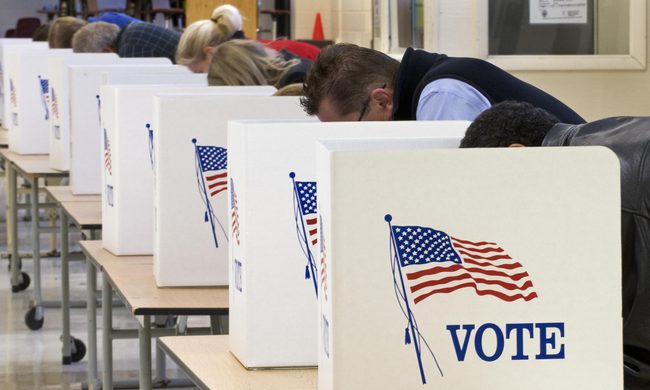
Voters cast their ballots on Election Day

Another election, another study has concluded that asking an AI chatbot for political guidance is a spectacularly bad idea. Research conducted during Hungary’s 2026 parliamentary election found that ChatGPT and Google Gemini offered not just inaccurate but also inconsistent and unreliable voting advice. The chatbots misclassified voter profiles, overlooked relevant parties, recommended parties absent from the ballot, and sometimes produced materially different answers when given the same information repeatedly.

AI keeps failing the voter test

Read more
Samsung’s humanoid robot ambitions are real, but factories come first
Samsung’s new robotics division has humanoids in its sights, although its immediate business is far more practical factory automation
Robot Touch Human Finger

Samsung wants a place in the humanoid race, but its new robotics push begins with machines built for factories rather than homes.

The CEO-led RX robotics division will initially focus on manufacturing robots. Samsung has separately identified humanoids as a priority, although it hasn’t announced a commercial model or explained where one fits into the division’s immediate plans.

Read more
The future of AI may depend on this one behind-the-scenes change
Running Claude on Android.

Whenever a new AI model arrives, it's easy to get caught up in the bells and whistles. We talk about how much smarter it is, how quickly it answers questions, or how realistic its images have become. But here's the thing: none of that matters much if the AI can't reliably work with the apps and services people use every day.

That's why an upcoming update to the Model Context Protocol (MCP) caught my attention. It isn't a new chatbot or a fancy AI model. In fact, most people will never even know it's happening. But it could quietly make the AI ecosystem a lot healthier. If you've never heard of MCP before, don't worry. Think of it as a shared language that lets AI assistants safely talk to apps like Gmail, Slack, calendars, databases, and countless other services. Instead of every company inventing its own way to make those connections, MCP gives everyone a common rulebook.

Read more