  1. Home
  2. Emerging Tech
  3. Legacy Archives

IKEA robot assembly assistant may just save you some blood, sweat, and tears

Add as a preferred source on Google
ikea assembly robot
Image used with permission by copyright holder

There’s a love-hate relationship we all have with IKEA. For the cost of an affordable, decent-looking Swedish furniture, you understand that you have to put in the work to assemble the full set. But beyond that basic idea, IKEA can also make or break friendships. Seriously, ask a best friend to come help you build an IKEA bed and see if you still want to grab happy hour drinks without blaming each other for misplacing that last bolt and barrel.

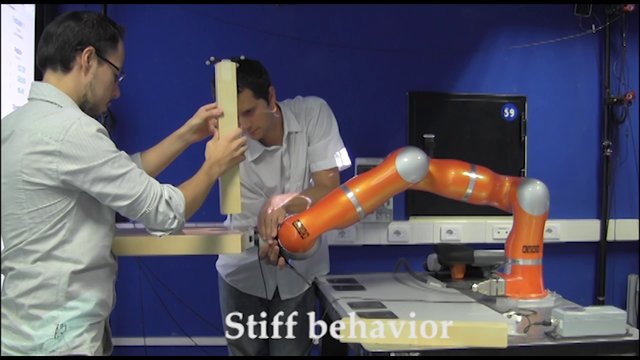
Thankfully, there’s someone out there attempting to fix this seemingly minor problem. Instead of enlisting the help of someone you actually care about, you could use this furniture assembly robot assistant. Designed by Leonel Rozo, Sylvain Calinon, and Darwin Caldwell of the Italian Institute of Technology’s Department of Advanced Robotics, the robot uses force sensor and a vision tracking system to help hold furniture pieces while human users attach various parts. The users can teach the robot how to collaborate with the builders, letting it automatically determine when to hold pieces stiffly as users are screwing in parts or when to relax and allow the user to move pieces around.

Recommended Videos

In the sample video, two users attempt to build an IKEA side table. With this “kinesthetic teaching” method, they are able to demonstrate to the robot that the table has four legs, and the robot will need to hold still while each leg is being attached, or flex when the user is trying to flip the board over. “This behavior is not pre-programmed, but is instead learn by the robot by extracting the regularities of the task from multiple demonstrations,” the team writes. In the case of a small side table, the robot helps a little – but we can see major uses when building larger furniture like bedframes and entertainment centers that require additional man power.

Still, the project seems rather infant, and the robot would definitely be more useful if it had slots to hold various nuts and bolts. But if we’re looking at a future where robots can help us assembly IKEA pieces without blood, sweat, and tears at the end of the day, we’ll take that bet. Oh, can it also bring us some saucy Swedish meatballs?

Natt Garun
An avid gadgets and Internet culture enthusiast, Natt Garun spends her days bringing you the funniest, coolest, and strangest…
The Apple Car may be dead, but it became the foundation of Apple Intelligence
A decade of work on a canceled car project reportedly laid the groundwork for Apple Intelligence.
Apple Intelligence in Apple Car

The Apple Car may have never left the garage, but it apparently gave birth to Apple's AI ambitions. According to Bloomberg's Mark Gurman, Apple's canceled autonomous vehicle project, one that consumed more than a decade of work and over $10 billion before being scrapped in 2024, ended up laying the technological foundation for Apple Intelligence. In a rather ironic twist, one of Apple's most expensive failures may also become one of its most important long-term investments.

The Apple Car forced Apple to think like an AI company

Read more
Researchers hid a prompt injection inside a PNG, and AI fell for it
Hacker

AI coding assistants like Claude are becoming every developer's favorite coworker. They can review code, explain confusing functions, and even write entire features with a single prompt. But new research suggests that this growing trust could also become their biggest weakness.

A team of security researchers (professor Sudipta Chattopadhyay and researcher Murali Ediga) has demonstrated an unusual attack that doesn't target the AI model directly. Instead, it targets what the AI doesn't pay enough attention to during code reviews. Rather than hiding malicious instructions in lines of code, the researchers tucked them inside an image file. Since many AI review tools treat images as decorative assets rather than as something worth inspecting, the pull request can appear perfectly harmless and sail through the review.

Read more
AI has already fallen into the wrong hands and they’re using it to make bombs
Logo, Text

Artificial intelligence has quickly become the go-to tool for everything from writing emails and summarizing meetings to helping students study or developers debug code. But the same technology that saves people time can also be misused, and a new report suggests that terrorist organizations are finding ways to do exactly that.

According to a research paper shared with The New York Times ahead of its publication, researchers found evidence that members of Boko Haram have been using popular AI chatbots to support both day-to-day activities and combat-related tasks. Interviews with 27 former members conducted in Nigeria over the past two years suggest that tools such as ChatGPT, Gemini, Claude, Grok, Meta AI, and DeepSeek were used to gather technical information, troubleshoot weapons, and even assist with planning attacks.

Read more