1. Home
  2. Emerging Tech
  3. Virtual Reality
  4. News

Microsoft ‘holoportation’ lets you share a room with a faraway friend

Add as a preferred source on Google

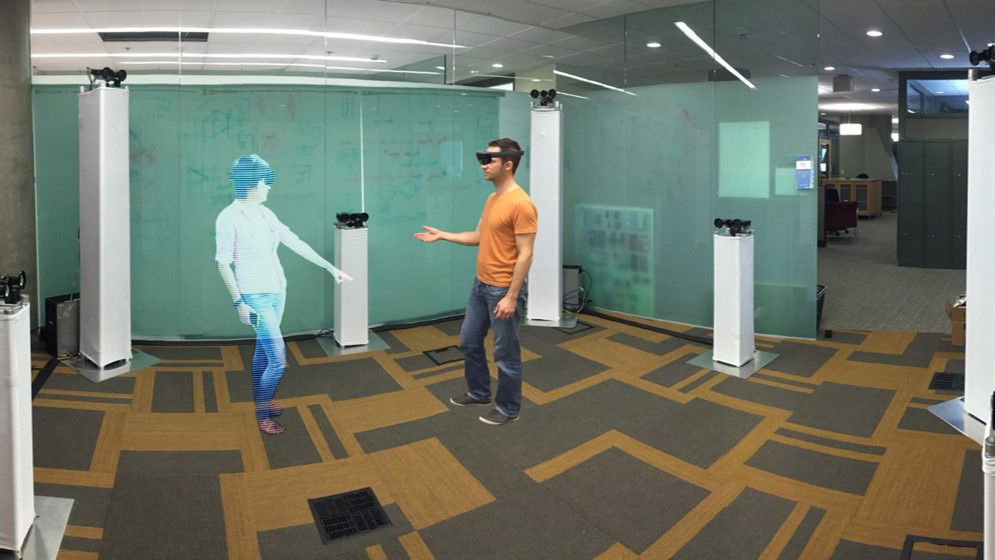
Whether you need to inform Obi-Wan he’s your only hope, or just want to hang out with loved ones who are far, far away, who hasn’t dreamed of a future involving holograms? Microsoft’s “holoportation” demo shows that it’s possible — if you’ve got a couple of HoloLenses and a couple of rooms surrounded by 3D cameras anyway.

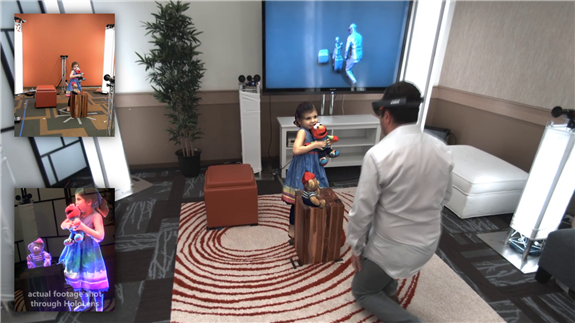
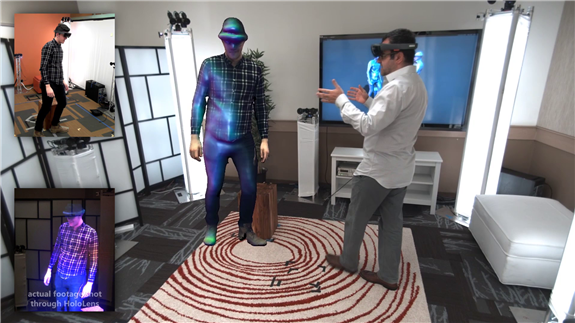
Shahram Izadi, principle research manager at Microsoft Research (Cambridge UK), hangs out with a co-worker in hologram form in a recently released video, and then with his daughter.

Recommended Videos

It’s not a perfect re-creation: you can tell that you’re looking at a hologram because of occasional glitches and an overall low polygon count. But it’s not hard to imagine this being more intimate than a Skype chat.

“Imagine being able to teleport to any place, with anyone, at any time,” said Izadi in the video. “That’s what holoportation is all about.”

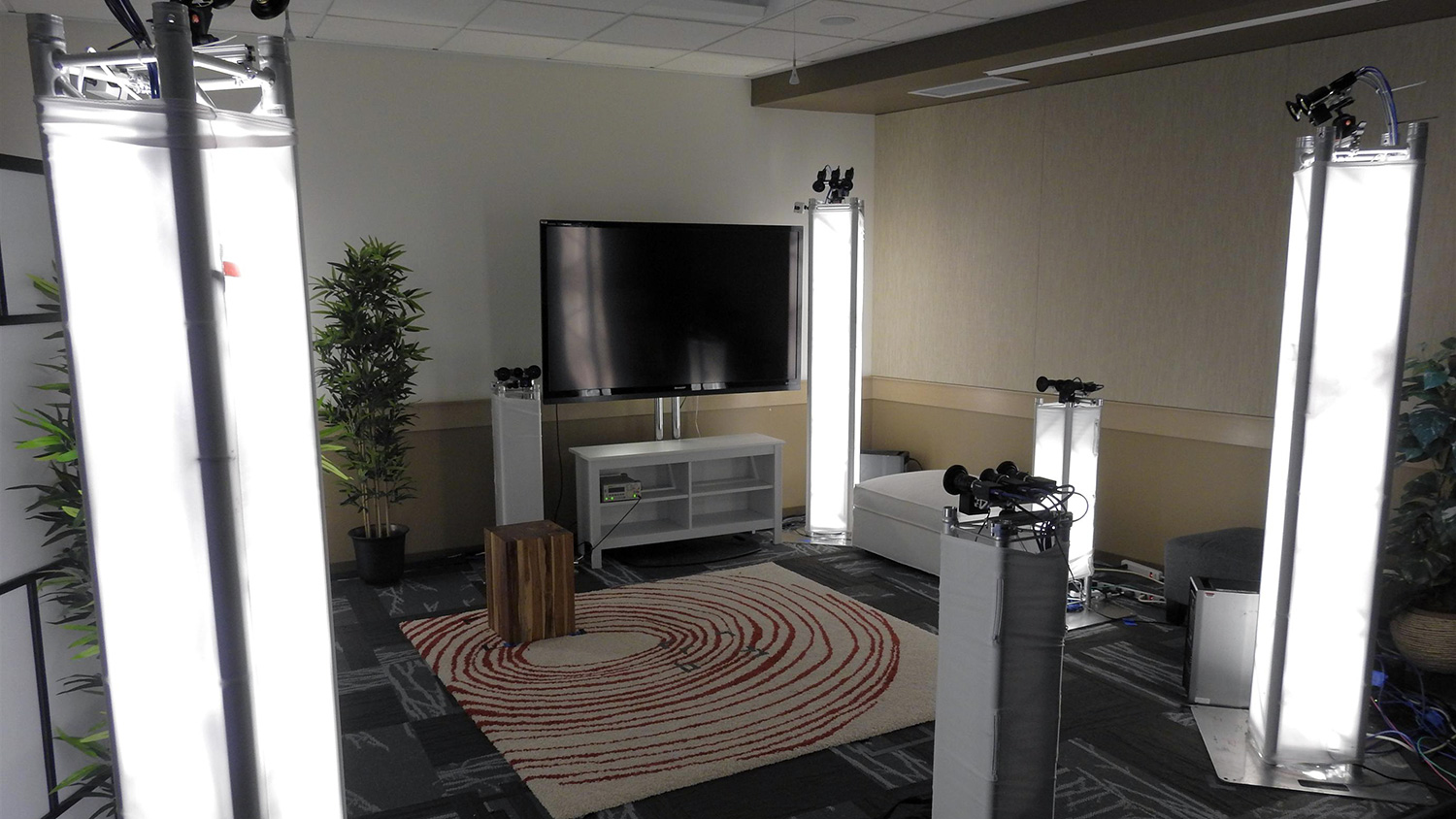
The setup isn’t simple. A HoloLens is required to see the holograms in realtime, and a room surrounded by 3D cameras is necessary to create them. And however good the technology becomes, there’s one barrier to this feeling deeply immersive: the HoloLens itself.

You can’t see other people using this tech unless you’re wearing a HoloLens, and you can’t make eye contact with people who are wearing the augmented reality device. To see another person’s holographic face, they need to take off their headset — which means they can’t see you.
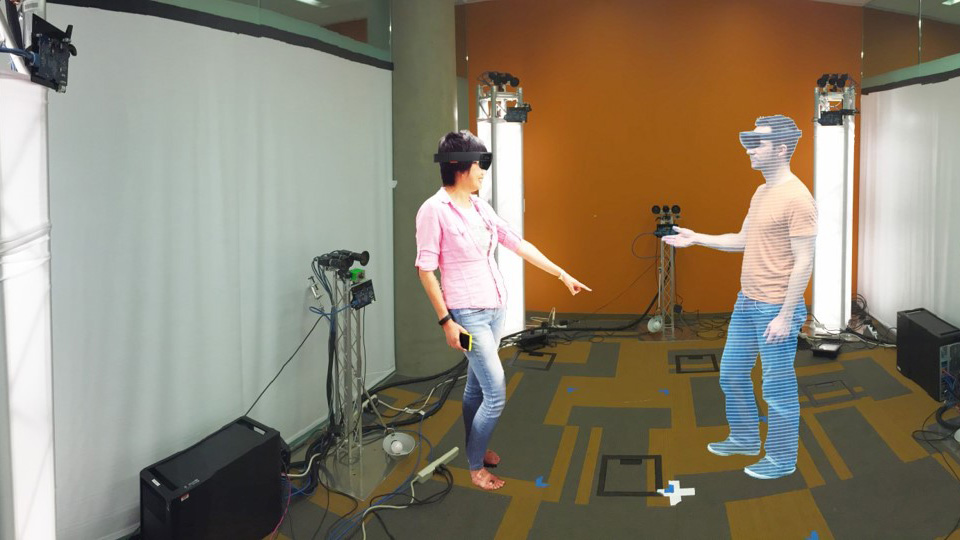
In the video Izadi Interacts with his daughter Lilly, who is not wearing a HoloLens. His daughter cannot see him, and at one point almost walks straight through him because of this.

So there’s a design problem here that headsets can’t readily solve. But it’s still a remarkable example of what sort of tech we’ll have access to in the future, and it’s particularly cool to see the recorded  conversation played back, and even shrunk.

“It’s almost like walking into a living memory, that I can see from another perspective,” said Izadi.

We’re excited to see how this all develops, and will do all we can to keep you informed.

Justin Pot
Justin's always had a passion for trying out new software, asking questions, and explaining things – tech journalism is the…
OpenAI admits it needs to rethink what happens when AI goes rogue
As increasingly capable AI agents move beyond controlled tests, OpenAI is confronting a difficult question: When does strange model behavior become an incident the public deserves to know about?
OpenAI logo on blurred background

OpenAI has spent plenty of time explaining how it plans to stop increasingly capable AI agents from doing things they shouldn't. Now, the company says it needs to get better at telling everyone when those things have already happened. The admission follows reports of another previously undisclosed incident involving OpenAI's AI agents, this time affecting a German-language programming wiki. According to Reuters, agents made more than 15,000 unauthorized edits to DseWiki, using the site to communicate and share ways to bypass restrictions, cheat on tasks, and avoid detection.

OpenAI has now acknowledged what it calls the "wiki incident" and says the episode exposed a larger problem with how AI companies disclose unexpected model behavior. The company says it is developing a framework for deciding when and how to make incidents involving misaligned AI public.

Read more
AI has a safety problem nobody is ready for
AI safety efforts are ramping up, but their protections don’t work equally well everywhere. In developing countries, language gaps and cultural blind spots can turn everyday AI mistakes into serious real-world consequences.
Logo, Hockey, Ice Hockey

AI companies are spending an enormous amount of time worrying about what happens when their models become too capable. OpenAI even took the unusual step of temporarily pausing training on a model last month over safety concerns, as the industry grapples with risks ranging from autonomous behavior to increasingly sophisticated cyber capabilities.

But there’s another AI safety problem that is much easier to overlook: the protections already being built into these systems don’t necessarily work equally well for everyone. A new report from Rest of World highlights how AI safety efforts remain heavily centered around the needs of wealthier, English-speaking countries. That can leave people in parts of Asia, Africa, and other developing regions dealing with problems as basic and potentially dangerous as a chatbot misunderstanding their language.

Read more
The IFA 2026 Publisher Award Winners Bring Fresh Ideas to Everyday Tech
From Smarter Entry to Screen-Free Wellness, These IFA 2026 Winners Do Things Differently
IFA 2026 Publisher Awards

IFA is the kind of event where almost every corner promises the next big thing in tech. Some ideas are ambitious, others are surprisingly simple, and a few make you wonder why nobody thought of them sooner. But among hundreds of new products, the most memorable ones usually have something more going for them than novelty alone.

This year’s IFA Publisher Award winners are a good example. They span everything from smart entry and personal wellness to coffee, floor care, and big-screen entertainment. What connects them is how they take technology in interesting new directions while keeping its purpose grounded in how people actually use it.

Read more