If you’ve spent the last few years holding out for a 3D printer that costs under a hundred bucks, then we’ve got good news for you: The printer you’re waiting for is finally here, and it goes by the name of OLO. The device, which first popped up at last year’s Maker Faire in New York, has finally found its way onto Kickstarter — where it obliterated its $80K funding goal in just a few hours.
For those of you who might’ve missed the product’s debut, here’s the lowdown: OLO is designed to take your smartphone and transform it into a fully functional 3D printer. No joke — you seriously just fire up the app, choose the object you want to print, pop your phone into the device’s base, and pull out a completed part a few minutes later. It’s like magic, and the whole thing costs less than a pair of Nikes.
Here’s how it works: The printer consists of three main parts — a reservoir, a special photopolymer resin that you pour into it, and a mechanized lid that contains the build plate and control electronics. At the bottom of the reservoir, there’s a piece of polarized glass which you place your phone underneath, facing upward.
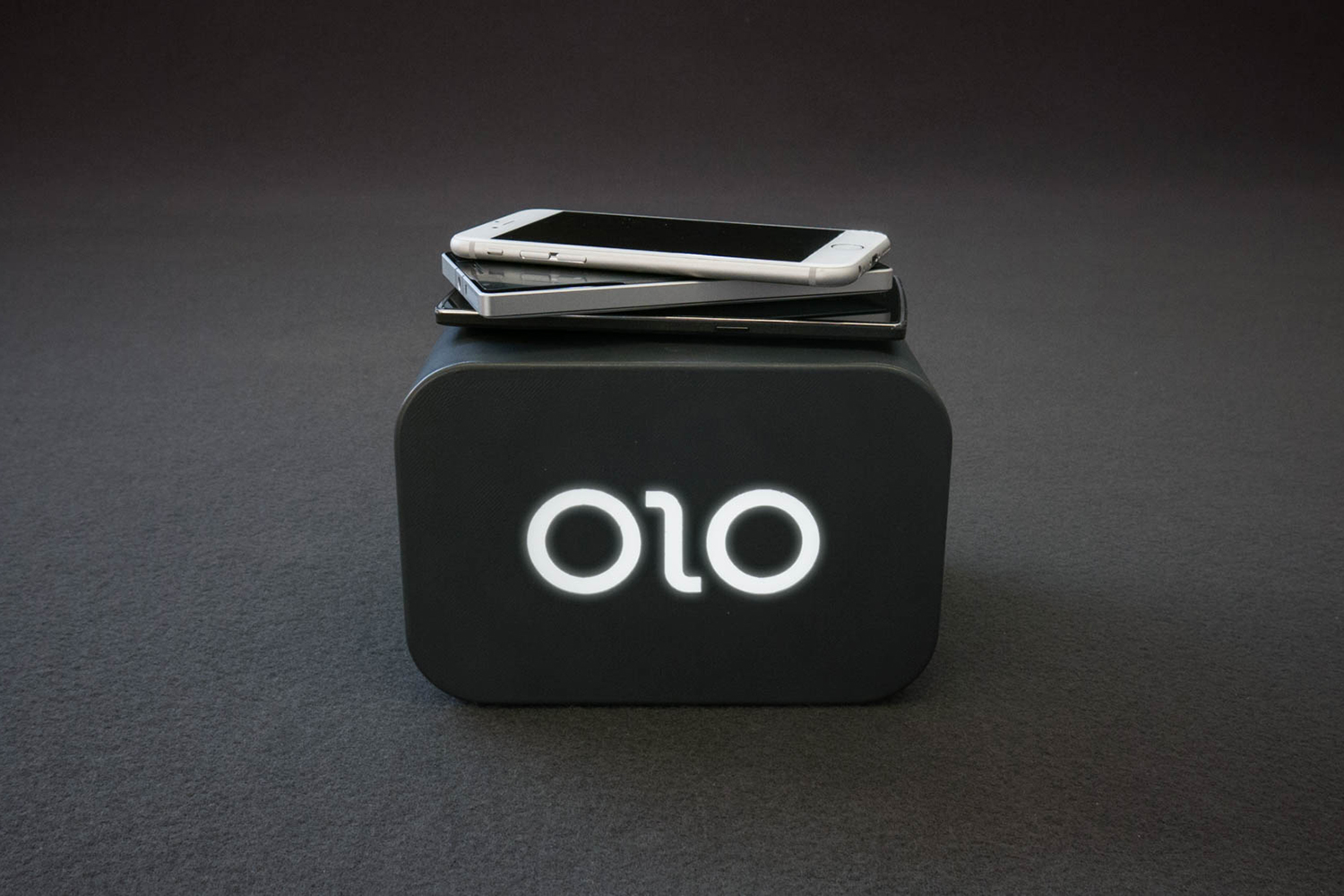
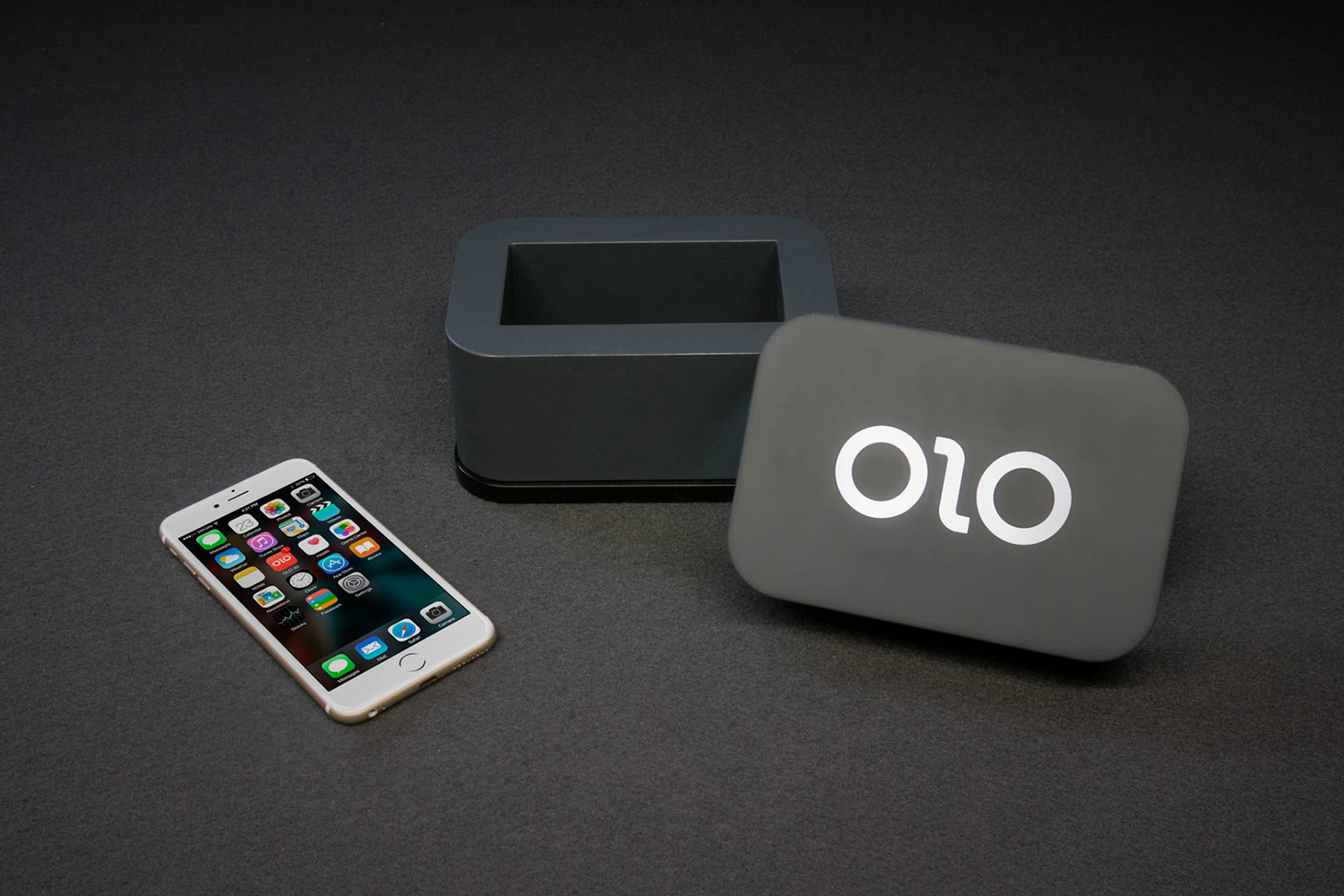
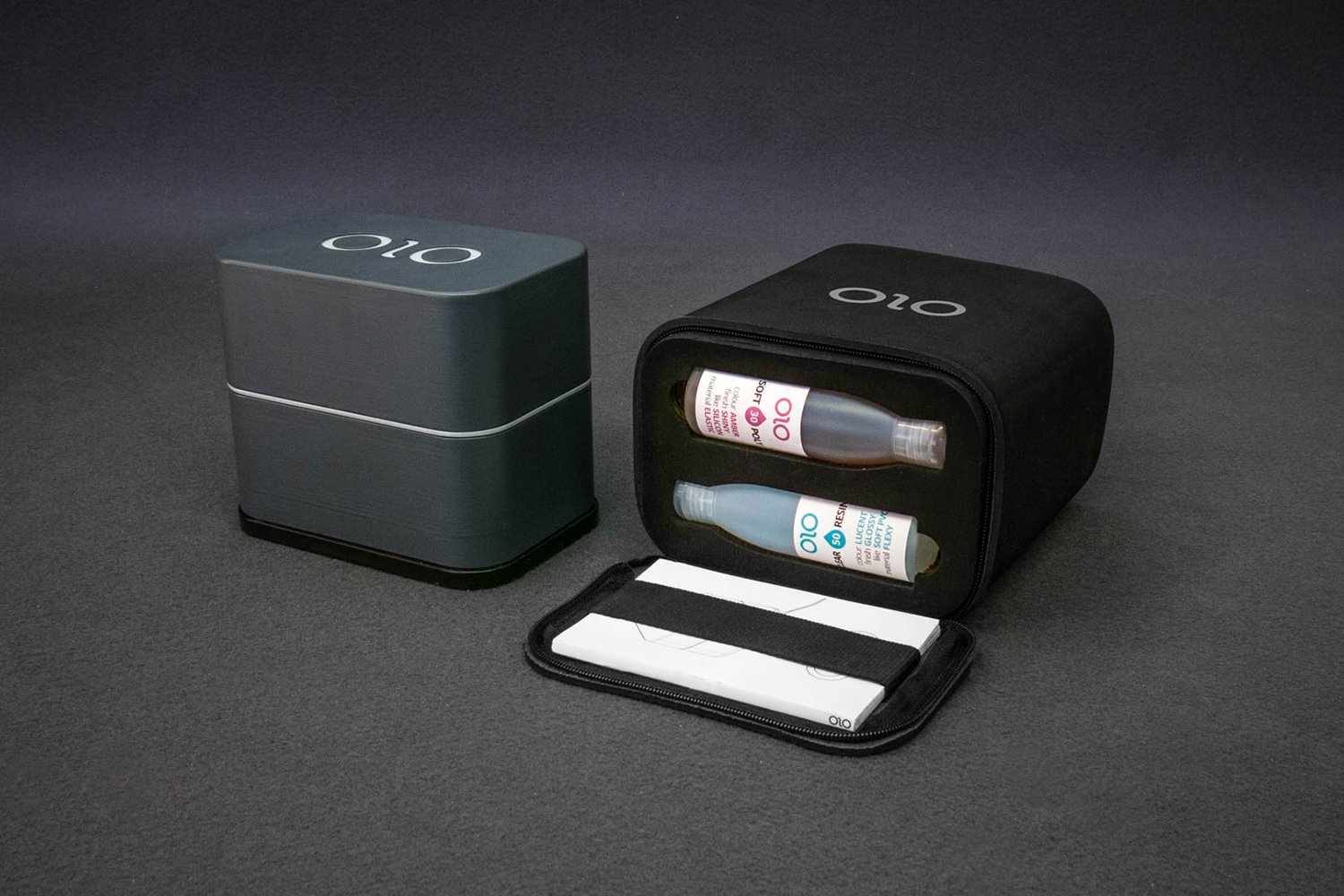

Basically, once you place the lid on top and the printer starts going, the app makes your phone’s screen light up with a specific pattern. The polarized glass then takes all this light (which shines outwardly to give your phone a wider viewing angle) and redirects it so that all the photons are traveling straight upward. So as your phone’s screen beams light up into the reservoir, the directed light causes a layer of resin to harden onto the build plate, which slowly moves upward as each new layer is created. It’s basically a tiny DLP printer that uses your phone’s screen instead of a projector — which is absolutely brilliant, because doing so replaces the single most expensive part of a stereolithography printer with something cheap and very common.
Pretty clever right? I mean, OLO probably isn’t going to steal too much thunder from more serious 3D printers like Ultimaker and Makerbot, but it could be a boon for democratizing 3D printing technology — especially since the whole thing retails for just $99. That brings down the barrier to entry considerably, although you’ll still need a smartphone for it to work. Also, depending on the size/complexity of the object you’re printing, you’ll likely have to surrender your
Unfortunately, by the time you read this, most of the “early bird” backer rewards will have already been snatched up — but even if you’re late to the party, you can still get your hands on an OLO for a $99 pledge. If all goes according the plan, the creators expect to finish up production and begin shipping to backers as early as September.
Editors' Recommendations
- Nvidia turns simple text prompts into game-ready 3D models
- AMD is bringing 3D V-Cache back to Ryzen 7000 — but there’s a twist
- New A.I. system could upgrade smartphone cameras
- AMD Ryzen 7 5800X3D details leak, and there’s some bad news
- AMD’s revolutionary 3D V-Cache chip could launch very soon