1. Home
  2. Emerging Tech
  3. News

This luxurious wooden 3D printer can print with four different materials at once

Add as a preferred source on Google

French additive manufacturing startup Pollen has unveiled its gorgeous new Pam 3D printer, which takes the unusual approach of printing using pellets instead of traditional filament spools as raw materials.

“We’ve been in R&D stealth mode for five years,” CEO Cédric Michel tells Digital Trends. “It was difficult to spend so long not talking about it to anyone. It’s a great moment for us to finally be able to go public.”

Recommended Videos

The wood-framed Pam printer operates speedily, at up to 400 mm/s, and is able to print using a wide variety of materials — including thermoplastics, silicones, composites, natural fibers, metal particles, and more. Perhaps most enticing of all is the fact that it promises to print up to four different materials at the same time, with the ability to pull off feats like printing sunglasses with lenses made of a different material — all in one single process.

Pam isn’t the only 3D printer to use pellets. For instance, the enormous SeeMeCNC PartDaddy delta printer uses a pellet hopper instead of spools of filament. However, the use of pellets definitely puts Cédric Michel’s new machine in a minority when it comes to smaller-size 3D printers.

“Using pellets brings a number of challenges,” 3D printing expert Richard Horne, who has been experimenting and developing open-source 3D printing technology as part of the global RepRap project, tells Digital Trends. “One of the difficult aspects I found when experimenting using pellets is that it’s tricky to stop the flow of plastic — or retract back a little, so it can be hard to control oozing.”

However, he also points out that buying pellets can be considerably lower cost than filament-based plastic, and that many more materials are available in pellet form. “This could really be a breakthrough product for desktop 3D printing,” he says.

But will purchasers of the Pam 3D printer be trapped in an ecosystem having to buy all their future pellets from Pollen? While Cédric Michel recommends that customers do this — due to the high quality of the company’s materials, and the fact that all the material parameters are already programmed into the Pam 3D printer — he says that the system is also open in a way that allows customers to use their own materials if they so wish.

Pam carries a somewhat hefty pre-order price tag of €8,000 ($8,900), although Michel says that this actually makes it low-cost compared to similarly positioned 3D printers. If you’re interested in picking one up, it’s possibly worth doing now — since the price is set to double by 2017 when Pam is officially available to buy.

We’re definitely fascinated to see where this goes!

Luke Dormehl
I'm a UK-based tech writer covering Cool Tech at Digital Trends. I've also written for Fast Company, Wired, the Guardian…
Yet another study says AI is bad for elections, and the rabbit hole gets worse
AI may be an election bomb waiting for someone to light the fuse
Voters cast their ballots on Election Day

Another election, another study has concluded that asking an AI chatbot for political guidance is a spectacularly bad idea. Research conducted during Hungary’s 2026 parliamentary election found that ChatGPT and Google Gemini offered not just inaccurate but also inconsistent and unreliable voting advice. The chatbots misclassified voter profiles, overlooked relevant parties, recommended parties absent from the ballot, and sometimes produced materially different answers when given the same information repeatedly.

AI keeps failing the voter test

Read more
Samsung’s humanoid robot ambitions are real, but factories come first
Samsung’s new robotics division has humanoids in its sights, although its immediate business is far more practical factory automation
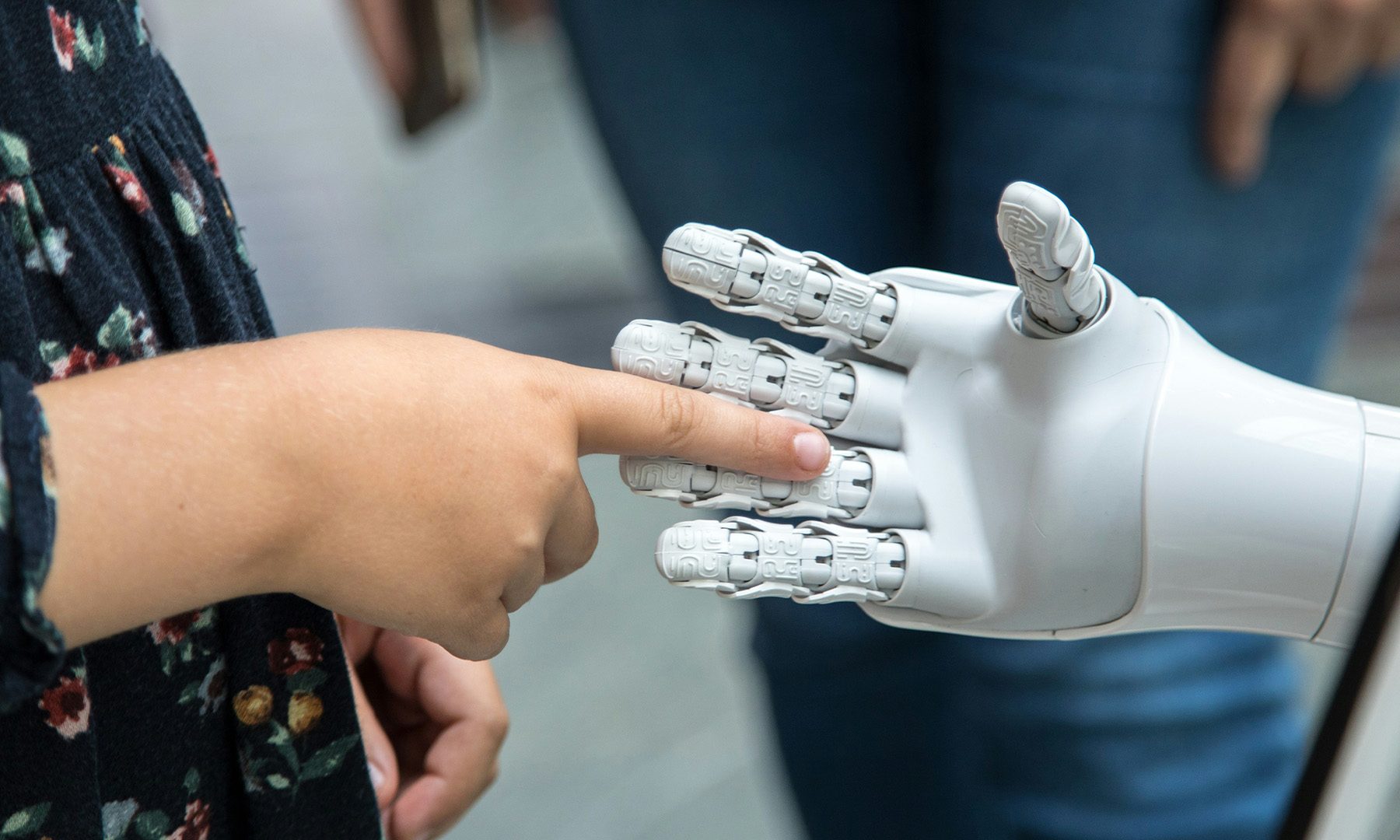
Robot Touch Human Finger

Samsung wants a place in the humanoid race, but its new robotics push begins with machines built for factories rather than homes.

The CEO-led RX robotics division will initially focus on manufacturing robots. Samsung has separately identified humanoids as a priority, although it hasn’t announced a commercial model or explained where one fits into the division’s immediate plans.

Read more
The future of AI may depend on this one behind-the-scenes change
Running Claude on Android.

Whenever a new AI model arrives, it's easy to get caught up in the bells and whistles. We talk about how much smarter it is, how quickly it answers questions, or how realistic its images have become. But here's the thing: none of that matters much if the AI can't reliably work with the apps and services people use every day.

That's why an upcoming update to the Model Context Protocol (MCP) caught my attention. It isn't a new chatbot or a fancy AI model. In fact, most people will never even know it's happening. But it could quietly make the AI ecosystem a lot healthier. If you've never heard of MCP before, don't worry. Think of it as a shared language that lets AI assistants safely talk to apps like Gmail, Slack, calendars, databases, and countless other services. Instead of every company inventing its own way to make those connections, MCP gives everyone a common rulebook.

Read more