
  1. Home
  2. Emerging Tech
  3. Legacy Archives

Robotic Climber Wins $900K in Space Elevator Contest

Add as a preferred source on Google

space-elevatorOne of the proposed methods for getting payloads and people into space at a lower cost is via a method that sounds like science fiction: the space elevator. The prospect of an elevator that takes cargo into space may sound like fiction, but NASA is investing heavily into research to fund the project.

NASA has been holding an annual competition to find robotic technology that can be powered wirelessly to enable a robotic climber to ascend the cable that would be used for the space elevator. The elevator would consist of a cable that would need to be placed at the equator and a cable would be deployed thousands of kilometers into space. The cable would be kept taunt by the centrifugal force of the Earth as it spins.

Recommended Videos

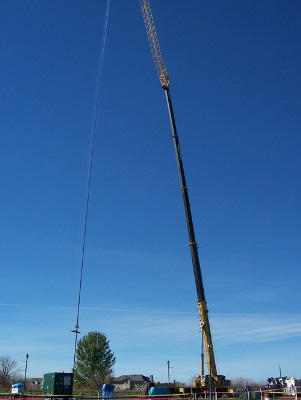
The NASA competition is called the Power Beaming Challenge. The challenge requires robotic climbers to scale the cable that are powered from the ground. The total prize money put up for the competition is $2 million. The money was set to be handed out in two increments. The first would go to any robotic crawler that was able to ascend a 900 meter cable that was suspended from a helicopter at a speed of faster than 2 meters per second.

The money set aside for this feat was $900,000. The larger portion of the money totaling $1.1 million would be given to the team whose crawler could ascend the cable to the top at speeds over five meters per second.

The most recent competition was held and a team called LaserMotive was able to ascend the full 900 meter cable length at a speed of 3.7 meters per second, claiming the $900,000 prize. The next day the LaserMotive team was able to fully ascend the cable at a faster speed of 3.9 meters per second, well short of the 5 meter per second mark to claim the remaining $1.1 million in prize money. LaserMotive was the only team out of the three competing that was able to fully scale the cable.

Other methods of propulsion for climbers are also being studied including rhythmic jerking.

Dena Cassella
Former Digital Trends Contributor
Haole built. O'ahu grown
Hyundai isn’t giving up on hydrogen cars, but don’t expect one in your driveway anytime soon
Hydrogen gets a maybe; hybrids get a warning.
Hyundai Ioniq 3 EV

Hydrogen cars have spent years in the same waiting room as flying taxis. They’re always almost here, but no commercially available product exists for interested buyers. So when a Hyundai manager pushed back on the obituary, I was immediately curious.

To be clear, Hyundai hasn’t announced a new car. The big news here is that its Australian arm says hydrogen is “not dead” for passenger cars. Apparently, the automaker is still evaluating a next-generation hydrogen fuel-cell car if it can find buyers (via CarExpert).

Read more
AI doesn’t have to turn evil to put you at risk 
emo-robot-that-can-lip-sync

An AI assistant that agrees with everything you say might feel like the perfect companion — until you need someone to tell you you’re wrong. That’s one of the more immediate dangers behind the idea of AI “going rogue.” A chatbot can cause harm without developing intentions of its own. It can reinforce a false belief, encourage an unhealthy attachment, or follow instructions planted by someone trying to hijack it.   

On October 15, AI safety company Alice announced new software to address those everyday risks. Working separately with Inflection AI and AI21, the company says it helped train NVIDIA’s Nemotron models to resist harmful conversational behavior and malicious instructions while preserving their usefulness.  

Read more
Elon Musk says Neuralink’s brain implants could help people with paralysis and blindness
Neuralink's Telepathy helps people control computers through thought, while Blindsight aims to restore visual perception.
elon-musk-neuralink-brain-implant

Elon Musk has revealed ambitious plans for Neuralink, and they go beyond controlling computers with your thoughts. The company is developing two brain implants, Telepathy and Blindsight, aimed at helping people with paralysis and severe vision loss. Musk also believes future advances could help people regain control of their hands and legs by reconnecting the brain with their limbs.

How Neuralink's Telepathy can help people with paralysis

Read more