
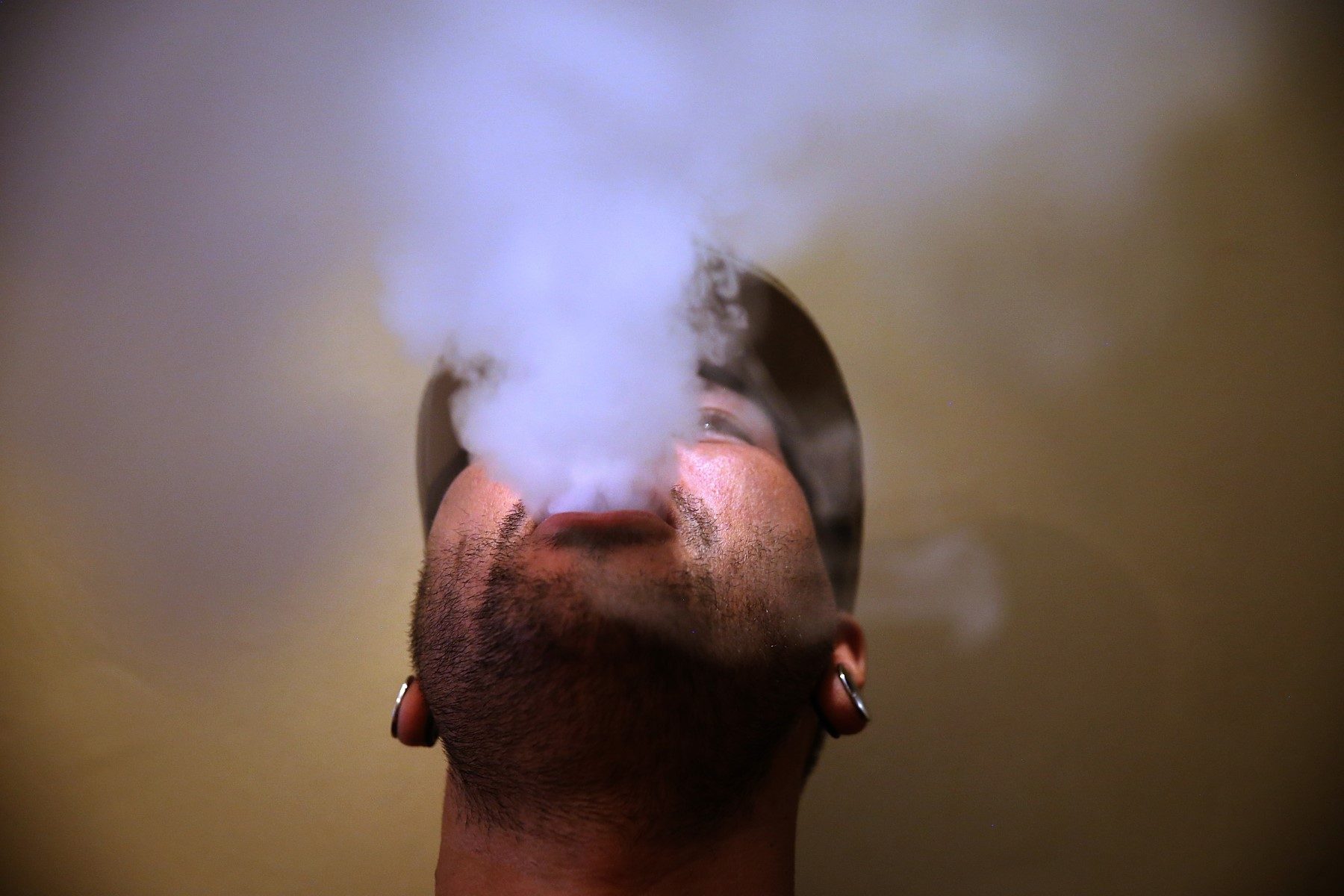
At least 34 people have died from a vaping-related lung illness that has plagued the country in recent months, and health officials finally have a culprit: Black-market THC vapes.
The issue is widespread: According to the Centers for Disease Control and Prevention (CDC), there have been at least 1,604 reported cases of lung injuries, largely caused by vaping underground THC products.
But with marijuana legal for recreational use in 11 states and 33 states having comprehensive medical cannabis laws, experts say people are still buying THC vaping pods on the black market because they’re more affordable and easier to find.
“[The illicit market] is across-the-board cheaper,” Morgan Fox, media relations director at the National Cannabis Industry Association, a nonprofit advancing the interests of the responsible cannabis industry, told Digital Trends. “We’re doing as much as we possibly can as federal and state laws will allow, but unfortunately there are still a lot of policies that prevent legal regulated businesses from displacing illicit markets and allow them to thrive.”
Another reason for the thriving undergroundmarket is availability. Tom Adams, the managing director at BDS Analytics, Industry Intelligence Group, analyzes cannabis industry market trends and said that even in states where cannabis use is legal, black market products are still thriving
“In some counties, even in Colorado, they do not have stores, so the only option is to go with the black market,” he said in an interview with Digital Trends. “On the other hand, in Alabama, [the black market] is 100% of the sales, so all the vaping going on in Alabama is through black-market vape.”
According to research from BDS Analytics about vape health issues, 68% of users prefer vapes because of ease of use. Others use vapes because of convenience (42%), discreetness (36%), taste and flavor options (22%), and other reasons including controlled dosages (19%) and even the belief that they are safer than other inhalables (11%).
The problem isn’t strictly on the black market; many legal vapes aren’t federally regulated. Juul Labs, which has been at the forefront of the vaping controversy, is not regulated by the Food and Drug Administration (FDA). Although the products are strictly nicotine-based and don’t contain THC, a recent lawsuit alleges that some pods were still found to be contaminated. The lawsuit, filed on Tuesday, alleges that 1 million contaminated Juul pods were sold to customers without the company initating a recall.
Fox said that the vapes found in dispensaries are regulated and tested products that have not been linked to the deaths and illnesses reported by the CDC.
“When you have an entirely unregulated marketplace existing, then there are no controls whatsoever in what goes into these products, and you’re just not seeing any of these cases [of illness or deaths] in the legal or regulated market,” Fox said.
Many regulators are moving to ban vapes entirely to curb the fear of vaping-related illnesses and deaths. States like Massachusetts, Michigan, California, and New York have banned vaping in some way, and even President Donald Trump has called to ban flavored e-cigarettes nationwide and issue new regulatory guidance on vapes. But Adams argues that the solution is simpler than bans.
“The answer to this crisis is obvious … legalization,” he said.
More and more states are making legalization happen. But even in places where counties opt out or in states where legal marijuana is still expensive as it starts, black market vaping products are still going to be an issue and will pose a threat to users’ health.
“People would prefer to have legal and quality-controlled reliable products, but there is a number where the price point is the priority,” Fox said. “We need to end federal prohibition, remove cannabis from controlled substances, and start to regulate through the FDA.”


