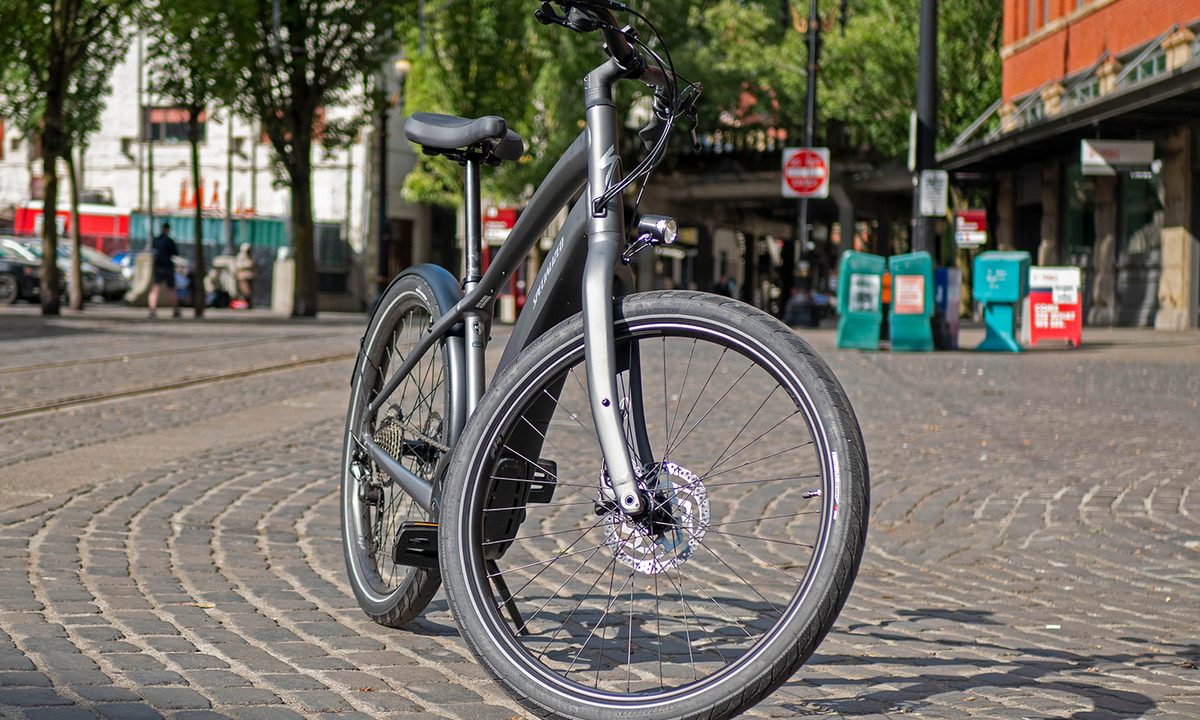

“The Specialized Turbo Como 4.0 is a wonderful electric commuter bike that's also surprisingly agile.”
- Powerful and responsive mid-drive motor
- Attractive design
- Agile feel
- Good battery life
- Ride can be jittery at high speeds
- So-so app and LCD screen

“Why you can trust Digital Trends – We have a 20-year history of testing, reviewing, and rating products, services and apps to help you make a sound buying decision. Find out more about how we test and score products.“
Every e-bike from Specialized has “turbo” preceding its name. It seems like a gimmick, especially when applied to bikes like the Turbo Como 4.0. The company’s marketing promises you’ll get where you going in stylish comfort, whether you’re grabbing groceries or going to work. Doesn’t sound “turbo,” does it?
I didn’t think so. Then I rode the bike.
The star of this show is the 250-watt mid-drive motor, meaning it’s situated between the pedals. The power doesn’t sound like much on paper, but it’s connected to the rear wheel by a sturdy 10-speed drivetrain that makes maximum use of available wattage and, more importantly, delivers on demand. Less expensive electric bikes often suffer significant delay, but the Turbo Como 4.0 springs to life in the blink of an eye.

Power delivery is smooth, too, inspiring confidence and offering a natural feel. Riding the Turbo Como 4.0 doesn’t feel much different from riding a normal bike. You just go faster.
How much faster depends on which of the three power settings you choose. I spent most of my time at Level 1, also known as Eco. At that setting, I could cruise at 16 to 20 miles per hour while still enjoying a workout. At level 3, though, I could easily hit 25 to 28 miles per hour on flat streets.
If anything, the Turbo Como 4.0 feels too fast. The bike’s wide tires offer a calm and comfortable ride below 20 miles per hour, but a bumpy road can overwhelm them as you pedal into the mid-20s. The jittery ride becomes uncomfortable after just a few minutes and will encourage you to slow your roll. An active suspension would help, but that’s not available on the Como.
Specialized’s integrated battery design keeps the center of gravity where it belongs. Under your butt.
Whatever speed you choose, and whatever road you tackle, the Turbo Como is more agile than you’d expect. Specialized’s integrated battery design keeps the center of gravity where it belongs – under your butt. The bike’s low weight helps, at it tips the scale at a modest 45 pounds. That’s 10 pounds less than a comparable bike from Pedego and more in line with the Swagtron EB12, a less expensive bike with a small battery and motor.
Excellent bike, so-so tech
Specialized has 45 years of experience designing bikes. The experience shows. The Turbo Como’s chubby look hints at its electric powertrain, but most people won’t know it’s an ebike until they take a second glance.
I think it’s one of the best designs in the business. Trek’s ebikes only hide the battery well in high-end configurations, while Giant’s style is eye-catching but also a bit gaudy. The Turbo Como and its cousin, the Turbo Vado, are the best lookers you’ll find under $5,000.
Attention has been paid to the details, as well. The brakes stop the bike quickly and actuate with a smooth, firm feel. The gears snap into places with confidence. The drivetrain is engineered to handle the extra torque of a mid-drive and lack the imprecise, sloppy sensation that can plague shifters on lesser ebikes.
The Turbo Como 4.0 has integrated lights and comes with fenders. A rack wasn’t included on our bike, but the more expensive Turbo Como 5.0 comes standard with a front rack. All Turbo Como models have rack mounts front and rear.
Specialized has less experience with consumer tech, and it shows. The Turbo Como 4.0 – which, remember, retails for $3,350 – has a small, disappointing black-and-white LCD. It’s readable and easy to use but lacks the sophistication or wow-factor I want to see. Color LCDs are not yet common but are available on high-end options from brands like Riese & Mueller and Gazelle. The lack of a sophisticated color LCD is not unusual in this class, but a disappointment I wish electric bikes would fix.

A lackluster screen can be forgiven if a decent app is included. Unfortunately, Specialized’s Mission Control app is nothing special. It offers diagnostics, ride tracking, and access to settings. It looks like something cooked up by programming students for a final project and could only connect to the bike I reviewed if stood inches away.
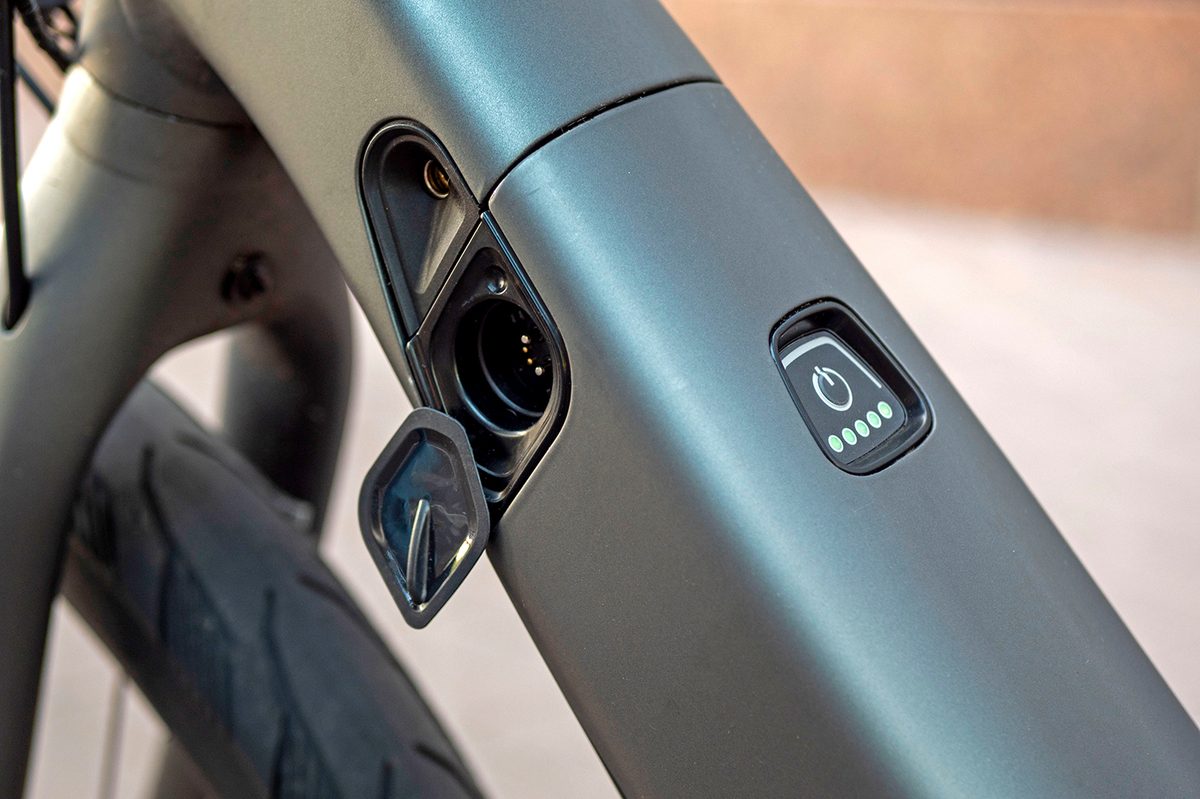
There is good news on the tech front, and it’s all about the battery. It offers a fat, visible power button on the downtube. You can’t miss it. You also can’t miss the charging port, which is right alongside the power button. An accessible charging point may sound basic, but too many ebikes put the power button and charging port in some far-flung position.
Specialized doesn’t make any precise claim about range, instead offering a calculator. That calculator claims I should expect 61 miles of range. In practice, the range seemed closer to 55 miles, which meant I had to charge once every four days. Most bikes in the Turbo Como 4.0’s price range promise similar range.
Our Take
The Specialized Turbo Como 4.0 is fast, beautiful, and agile. It’s quick enough to feel fun, but practical enough for everyday commuting. You might think the price is steep at $3,350 but, if you compare it other bikes with similar features, it’s a good value. This bike that can get you to work day after day, rain or shine, and still put a small on your face.
Is there a better alternative?
Trek’s Super Commuter+ 7 has similar specifications and features. Unlike the Turbo Como, it only comes in one trim, which sets you back $3,700. It’s nice bike, but the Como looks better and offers more for your money.
Giant’s alternative is the lewdly named Quick-e+ 1. Joking aside, it’s a good value at $3,150. That includes a rear rack and lights. It looks a bit cobbled together, however. You might choose the Giant if it’s on sale, but the Como is preferable if you’re paying MSRP.
It’s worth noting that while all the bikes above can be used by men or women, the Trek and Quick-e +1 seem less unisex in their sizing and marketing. Giant, in particular, siphons women towards its Liv brand. Specialized offers step-through Como models for people who want the look or convenience.
Want more options? Check out our favorite electric bikes.
How long will it last?
The Turbo Como 4.0 will likely need a replacement battery after five years of regular use. I’m hopeful that Specialized will continue to offer replacements, though there’s no way to know for sure. The bike itself can last ten years or more if you keep on top of maintenance.
Should you buy it?
Yes. The Specialized Turbo Como 4.0 is an excellent choice for commuters.