
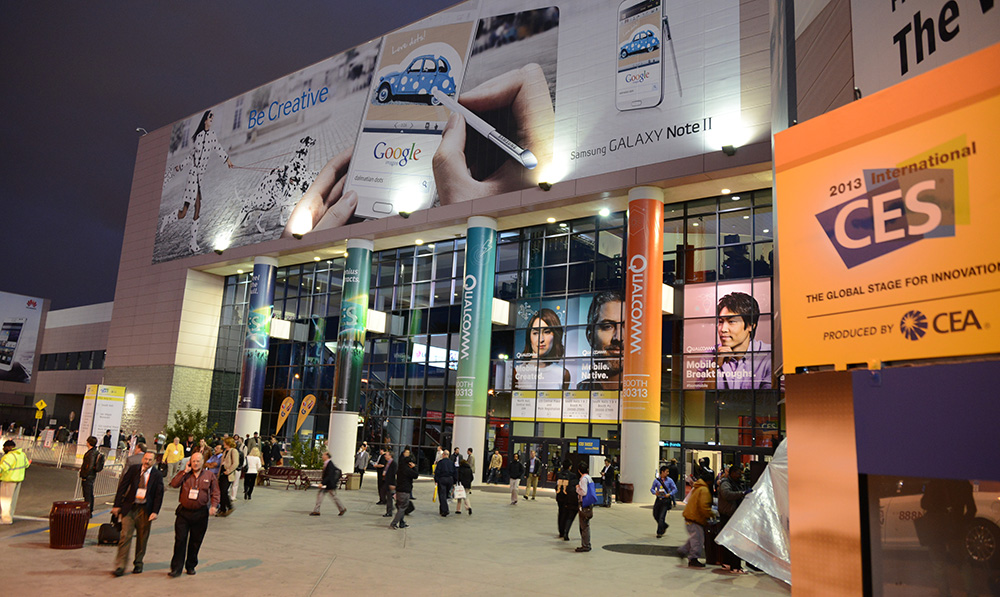
OK, whoever said there was never anything big announced at CES anymore (I think it was me) was sure wrong this year. It was kind of amazing how many products from Chinese vendors I lusted for that you just can’t get in the US, but that was far from the end of my wish list. We also saw an amazing game system from Nvidia that won’t be here for around five months, and 3D sound from Audi which I can’t get in the car I’d like to buy from them, and that’s just scratching the surface.
Let’s chat about the amazing tech that you can’t now, and in some cases, may never buy that was showcased at CES 2013.
In-car DVR
I’ve picked up a somewhat sick habit of late, as I’ve gotten hooked on videos of crazy Russian drivers. Just search on the topic. Apparently a ton of them have video cameras running all the time in their cars and, from what I understand, they use the videos to prove they weren’t the ones that caused an accident. And accidents there are plenty of. In Russia, crazy driving is apparently an understatement. Well, a Chinese company was showcasing an in-car DVR with a camera that sits next to your mirror and has a light treatment kind of like KITT (the name of the artificially intelligent Pontiac Trans Am) in the old show Knight Rider. It runs all the time and, if you have an accident, will lock down the image before and continue filming. But you can also just leave it running and automatically capture stuff you see while driving, and if you are like me, you see crazy stuff that would be fun to share at least weekly. I’m in California, where we are kind of crazy; if you are in New York I’ll bet you’d get something every day. The product is called the Black FXD700 from Thinkware, and I’ll be on the short list of buyers.
Audi 3D Sound
The most impressive car section of the show belonged to Audi (though the car I most wanted was actually the new Viper over at Chrysler). The booth was a white collapsing box so brightly lit, it looked from a distance like a rare door to outside the convention center. In front was a full F1 race car, followed by the new S-5 RS (I have an S-5 myself) and the new Q7. But the amazing part was the 3D sound demonstration that was far, far beyond anything I’d ever heard in a car. The problem was, when I went and asked if I could get this amazing car audio system in the car I wanted (that bright red with graphite trim S-5 RS) I was told no, it only comes in the Q7, a vehicle that I have no desire for whatsoever. So Audi had the best OEM sound system at the show, and a car I might have actually bought, but since I can’t get them together I’m unlikely to buy either.
Huawei 6.1-inch smartphone
I like big phones. Anyone that argues that bigger isn’t better is an iPhone user, and that’s because they don’t have a choice. I’m using my phone now more and more for email, browsing the Web, and even my near 5-inch screen is starting to feel small. I’m also at that age where I should be wearing glasses, but don’t’ want to. So in smartphones, bigger is better for me, and at 6.1 inches, no one was bigger at CES than Huawei. This was a huge Android phone, and I so wanted it. The problem is that while Huawei is huge in China, it’s unknown in the U.S., and apparently having issues getting carriers. So it’s unlikely I’ll get the big phone I want, until someone else that is already in the US market builds it.
Nvidia Project Shield
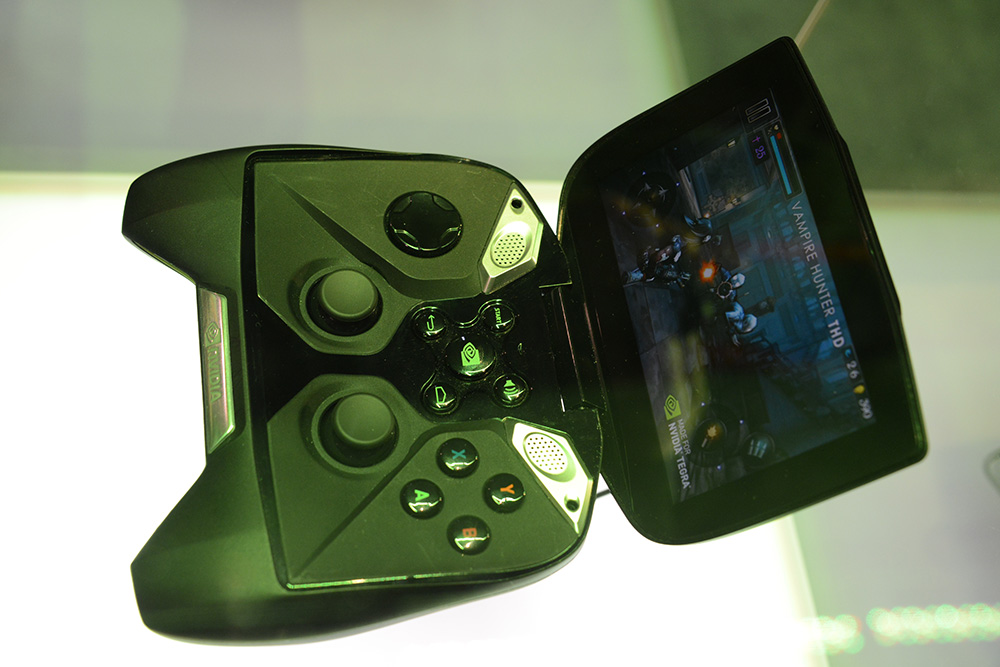
Now, of all the gadgets I saw at the show, the one that first got me drooling was the Nvidia Project Shield handheld game system. It has an impressive built-in screen, full-on game controller, and fully ported onboard sound system, plus it can output a 4K Ultra HD image to any Ultra HD TV. This is truly next-generation game platform. The woman sitting next to me was just mumbling “I want, I so want” over and over again during the Nvidia presentation. This makes conventional handheld gaming systems and the old “give away the razor, sell the blades” gaming model seem last century. Problem is, it won’t be out for another five months at least, and I want it now.
Surface Pro
Although Microsoft didn’t have an official presence at CES 2013, I also got a chance to play with its upcoming Surface Pro platform. Suddenly this product is looking a lot more interesting to me, and there are some unexpected surprises. Unfortunately, I can’t share any of that for a few weeks, yet nor will I have one to play with until next month. But at least I won’t have to wait long for that product.
In the end, CES was full of surprises, but most of the ones I really wanted I can’t buy now. Fortunately, I only have to wait a few weeks for some of them. Now if I can just figure out where my wife hid my wallet by then, I’ll be good.
Guest contributor Rob Enderle is the founder and principal analyst for the Enderle Group, and one of the most frequently quoted tech pundits in the world. Opinion pieces denote the opinions of the author, and do not necessarily represent the views of Digital Trends.


