The company announced the new Beovision 12 New Generation plasma television with Beosystem 4 processing. B&O describes it as an update to the Beovision 11, with a more powerful digital video and audio processor. Every unit is custom calibrated at the factory and then again in the home. Highlights include a 360-degree light sensor, and a color-correction system which uses a motorized camera that pops up and measures the color balance of the television every 100 hours of use to make sure balance is maintained as the plasma phosphors age. Talk about self maintenance!
The company then announced an update to its A9 speaker, which will now include Spotify Connect. Spotify Connect works by allowing users to “pass off” their Spotify stream to another device, which then continues the stream from the cloud, essentially freeing up the mobile device the stream originated on. The speaker is expected to launch in November at $2700, but existing A9 owners can expect a free software upgrade.
As for the product we can’t talk about, here’s what we can discuss: The product will be the first “WiSA certified” product introduced. If you’re not familiar with WiSA, it’s the 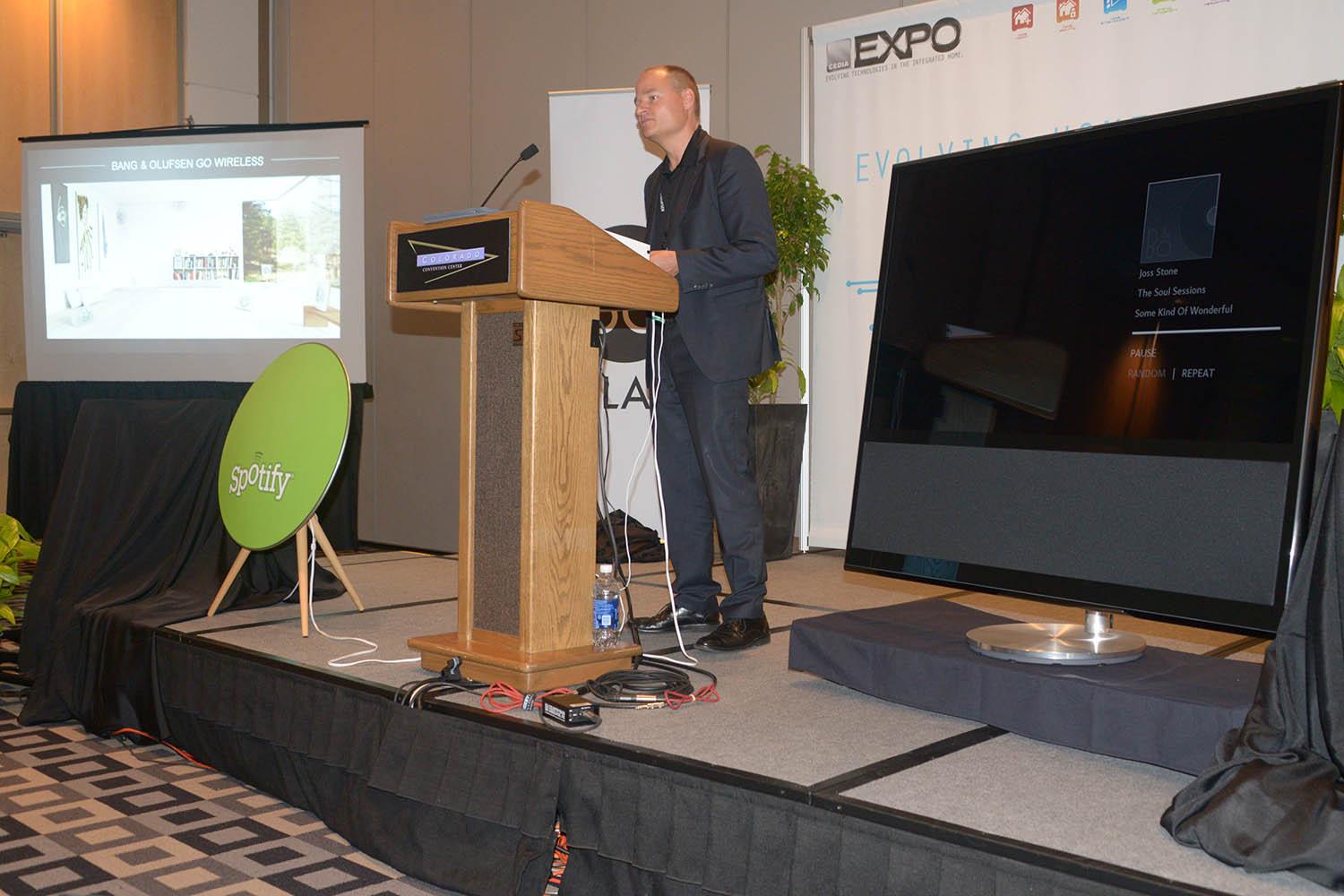 organization that has rallied together a bunch of consumer electronics manufacturers around a wireless audio transmission standard. The standard calls for wireless transmission of audio up to about 35 feet at 24 bit/96 kHz. That’s better than CD quality audio from a wireless system. If that sounds familiar, it’s probably because the company that makes the hardware that supports this endeavor, Portland, OR-base Summit Wireless – has previously partnered with an audio company to produce a wireless audio product. If you connect the dots, you can probably figure out what we’re not talking about.
We can say that what we witnessed was impressive, and we think that when B&O finally takes the wraps off this mystery product, it will likely gain attention for the wireless audio technology. The veil on this product is expected to lift on October 29th, and Digital Trends will have exclusive coverage at that time.