“Skullcandy's latest headphones match its signature bass with a customized sound experience.”
- Personalized sound
- Intense bass
- Compact design
- Mediocre noise cancellation
- Boring design
“Why you can trust Digital Trends – We have a 20-year history of testing, reviewing, and rating products, services and apps to help you make a sound buying decision. Find out more about how we test and score products.“
Skullcandy has always served a diverse population with its headphone lineup. From affordable wired earbuds that come in handy in a pinch, to more elaborate over-ear options, there’s a wide array of choices for multiple kinds of listeners. With its latest offering, though, Skullcandy is going a step further by introducing noise cancellation to its fabled Crusher series.
It’s an ambitious effort on Skullcandy’s part, seeing that the new Crusher ANC is competing in a premium category that’s typically dominated by Bose, Sony, and other big names that have perfected the craft of active noise cancellation. The $320 cost of the Skullcandy Crusher ANC is evidence of just how serious Skullcandy is, and there’s one particular feature those with hearing issues should appreciate.
Personalized sound tuned to your ears
What makes this pair of headphones ambitious compared to Skullcandy’s previous efforts is that you can get a personalized sound experience that’s tailored to your hearing. This feature isn’t necessarily new, having been employed by a handful of headphones already, but it’s still something that I appreciate because I’ve got some hearing damage.
It’s the high-end that my ears struggle to hear — while the bass and mids are easier for me to distinguish. Using the Skullcandy app to set up the headphones, there’s a portion of the process where it plays various tones in different ranges. This audio calibration process is a bit laborious, but it helps to produce a custom sound profile that’s tuned to your hearing in an effort to customize the music so you hear it the way the artist intended it.
For me, though, the end result was that it sounded as though the headphones simply boosted the treble. Other listeners may have different results.
Cinematic bass
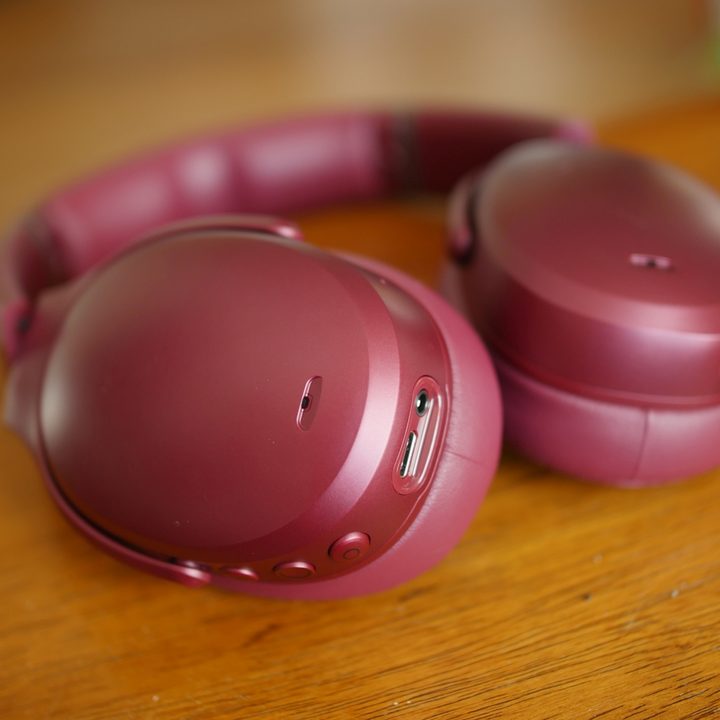
Skullcandy’s signature bass-thumping sound is alive and well in this pair thanks to the Sensory Bass feature. You don’t just hear the bass, you get to feel it! While most headphones employ two drivers, these leverage a total of four. This allows the Crusher ANC to deliver some heart-pounding bass. Luckily, you can dial down the intensity by adjusting the slider on the left side of the earcup.
The Sensory Bass feature works exceptionally well when it comes to watching movies or videos, ensuring that you get that theater-quality punch when there’s an intense scene playing out on screen. The roar of a revving engine is particularly intensified by the Crusher ANC. Now, as much as I appreciate this feature, along with the personalized sound tuning, I still would prefer to have additional equalizer settings to choose from through the app.

Mediocre noise cancellation
The Crusher’s active noise cancellation is undoubtedly a nice perk, but it’s mediocre at best. For most situations, it merely suppresses ambient sound. I tested them out during a subway ride, but I could still hear some nearby noises around me, and the noise cancellation is nowhere close to the same intensity as the Sony WF-1000XM3 true wireless earbuds I’ve been using.
As we’ve seen from a few top-tier noise cancelers, there’s also a feature that amplifies ambient sounds by touching the surface on the left earcup. It’s okay for conversing with nearby friends without the need to take off the headphones, but again, I’ve experienced better results with other headphones.

Tame looks, solid comfort
At $320, the Crusher ANC don’t have the same level of sophistication as some other headphones in this price category when it comes to styling. I will say that the deep red color option is an attractive shade, while the matte finish doesn’t show smudges or fingerprints. On the whole, the design lacks the aesthetic pop of some other headphones that offer more detail in their designs, such as V-MODA’s Crossfade Wireless 2 or the recent Sennheiser Momentum Wireless 3.
It also doesn’t help that the Crusher ANC are constructed entirely out of plastic. On the plus side, the headphones are quite comfortable thanks to the plush cushioning around the headband and earcups. Even better, the adjustable headband collapses to make it easier to throw into a bag without occupying too much space.

Conclusion
The Skullcandy Crusher ANC are competing in a tough space, as there are several headphones that excel in delivering outstanding noise cancellation and sound quality. The headphones’ $320 price point is still a big ask when top-tier models like Sony’s WH-1000xM3 over-ears (our favorites in the field) run $350 or less. Then again, for those who are all about the bass, they certainly won’t be disappointed by what the Crusher’s Sensory Bass feature is able to churn out.