Update: After months of back and forth, Amazon finally agreed to give a batch of Alexa data over to prosecutors investigating the murder of Bentonville, Arkansas resident Victor Collins. What’s particularly interesting, however, is the fact the massive corporation wasn’t forced to fork over the data by the investigators themselves but rather received permission from the man suspected of murdering Collins, James Andrew Bates. Despite initially refusing to open up the Alexa information on the grounds of protecting Bates’ privacy, Amazon heeded his request to turn it over to help prove he’s “innocent of all charges,” according to his attorney.
“I am pleased that we will have access to the data from the Defendant’s Echo device since the Defendant consented to its release,” said prosecuting attorney, Nathan Smith. “As with any case, our obligation is to investigate all of the available evidence, whether the evidence proves useful or not. Since this case is ongoing, I cannot comment on the specifics of the recording or whether it will be used in court.”
On February 23, Amazon filed a motion intending to “quash” the search warrant looking to extract data from Amazon Echo device linked to the murder investigation. The company states that the requests sent the Amazon Echo, as well as responses doled out by Amazon, have First Amendment protection, thus don’t require extraction by the police leading the investigation. Amazon did add it would turn over the data if police found a way to meet a “heightened burden for compelled production” of evidence.
Original article: As the devices around us continue to get smarter, there is an increasingly slippery slope regarding an outsider’s access to its owner’s private information. With no specific precedent established, each instance of a request for information expectedly stirs the proverbial pot. In December, the police department in Bentonville, Arkansas decided to dip into this ongoing debate by requesting access to an Amazon Echo device it believes harbors information pertaining to a 2015 murder. Though the police have already obtained some data from the device, it appears as though it’s searching for even more access to an otherwise privately contained batch of information.
Just over a year ago, a man by the name of James Andrew Bates drew a charge of first-degree murder after police found the deceased body of Victor Collins in Bates’ hot tub. While investigating the who, what, why, when, and how of the incident, the Bentonville Police Department noticed a slew of connected devices installed throughout Bates’ home — including a Honeywell alarm system and, the device in question, an Amazon Echo.
Requested by the police was access to any audio recordings, text records, purchase history, or transcribed documents pertaining to Bates and any of his relative Amazon information. Amazon has not fulfilled the police department’s solicitation for the Echo’s audio recordings, though it has already supplied Bates’ prior purchases and account information. The police department says it already pulled data from the Echo, though it’s not entirely known how much usable audio or text was not only extracted but capable of being utilized in court.
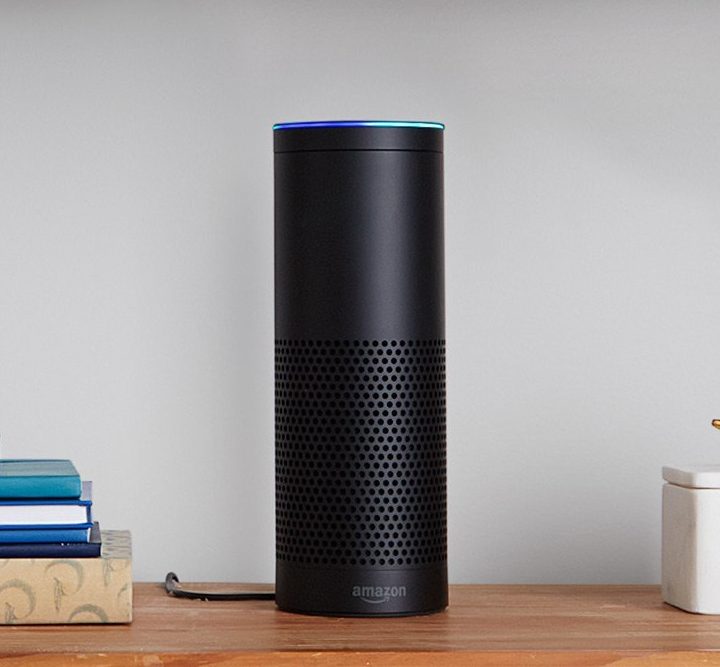
So what could the police department have feasibly pulled from the Echo device? It’s known that Amazon’s voice-activated devices remain consistently awake while waiting for a specific wake word but whether or not it’s always actively listening or recording creates a bit of a gray area. According to an in-depth Wired article about Google Home and Amazon Echo’s ability to record voice, it’s pointed out that although the devices each search for a wake word, anything said before its designated prompt isn’t stored or transmitted. If this is true, then it’s unlikely the Bentonville police department holds much in the way of usable data — unless Bates uttered the wake word around the time of Collins’ death.
Furthermore, given that the Amazon Echo has just 4GB of storage, most of which is occupied by device firmware, there’s very little information actually kept in the Echo itself. Sure, there’s another 250MB of RAM for storing more temporary data, but even that information goes away every time the Echo is restarted. Finally, because the Echo has no data ports and storage can only be accessed by taking the device apart or connecting it to a pinout on the circuit board, it would be difficult to imagine a situation in which the smart home hub would truly be a useful source of evidence.
That said, a smartphone associated with the Echo could be much more incriminating, as connected devices keep text records of almost every request users make. Of course, this gets us back into San Bernardino territory and the case of the locked iPhone, but should a user have an Android … well, then things get a bit easier for law enforcement. Even so, depending purely on text records might not be the most airtight evidence. After all, Alexa sometimes misunderstands you, and as such, sometimes mis-transcribes your requests as well.
In any case, it’s unknown the kind of damning information this Echo may possess, the police did acknowledge that Bates’ water meter displayed a dramatic spike in usage during the night in question. Granted, a hot tub remains a central part of Collins’ mysterious death but the water meter shows that roughly 140 gallons of water were used over a brief two-hour time period from 1 a.m. to 3 a.m. To the investigators, this assessment of the water meter — and to a larger extent, the request for the Echo data — is them merely doing their job. As far as Bates’ defense attorney is concerned, it’s a violation of privacy.
“You have an expectation of privacy in your home, and I have a big problem that law enforcement can use the technology that advances our quality of life against us,” said Kimberly Weber, Bates’ defense attorney, according to a report by The Information.
With the trial of James Andrew Bates scheduled for 2017, it’s expected the two sides — and eventually Amazon itself — will continue to debate the merit and virtue associated with openly sharing the data of a connected device such as Amazon’s Echo. However, it won’t be until this trial concludes for there to exist any semblance of a theory as to whether or not the actual data proves critical in the pursuit of justice — or if it serves as nothing more than an establishment of an unpredictable precedent.
Article first published in December 2016. Edited on 3/7/2017 by Rick Stella: Added news of Amazon giving investigators the Alexa data at the request of murder suspect, James Andrew Bates.