  1. Home
  2. Smart Home
  3. News

Hand washing dishes may help kids avoid developing allergies

Add as a preferred source on Google

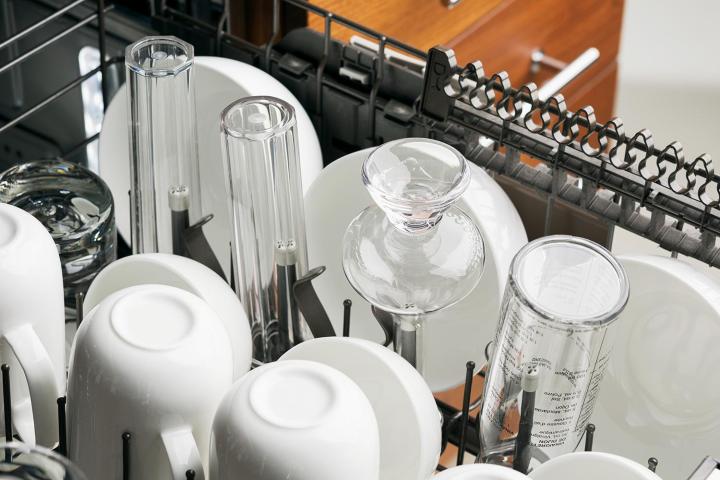
The first dishwashing machine patent went to Joel Houhgton in 1850. The wooden machine wasn’t very affective; its wheel had to be turned by hand to wet the dishes. Unaware of such a patent, socialite Josephine Cochran decided, “If nobody else is going to invent a dishwashing machine, I’ll do it myself,” according to the Chicago Tribune. After receiving her patent in 1886, she debuted her invention at the 1893 World’s Colombian Exposition. While her friends and hotels wanted versions, dishwashers didn’t become widespread until the 1950s, though Cochran’s company eventually became KitchenAid.

People have only been sterilizing their dishes for about half a century. Water above 145 degrees Fahrenheit kills many bacteria. Dishwashers typically run between 130 and 170 degrees Fahrenheit, but people can get third-degree burns from 133-degree water in 15 seconds, according to the Burn Foundation. It would seem dishwashers are a safer option, but new research in the journal Pediatrics from Sweden’s University of Gothenburg suggests it may not be an entirely ideal solution.

Recommended Videos

 Related: The best way to load a dishwasher, according to science

The university’s study followed 1,029 Swedish children, who were 7 and 8 years old, to see how hand washing and machine washing dishes affected them. Researchers found eczema was far less likely to develop in children whose parents did the dishes by hand, and allergic asthma and hay fever were somewhat less likely to occur in these children, too. The effect may be due to the hygiene hypothesis: the idea that those in developed countries aren’t exposed to enough bacteria and microorganisms, thanks to everything from sterilization to hand sanitizers to a lack of interaction with animals. In developing countries, such exposure helps immune systems learn what it should attack and what it should leave alone.

“The hypothesis was that these different dishwashing methods … are not equally good in reducing bacteria from eating utensils and so on,” Dr. Bill Hesselmar, who led the study, tells NPR. “So we thought that perhaps hand dishwashing was less effective, so that you are exposed to more bacteria.”

Of course, he admits that this could be correlation and not causation and other factors, such as the type of food eaten (fermented) and purchasing some items from a farm rather than a grocery store, also appeared to make the children in hand-washing families more immune.

While he says the study does lend support to the hygiene hypothesis, allergist Dr. Todd Mahr tells NPR that it’s too early to recommend dismantling the dishwasher. “I’m not convinced it’s going to make that big a difference,” he says of favoring hand washing.

Jenny McGrath
Former Senior Writer, Home
Jenny McGrath is a senior writer at Digital Trends covering the intersection of tech and the arts and the environment. Before…
Beatbot AquaSense X review: The pool cleaner for those that want to be pampered
It's a nothing short of a self-cleaning nirvana for your pool. But as they say, nothing fine comes without a fittingly handsome fee.
Beatbot Aquasense X robot, AstroRinse station and iSkim

view at amazon

Quick take: 

Read more
An unpatched Shark vacuum flaw could put your smart home at risk
The vulnerability affects SharkNinja robot vacuums and stems from a misconfigured cloud security policy rather than a firmware bug.
Shark RV2320S Matrix Self-Emptying Robot Vacuum Featured

Robot vacuums are supposed to clean the house. Turns out this one was mapping it for strangers. Security researchers have disclosed a critical vulnerability affecting SharkNinja's cloud-connected robot vacuums that could allow attackers to remotely access sensitive information, including live camera feeds, home maps, Wi-Fi passwords, and even execute commands on affected devices. More concerningly, the issue reportedly remains unpatched despite being responsibly disclosed to SharkNinja months ago.

How can a vacuum become a spy?

Read more
Google Home Speaker (2026) review: Smarter and punchier, with a subscription pinch
Google's latest smart speaker pairs Gemini with better sound and deeper smart home integration. What's not to love without spending over a $100?
Sphere, Body Part, Finger

View at Amazon

Quick Recap

Read more