
  1. Home
  2. Wearables
  3. Android
  4. Mobile
  5. News

Digital Trends may earn a commission when you buy through links on our site. Why trust us?

Huami’s Amazfit PACE fitness tracker will launch in the U.S. at $129

Xiaomi's AmazFit smartwatch set to go on sale in the U.S. later this month

Add as a preferred source on Google
Purple, Art, Graphics
This story is part of our coverage of IFA Berlin 2025

It’s true that wearables are a dime a dozen, these days. That’s no surprise — companies of all sizes are eager to cash in on a market some analysts predict could be worth an estimated $25 billion by 2019. Apple’s staked it claim with the Apple Watch. Samsung’s has done the same with the Gear S2. And now, there’s new competition in town: the Amazfit PACE.

The Amazfit PACE, which is manufactured by Huami, Xiaomi’s ecosystem partner responsible for the Mi Band, leans decidedly toward the affordable end of the smartwatch spectrum. That’s may not a major differentiator in a market filled with pricey gadgets like the $1,500 Tag Heuer Connected and the $995 Movado Bold Motion. But the Amazfit PACE won’t break the bank for the hardware on offer, here: a ceramic, scratch- and water-resistant IP67 body that supports standard 22 mm watchbands. In terms of silicon, it packs an always-on display and 2.4GB of internal storage, the latter of which stores music and other offline media.
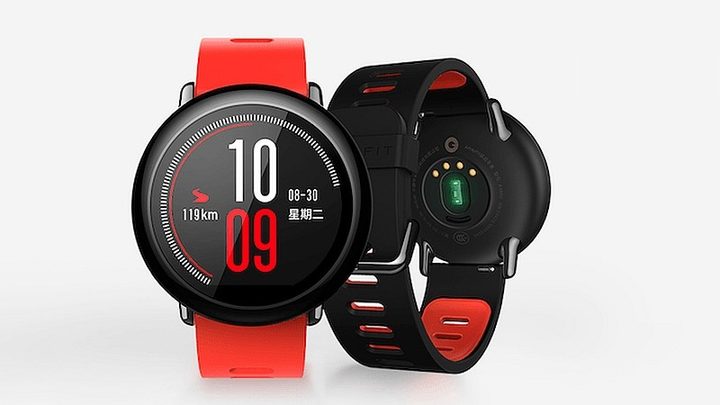
xiaomi-amazfit
Image used with permission by copyright holder

The Amazfit PACE also houses a myriad of activity-tracking sensors. Inside, you’ll find a Bluetooth 4.0 LE, GPS, and a heart rate sensor. It doesn’t run Android Wear, Google’s smartwatch operating system, but instead pairs with the Xiaomi’s Mi Fit app on Android and iOS in order to deliver much the same functionality — namely, mirroring incoming social media messages, texts, calls, and reminders.

Recommended Videos

All that tech may sound like a massive power suck, but Xiaomi begs to differ. The firm estimates the Amazfit PACE can last about five days on a charge, or about 36 hours with the GPS sensor enabled. Disable all but the pedometer, and the company says you can eke 11 or so days out of the thing, making it useful for weeklong camping trips in the wilderness, no doubt.

The Amazfit PACE first went on sale in China on August 31, but is set to make its U.S. debut on November 22. The watch will retail at the promotional price of $129; after November 28, the price will increase to the regular MSRP of $159.
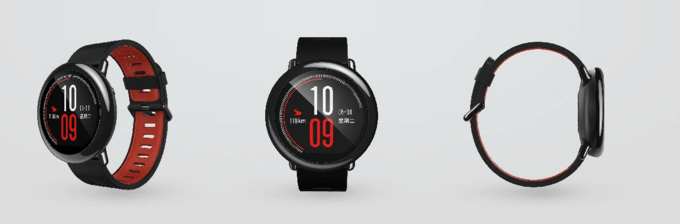
Amazfit-Watch-smartwatch-14
Image used with permission by copyright holder

The Amazfit PACE isn’t Huami’s first rodeo in the wearables market. The company launched its smartwatch division two years ago with the Mi Band, and has since expanded earnestly with efforts like the cute, kid-focused $50 Mi Bunny. In terms of price and specifications, the Amazfit PACE slots comfortably in the company’s top tier, and holds its own against the competition. A comparable Android Wear watch, the Sony SmartWatch 3, retails for $140. Cheaper options like the $100 Asus Zenwatch, meanwhile, omit components like GPS.

Xiaomi’s rapid-fire approach to the wearables market has paid dividends. In the first quarter of this year, it shipped 3.7 million smartwatches and fitness trackers, representing growth in the company’s wearables business of 41.8 percent year over year. That has helped cement the company’s second-place position in the market: as of March of this year, it commanded a 19-percent share behind Fitbit’s 24.5 percent.

Buy on Amazon

Article originally published in August 2016. Updated on 11-17-2016 by Lulu Chang: Added news that the Amazfit will go on sale in the U.S. on November 22. 

Kyle Wiggers
Kyle Wiggers is a writer, Web designer, and podcaster with an acute interest in all things tech. When not reviewing gadgets…
Apple’s next big health bet could be turning glasses and headsets into fitness companions.
A focus on fitness could help Apple separate its glasses from Meta’s approach
Apple Vision Pro

Apple’s long-rumored smart glasses are already running late as the company tries to avoid the privacy concerns that come from putting cameras on someone’s face. At the same time, Apple may be planning to turn them into something far more useful than a typical pair of smart glasses.

According to Bloomberg, Apple is exploring ways to turn its future glasses and Vision headsets into health and fitness companions. Their cameras and sensors could eventually track movement, analyze workouts, and help users improve how they exercise.

Read more
The Moto Watch Ultra could revive Motorola’s premium smartwatch ambitions
A premium Motorola smartwatch with LTE and 50-metre water resistance may be in development
Wristwatch, Arm, Body Part

Motorola may be preparing to throw its hat into the premium smartwatch ring. Exclusive renders obtained by The Mac Observer reveal an unannounced wearable carrying the internal name Moto Watch Ultra, and the design looks far more ambitious than the Moto Watch launched earlier this year.

The images show a circular display surrounded by a numbered bezel, a large rotating crown, and an additional side button. Motorola also appears to be using a 46mm stainless steel case, which should give the watch a more premium finish than the aluminum frame used on the current Moto Watch. The leaked model is shown with a black leather-style strap featuring red stitching and a matching red inner lining. Its watch face displays steps, activity data, calories, time, and date.

Read more
Google’s long-awaited AirTag rival just leaked ahead of launch under a familiar name
Electronics, Computer Hardware, Hardware

Google has spent the last few years expanding Android's Find Hub network, making it easier to track lost devices and accessories. But there's been one obvious piece missing from the puzzle: a first-party tracker of its own. That may finally be about to change.

According to a report from 9to5Google, Google's long-rumored Pixel Tag has finally broken cover. The accessory has appeared in multiple online listings, with the report also revealing what seems to be its first leaked image, offering an early look at Google's answer to Apple's AirTag and Samsung's Galaxy SmartTag.

Read more