1. Home
  2. Space
  3. News

NASA’s high-tech lunar backpack aims to map surface of moon

Add as a preferred source on Google

NASA is testing a high-tech backpack containing technology that could be used by astronauts to create highly detailed maps of the lunar surface.
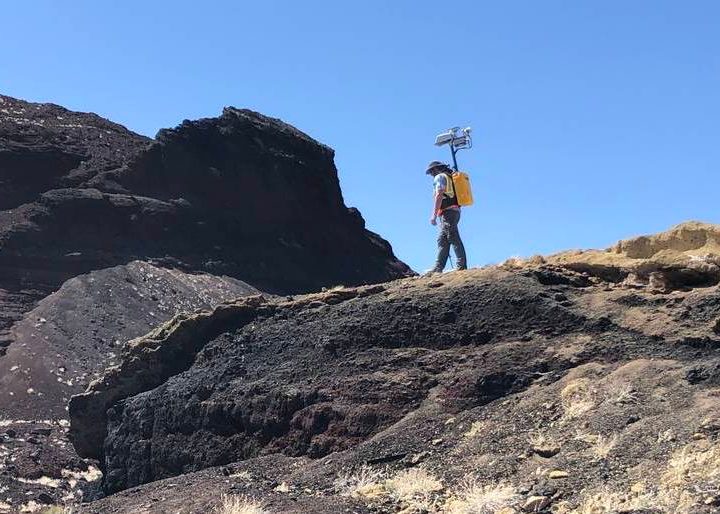
A KNaCK backpack prototype undergoing testing.
Michael Zanetti, a NASA planetary scientist at NASA’s Marshall Space Flight Center in Huntsville, Alabama, hikes the Cinder cone in the Portillo volcanic field in New Mexico in late 2021, testing the backpack-sized prototype for NASA’s Kinematic Navigational and Cartography Knapsack (KNaCK), a mobile lidar scanner now in development to support lunar exploration and science missions. NASA/Michael Zanetti

NASA and industry partners Torch Technologies and Aeva have developed a remote-sensing mapping system called the Kinematic Navigation and Cartography Knapsack (KNaCK) that uses mobile lidar scanner technology to create ultra-high-resolution maps in real time as an astronaut walks across the surface of the moon. The gear can make millions of measurement points per second and can also be used for navigation to improve safety for astronauts crossing the lunar surface on foot and also in a rover.

Recommended Videos

The technology is set to be used in the upcoming Artemis missions that will see the first crewed lunar landings since 1972, and while it’s currently carried in a backpack, the plan is to incorporate it into a smaller device that can attach to an astronaut’s helmet.

KNaCK is expected to play an important role on lunar missions as astronauts will be exploring the moon’s south pole, much of which is in deep shadow and therefore hard to easily see.

“Basically, the sensor is a surveying tool for both navigation and science mapping, able to create ultra-high-resolution 3D maps at centimeter-level precision and give them a rich scientific context,” said planetary scientist Dr. Michael Zanetti, leader of the KNaCK project at NASA’s Marshall Space Flight Center in Huntsville, Alabama. “It also will help ensure the safety of astronauts and rover vehicles in a GPS-denied environment such as the moon, identifying actual distances to far-off landmarks and showing explorers in real time how far they’ve come and how far is left to go to reach their destination.”

Zanetti said that humans tend to use landmarks like buildings and trees to orient themselves, but as those things don’t exist on the moon, KNaCK technology will enable lunar explorers “to determine their movement, direction, and orientation to distant peaks or to their base of operations. They can even mark specific sites where they found some unique mineral or rock formation, so others can easily return for further study.”

Engineers have already tested a prototype of KNaCK to map an ancient volcanic crater in New Mexico, and also to create a 3D reconstruction of the six-mile-long sea barrier dunes at NASA’s Kennedy Space Center in Florida.

The team is now working to miniaturize the hardware and make it robust enough to comfortably deal with the challenges of microgravity and solar radiation.

Trevor Mogg
Contributing Editor
Not so many moons ago, Trevor moved from one tea-loving island nation that drives on the left (Britain) to another (Japan)…
Space is becoming Bezos and Musk’s next data center site, and we have every reason to worry
The AI boom is coming for the night sky
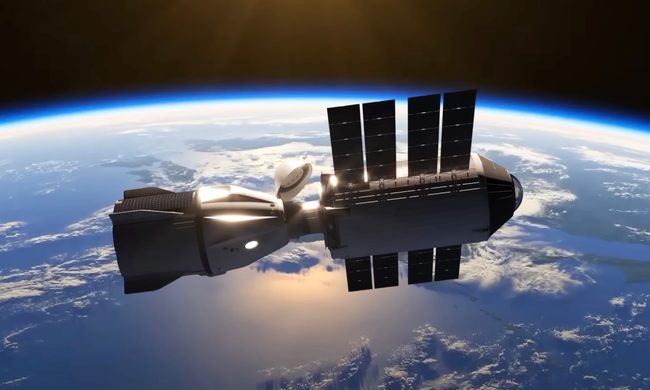
How Vast's space station will look in orbit.

AI data centers already consume vast amounts of electricity and water on Earth, so Silicon Valley has begun looking somewhere considerably more spacious... literally.

Elon Musk's SpaceX and Jeff Bezos' Blue Origin, along with several other companies, have proposed enormous constellations of satellites designed to operate as orbital data centers. However, environmental groups and former space officials are now warning that putting them into orbit at the proposed scale could have severe consequences for Earth's atmosphere and the night sky.

Read more
The first possible exomoon is here, and it makes our Moon look hilariously tiny
Scientists may have found the first exomoon, except this one is the size of Jupiter
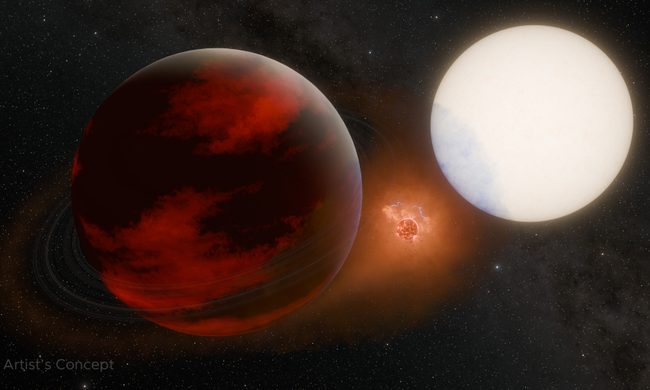
This artist’s concept depicts a potential volcanic moon between the exoplanet WASP-49 b, left, and its parent star. New evidence indicating that a massive sodium cloud observed near WASP-49 b is produced by neither the planet nor the star has prompted researchers to ask if its origin could be an exomoon.

We have already discovered more than 6,000 planets outside of our immediate neighborhood. Yet, finding a moon orbiting one of those distant worlds has proved considerably harder. Astronomers may finally have something close to the real deal, but this particular object stretches the word “moon” almost beyond recognition.

Using the European Southern Observatory’s Very Large Telescope in Chile, researchers detected strong evidence for a moon-like object in the CD-35 2722 system. Further observations are still necessary to confirm the discovery, but it could become the first confidently detected natural satellite outside our solar system. There is still one tiny complication though. This moon is apparently massive.

Read more
China’s answer to SpaceX’s reusable rockets literally catches boosters in a net
SpaceX catches boosters on legs. China just used a net.
Ammunition, Missile, Weapon

SpaceX's playbook for recovering a rocket booster generally involves legs, a precisely controlled vertical landing, and either a concrete pad or a drone ship. 

China just managed to pull off something similar, but in a slightly different way, and on July 10, it tested the method as well.

Read more