1. Home
  2. Phones
  3. Android
  4. Mobile
  5. News

Samsung commits to improving the Galaxy S10’s ultrasonic fingerprint sensor

Add as a preferred source on Google
galaxy s10 plus fingerprint
Julian Chokkattu/Digital Trends

Samsung has vowed to continue improving the ultrasonic fingerprint sensor on the Galaxy S10 and Galaxy S10 Plus smartphones, following the device’s launch with the new technology in February. If you’re still having problems with the new sensor, this will be welcome news.

Fingerprint sensors are common on smartphones today, but Samsung opted to include Qualcomm’s new ultrasonic sensor on the S10, rather than one of the more common capacitive or photographic sensors. It is set underneath the display on the front of the phone, and not on the rear panel.

Recommended Videos

New technology often brings new problems, and some have found the fingerprint sensor less reliable than alternative systems, or had negative experiences. Samsung has been listening to the complaints and already sent out a software update to address some of the problems, but won’t be stopping there.

“The accuracy has been improved through the first update of the software recently just in one week since the launch,” Samsung told the Korea Herald, adding, “We will continue providing updates to make the scanner work better.” Qualcomm, which makes the scanner and is apparently also aware of the feedback, said that because this is new technology, “it needs time for improvement.”

Our experience with the scanner has been positive, with Digital Trends mobile editor Julian Chokkattu saying, “It takes some getting used to, but it’s the best in-display fingerprint sensor I’ve tested. I’d love if all phones switched to this design. It’s not the quickest, but it’s more convenient,” in his review of the Galaxy S10 Plus.

The Galaxy S10 and S10 Plus have the ultrasonic fingerprint sensor set under the display, which may put some people off before even trying it, due to the poor accuracy and unreliability on other devices launched recently. The Galaxy S10’s system is not the same as those sensors, and the ultrasonic technology — which uses inaudible sound waves to map your fingerprint — works in a different way, and is not only more secure, it is not put off by damp or oily fingers either.

Samsung sent out the first software update for the Galaxy S10 on February 27, which among other features including Instagram mode for the camera and remapping of the Bixby key, tweaked the ultrasonic fingerprint sensor’s performance. Posts made to the official Samsung community forum have noted this changed the experience for the better. From its statement, Samsung isn’t satisfied, and appears to believe further improvements are possible.

Andy Boxall
Andy has written about mobile technology for almost a decade. From 2G to 5G and smartphone to smartwatch, Andy knows tech.
OnePlus is gone, and Android phones just became more boring in the US
OnePlus 13 vs OnePlus 11.

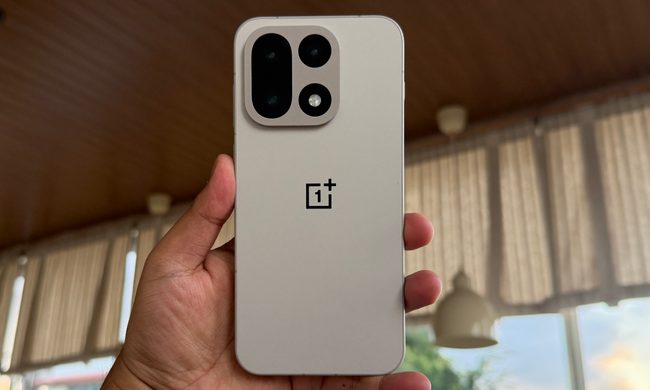
I wasn't expecting a smartphone brand's exit to hit me this hard, but OnePlus leaving the US and Europe genuinely did. The company has already confirmed that it will no longer launch new products in either market, although existing customers will continue receiving software updates and after-sales support. So while OnePlus isn’t disappearing altogether, it is walking away from two of the biggest smartphone markets in the world.

To be honest, the Android market in the US already feels limited. If you’re shopping for a flagship, your realistic choices almost always begin with Samsung and end with Google. OnePlus was one of the very few brands sitting in between, offering something that didn’t quite look or feel like everything else. And that’s exactly what I’m going to miss.

Read more
A niche iPhone browser quietly fixes my biggest problem with Google Search
Quiche Browser open on iPhone

If there's a new browser, email app, or note-taking app to try, chances are I've already installed it. Like every other productivity nerd, I'm always chasing the perfect setup. That's how I stumbled upon Quiche Browser. It was already close to replacing the Arc Search for me on the iPhone, but its latest update finally pushed it over the edge, earning it a spot as my default browser.

What makes Quiche so good

Read more
Google has to play fair with AI rivals on Android, and that could be good news for your wallet
A new ruling strips Gemini of its exclusive access to deep Android integration, opening the door for cheaper AI models to offer similar functionality for less.
A person using Google Gemini on the Google Pixel 9a.

After forcing Google to open up Android to third-party app stores, the EU is back with a new target, and this time it's Gemini's home-field advantage. The European Commission ordered Google on July 16 to give rival AI apps the same deep access to Android that's currently exclusive to Gemini. The order falls under the EU's Digital Markets Act (DMA), and it directs Google to stop treating its own assistant as a first-class citizen on a platform it controls.

What Google now has to hand over

Read more