The Samsung Galaxy S24 series is here, and with it comes a lot of new AI features. Samsung is labeling these features under its new “Galaxy AI” brand, and you’ll only find most of them first on an S24 phone.
Alongside the Galaxy S24 announcement, Google confirmed that one of the S24’s new features — called “Circle to Search” — is actually coming to other Android phones beyond the S24. And it’s coming soon.
What is Circle to Search?

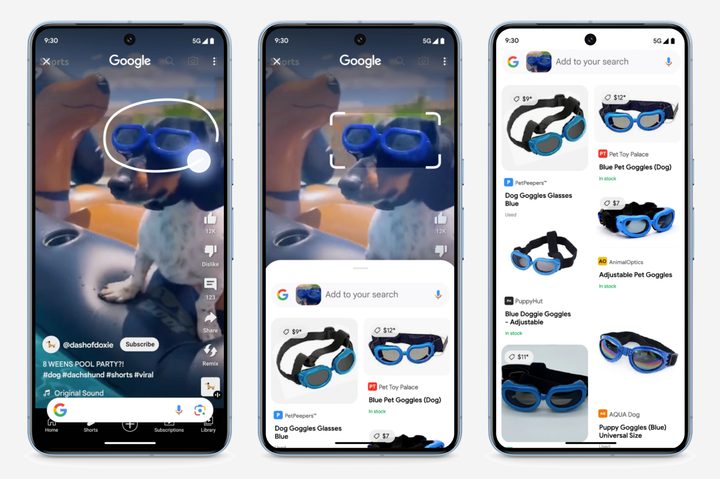
Circle to Search works just as the name implies. At any place on the Galaxy S24, you can press and hold the home button/gesture line (depending on which navigation style you’re using) to initiate the Circle to Search mode. From there, you circle whatever it is on your screen that you want to do a Google Search for.
After you circle an object, it’s surrounded by a little frame (like you see in the photo above). Below your object, search results based on whatever you circled will appear. In the example above, Circle to Search detected the backpack and offered a link to buy it, plus other related searches.
I used Circle to Search during my hands-on time with the S24 and S24 Plus, circling different landmarks in Italy and France. Circle to Search was able to quickly identify what I was looking at. It also gave me recommended searches for those things, such as “When is a good time to visit this place,” “What’s the weather like in this area,” and more.
Circle to Search works with virtually anything that’s on your phone’s display. It can be something you’re looking at in Google Chrome, in your photos/gallery app, a text message, etc. What’s particularly handy is that Circle to Search is an overlay on top of whatever app you’re currently in. When you’re done using the feature, swipe out of it, and you’re right back where you left off in your previous app.
I played with Circle to Search for a few minutes during my S24 hands-on time, and I was pretty happy with the results. I’m not sure how often I’ll use it in my day-to-day, but it certainly looked like a helpful feature to have.
These are the phones getting the new feature
Here’s where things get interesting, though. Although Samsung’s press briefing implied that Circle to Search was only coming to the Galaxy S24 series, that’s not the case.
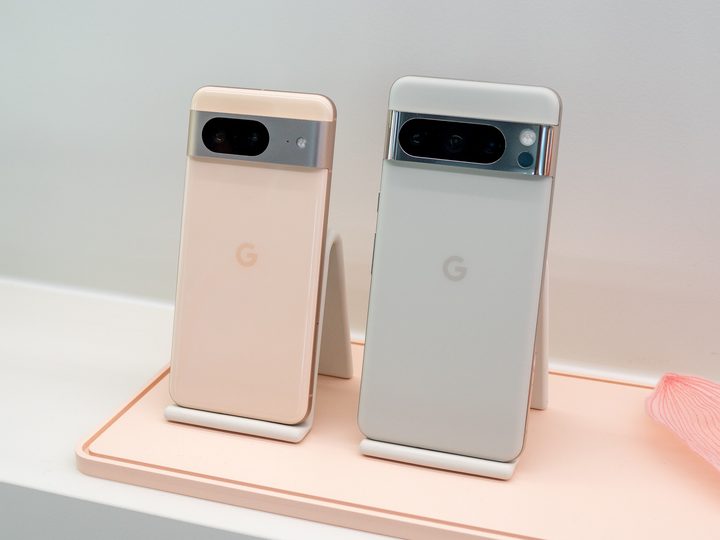
In addition to the Galaxy S24, Galaxy S24 Plus, and Galaxy S24 Ultra, Circle to Search will also be available on the Google Pixel 8 and Google Pixel 8 Pro. And they aren’t coming at a later date, either. All five phones will get Circle to Search on January 31 — the day the S24 series officially hits store shelves.
Although Google hasn’t named any other phones that Circle to Search is coming to, it’s hard to imagine the feature will remain exclusive to the Galaxy S24 and Pixel 8 series forever. If I were a betting man, I’d imagine we learn more about Circle to Search coming to other Android phones around the time of Google I/O this spring.
It’s also worth noting that, in its press release, Google refers to the S24 and Pixel 8 as “select premium Android smartphones” getting the feature — suggesting that Circle to Search requires a certain amount of processing power and will only be available on more powerful handsets if and when it expands to other devices down the road. Furthermore, Circle to Search is available “in all languages and locations” where the Galaxy S24 and Pixel 8 handsets are sold.
In addition to Circle to Search’s expansion, Google also announced that it’s expanding the functionality of Google Lens. Now, after scanning something with Lens, you can type a related search query for the image and receive “AI-powered insights that go beyond just visual matches.” In the example Google provides, you can use Lens to scan a board game and then ask things like “How is this game played?” or “What is this game?” Google Lens would previously just return visual results, but it’ll now tap into Google’s AI smarts to deliver proper answers. This is rolling out this week to the Google app in Android and iOS, in English only in the U.S.
Pre-Order Now Pre-Order Now