  1. Home
  2. Social Media
  3. Outdoors
  4. News

Protect your favorite hiking trail with the power of an Instagram post

Add as a preferred source on Google

Go ahead and post the picture — geotagged nature photos may help policymakers decide which outdoor areas to protect, according to a recent study published in Proceedings of the National Academy of Sciences.

To value landscapes in the past, researchers were confined to the old-school method of surveying, which helped them gauge how different people felt about various environments and could help inform policy decisions on preservation. But these surveys proved limited. Self-selection bias — people’s propensity to place themselves into a particular group — meant surveys such as these failed to capture the opinions of many people.

Recommended Videos

“I felt that we needed measures that would be more representative of the diversity of society across larger areas,” North Carolina State University postdoctoral researcher and co-lead author Derek Van Berkel told Digital Trends. “Social media seemed like a logical data source as people are readily volunteering information by uploading photos and commenting on the places around them.”

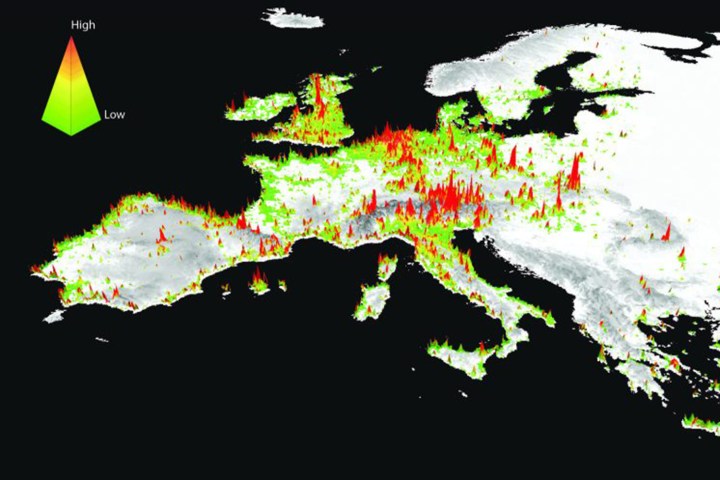
Berkel and his team set out to crowdsource their study. They developed algorithms to skim and filter social media data of European landscape images, including the content of comments and hashtags. Of main interest was how these regions should be used — for example, whether designated as agricultural, mining, and forestry, or saved for recreation.

“One of the goals of our work is to better communicate the importance of special places to policymakers so that they can make more effective and informed decisions about landscape planning,” Berkel said. “We believe that creating clear maps to show the locations of highly valued landscapes can help policymakers and other stakeholders realize their own personal connections with these places, and ultimately better understand how meaningful they are for people’s enjoyment and well-being.”

The researchers have since turned their gaze to the United States, using applications like Instagram and Flickr to reveal how Americans value their surroundings. Berkel said he is curious to compare American values with those in Europe. By investigating some of the socio-demographic influences on these posts, he hopes the system could inform policies that support impoverished neighborhoods with better landscapes and greener spaces.

Dyllan Furness
Former Contributor
Dyllan Furness is a freelance writer from Florida. He covers strange science and emerging tech for Digital Trends, focusing…
Instagram and WhatsApp lead in sextortion reports, iMessage is weaponized against teenagers: Report
Over 2,000 complaints in six months, and the platforms are still playing catch-up.
Child using a blue phone

If you use Instagram, WhatsApp, or iMessage, you need to know what is happening on these platforms. Australia's online safety regulator, eSafety, has published a new transparency report, and the findings are grim. 

As reported by The Guardian, the regulator found significant gaps in how the biggest tech companies are handling online sexual extortion and child sexual exploitation, even as the reports keep climbing.

Read more
Europe plans a wide social media ban for children
The plan would bar kids under 13 from social media completely, with looser rules for teens up to 18.
Child using a red iPhone

Europe is taking its biggest step yet toward keeping kids off social media entirely. A panel of experts today handed the European Commission a report recommending sweeping new age restrictions, according to a New York Times report. Commission president Ursula von der Leyen is expected to turn those recommendations into a formal law proposal in September.

What the proposal aims to restrict

Read more
The days of unrestricted social media for children may be coming to an end
Social media could soon look very different for younger users
Social Media

What started as a policy experiment in Australia has quickly turned into a global movement. Governments around the world are increasingly questioning whether children should have unrestricted access to social media, with more than 20 countries now either enforcing, proposing, or actively debating age-based restrictions. According to an AFP tally, at least five countries already have nationwide restrictions in force, while many others - including several European nations - are preparing to follow suit.

The momentum comes amid growing concerns over the impact of social media on children's mental health, online safety, sleep patterns, and exposure to harmful content. Policymakers are also under pressure to address addictive recommendation algorithms, cyberbullying, and the growing use of AI-generated content that can make online platforms even harder for young users to navigate.

Read more