1. Home
  2. Space
  3. News

How to watch Axiom-1 space tourists return from the ISS on Saturday

Add as a preferred source on Google

With the first fully private space tourism mission to the International Space Station (ISS) drawing to a close this Saturday, the Axiom-1 crew will soon be heading back to Earth on a SpaceX craft.

The crew’s departure has been postponed several times due to poor weather conditions at the recovery site off the coast of Florida, but the weekend return is now looking increasingly likely.

NASA Live: Official Stream of NASA TV

The Axiom-1 crew consists of Commander Michael López-Alegría, Pilot Larry Connor, and Mission Specialists Eytan Stibbe and Mark Pathy. Their departure from the ISS will be livestreamed, and we have the details on how to watch.

Recommended Videos

What to expect from the departure

The 11-person crew aboard the ISS.
The 11-person crew aboard the station comprises of (clockwise from bottom right) Expedition 67 Commander Tom Marshburn with Flight Engineers Oleg Artemyev, Denis Matveev, Sergey Korsakov, Raja Chari, Kayla Barron, and Matthias Maurer; and Axiom Mission 1 astronauts (center row from left) Mark Pathy, Eytan Stibbe, Larry Conner, and Michael Lopez-Alegria. NASA

The Axiom-1 crew arrived at the ISS on Saturday, April 9, and will head home after spending a total of 12 days in space. They will travel on the SpaceX Dragon Endeavour and are set to splash down off the coast of Florida. As well as carrying the four-person crew home, the Dragon spacecraft will also be loaded with the results of scientific experiments carried out on the ISS in addition to supplies.

How to watch the departure

The livestream will start at 4:15 p.m. ET (1:15 p.m. PT) on Saturday, April 23. The hatch closure will take place at around 4:30 p.m. ET (1:30 p.m. PT).

The undocking of the Dragon from the ISS is set for around 6:15 p.m. ET (3:15 p.m. PT), with coverage running for a further 30 minutes after undocking.

A livestream of the departure will be available on NASA’s website, or you can watch using the video embedded near the top of this page.

Splashdown off the coast of Florida is targeted for no earlier than 12:45 p.m. ET (9:45 a.m. PT) on Sunday, April 25. This will also be livestreamed.

Georgina Torbet
Georgina has been the space writer at Digital Trends space writer for six years, covering human space exploration, planetary…
SpaceX Starship reaches orbit for the first time but its historic flight ends early
Starship reaches orbit for the first time and deploys 26 Starlink satellites before an early splashdown.
spacex-starship

After 13 suborbital test flights and more than $15 billion in development costs, SpaceX's Starship has finally reached orbit. The 407-foot megarocket, the most powerful ever built, lifted off from Starbase, Texas, on Monday and delivered its first real payload on it's 14th attempt. The celebration came with an asterisk, though, since SpaceX had to cut the planned 10-hour mission to roughly three hours.

https://twitter.com/SpaceX/status/2104601695711904180

Read more
Starship is finally going orbital, and SpaceX has picked September 22
Flight 14 is aiming for orbit, Starlink V3 deployment and a very long day in space.
Starship rocket.

SpaceX is finally ready to give Starship its biggest test yet. The company says the massive rocket's 14th test flight is scheduled for September 22, when it will attempt to put the upper stage into Earth orbit for the first time. The launch is currently pending regulatory approval, with a 75-minute window opening at 7:15 a.m. CT.

Starship has 26 Starlink satellites to deliver

Read more
Want a city on the Moon? Scientists say there’s not enough water
A billion tons still comes up short
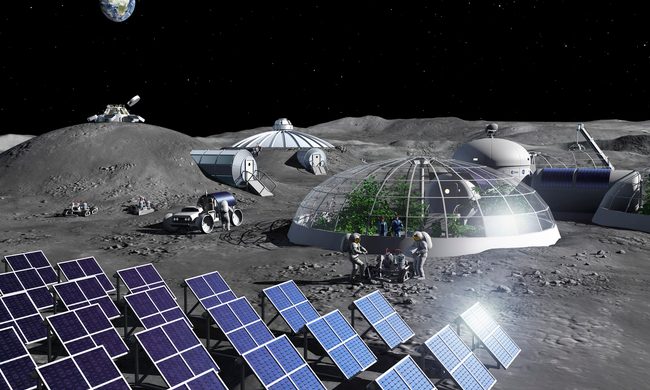
Artist impression of activities in a Moon Base.

For decades, humanity has looked up at the Moon and wondered what it would be like to live on it. Think sprawling cities, factories, research centers, and permanent human settlements. Unfortunately, there is one fairly fundamental problem with that vision.

A new study published in Frontiers in Space Technologies argues that even the Moon's potentially enormous reserves of frozen water may be nowhere near enough to support city-sized populations sustainably. Researchers Martin Elvis and Jonathan McDowell estimate that the permanently shadowed regions near the lunar poles could contain roughly one billion tons of water. It sounds like an extraordinary amount until you put a million thirsty humans next to it.

Read more