1. Home
  2. Space
  3. News

Blue Origin auction sees huge new bid for first rocket ride

Add as a preferred source on Google

A mystery bidder has just offered $3.5 million for a seat on Blue Origin’s first crewed rocket ride on July 20.

Bid for the very first seat on New Shepard

The new offer — an increase of $700,000 on the previous highest bid — is part of an ongoing charity auction and came just hours after Blue Origin owner and Amazon founder Jeff Bezos announced he will also be taking the trip, along with his brother.

Recommended Videos

The auction for the coveted seat began last month, with the current bidding phase set to end on Thursday, June 10. Two days later, a live online auction will take place where previous high bidders will be able to battle it out for a place on board Blue Origin’s tried-and-tested New Shepard rocket.

Blue Origin’s first crewed, suborbital space trip is expected to mark the beginning of a full-fledged space tourism service in which paying customers will be able to fly to the Kármán line — a location about 62 miles above Earth that’s generally considered as the edge of space — for amazing views of our planet. You’ll also be able to float around inside the capsule during a brief period of weightlessness. Finally, the capsule will return to Earth for a parachute-assisted landing in the desert. The whole trip from launch to landing will take around 10 minutes. Prices for the commercial service haven’t been revealed, though previous announcements by Blue Origin suggest that a seat for future flights could cost around $250,000, which is what rival space tourism provider Virgin Galactic is charging for its yet-to-launch service.

Jeff Bezos surprised the world on Monday when he announced via Instagram that he would be taking one of the seats on board the capsule for the July 20 space ride.

“Ever since I was five years old, I’ve dreamed of traveling to space,” Bezos wrote in an Instagram post revealing the news. “On July 20th, I will take that journey with my brother. The greatest adventure, with my best friend.”

In a video accompanying the post, Bezos, currently listed by Forbes as the world’s richest person, with a net worth of $177 billion, said that to see Earth from space “changes you,” adding, “It changes your relationship with this planet, with humanity. It’s one Earth. I want to go on this flight because it’s a thing I’ve wanted to do all my life. It’s an adventure, it’s a big deal for me.”

Trevor Mogg
Contributing Editor
Not so many moons ago, Trevor moved from one tea-loving island nation that drives on the left (Britain) to another (Japan)…
Amazon’s Starlink rival just crossed a major milestone, but don’t expect perfect internet just yet
Amazon finally showed up to the space internet party
Amazon Leo satellite layout across all launch vehicles

Amazon has taken a significant step toward launching its long-awaited satellite internet service. Following its latest rocket launch, the company now has 396 Project Kuiper satellites in low-Earth orbit, enough to begin offering continuous service across select regions. The milestone keeps Amazon on track for its previously announced goal of launching commercial service by mid-2026.

https://twitter.com/Weber44Chris/status/2072575499461963938?ref_src=twsrc%5Etfw%7Ctwcamp%5Etweetembed%7Ctwterm%5E2072575499461963938%7Ctwgr%5Ed727a1b853cbf519585e7bf2655943afb2f91bb8%7Ctwcon%5Es1_&ref_url=https%3A%2F%2Fwww.theverge.com%2Fscience%2F960563%2Famazon-leo-service-tipping-point

Read more
Amazon’s Starlink rival is set to launch satellite internet later this year
After launching nearly 400 satellites, Amazon says its Leo broadband service will go live later this year.
Atlas V launches 29 Amazon Leo satellites from Cape Canaveral, Florida

Amazon's long-awaited answer to SpaceX's Starlink is finally nearing liftoff. According to an exclusive report from Reuters, the company plans to begin offering its Leo satellite internet service later this year, after its latest rocket launch pushed the constellation to 394 satellites in orbit.

The pieces are finally falling into place for Project Kuiper

Read more
NASA is investing $590 million in private contractors to build humanity’s first Moon outpost
NASA is counting on private companies to land its Moon Base dream.
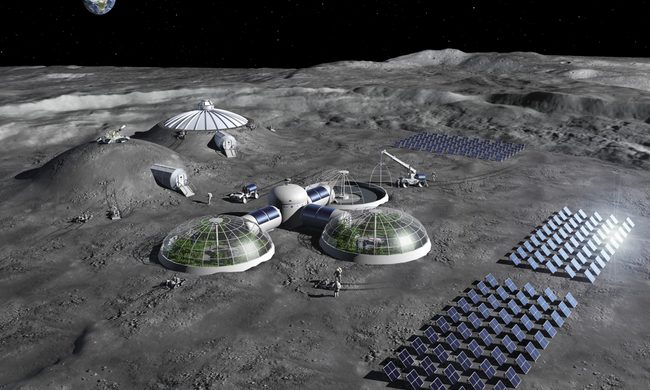
Artist impression of a Moon Base concept, with solar arrays for energy generation, greenhouses for food production, and habitats shielded with regolith.

Building a permanent base on the Moon sounds like science fiction, but NASA is making it feel a lot more real. The agency just handed $590 million in contracts to three private companies for four uncrewed lunar lander missions launching in late 2028.

These missions are part of Phase 1 of NASA's broader $30 billion Moon Base program, which needs to deliver landers, rovers, and scientific cargo up there before astronauts eventually move in. These efforts are closely tied NASA's Artemis program, which sent humans on a lunar flyby in April for the first time since the Apollo era.

Read more