1. Home
  2. Space
  3. News

How to watch SpaceX’s latest Starlink satellite launch

Add as a preferred source on Google
SpaceX Starlink Launch - Watch Live!

SpaceX is gearing up for yet another Starlink mission — and you can watch it live today.

Recommended Videos

Thanks to an abundance of livestream cameras showing everything from launch to landing, as well as satellite deployment and possibly the capture of the rocket’s two nose cone pieces, the missions are always good entertainment while at the same time highlighting just how far SpaceX has come in its 18-year history.

The mission will see SpaceX’s workhorse Falcon 9 rocket deploy another batch of 60 Starlink satellites as part of the company’s plan to provide reliable broadband internet services from space, including for communities in remote areas who currently have no access to such facilities.

Following deployment, SpaceX will have around 800 Starlink satellites in orbit, enough for it to ramp up testing of its proposed internet service. SpaceX said earlier this month that recent trials showed the system is currently capable of download speeds of “greater than 100 megabytes per second — fast enough to stream multiple HD movies at once and still have bandwidth to spare.”

California-based SpaceX put its first batch of Starlink satellites into low-Earth orbit in May 2019, but astronomers were quick to voice concerns that the satellites’ tendency to reflect the sun interfered with the stargazing community’s ability to carry out its work. As a result, recent launches have seen the satellites fitted with visors designed to reduce the brightness of the reflection.

The launch has been delayed several times, most recently due to bad weather in the area where the first-stage booster was set to land, and before that a “recovery issue.”

How to watch the SpaceX Starlink launch live

SpaceX’s Falcon 9 rocket will depart Cape Canaveral when conditions permit. Two planned launches in September have already been scrubbed due to poor weather.

A video at the top of this page should go live shortly before launch. Alternatively, the same livestream can be viewed at SpaceX’s YouTube channel.

Enjoy the awesome spectacle of rocket launches? Then be sure to check out all of the amazing missions that took place around the world over the summer.

Trevor Mogg
Contributing Editor
Not so many moons ago, Trevor moved from one tea-loving island nation that drives on the left (Britain) to another (Japan)…
SpaceX Starship reaches orbit for the first time but its historic flight ends early
Starship reaches orbit for the first time and deploys 26 Starlink satellites before an early splashdown.
spacex-starship

After 13 suborbital test flights and more than $15 billion in development costs, SpaceX's Starship has finally reached orbit. The 407-foot megarocket, the most powerful ever built, lifted off from Starbase, Texas, on Monday and delivered its first real payload on it's 14th attempt. The celebration came with an asterisk, though, since SpaceX had to cut the planned 10-hour mission to roughly three hours.

https://twitter.com/SpaceX/status/2104601695711904180

Read more
Starship is finally going orbital, and SpaceX has picked September 22
Flight 14 is aiming for orbit, Starlink V3 deployment and a very long day in space.
Starship rocket.

SpaceX is finally ready to give Starship its biggest test yet. The company says the massive rocket's 14th test flight is scheduled for September 22, when it will attempt to put the upper stage into Earth orbit for the first time. The launch is currently pending regulatory approval, with a 75-minute window opening at 7:15 a.m. CT.

Starship has 26 Starlink satellites to deliver

Read more
Want a city on the Moon? Scientists say there’s not enough water
A billion tons still comes up short
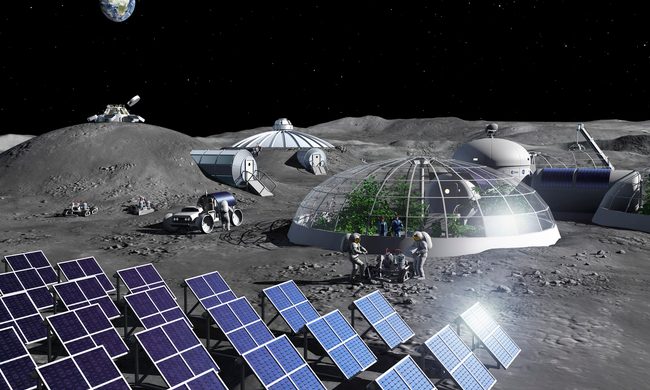
Artist impression of activities in a Moon Base.

For decades, humanity has looked up at the Moon and wondered what it would be like to live on it. Think sprawling cities, factories, research centers, and permanent human settlements. Unfortunately, there is one fairly fundamental problem with that vision.

A new study published in Frontiers in Space Technologies argues that even the Moon's potentially enormous reserves of frozen water may be nowhere near enough to support city-sized populations sustainably. Researchers Martin Elvis and Jonathan McDowell estimate that the permanently shadowed regions near the lunar poles could contain roughly one billion tons of water. It sounds like an extraordinary amount until you put a million thirsty humans next to it.

Read more