1. Home
  2. Space
  3. News

Watch spacewalkers fiddling about with a cable 250 miles above Earth

Add as a preferred source on Google

Two astronauts successfully completed a spacewalk outside the International Space Station (ISS) on Wednesday, March 23.

NASA astronaut Raja Chari and ESA (European Space Agency) astronaut Matthias Maurer worked outside the orbiting outpost for 6 hours and 54 minutes before returning inside at 3:26 p.m. ET.

Recommended Videos

The entire spacewalk was livestreamed using cameras attached to the ISS as well as to the astronauts themselves. With the station orbiting Earth at 17,000 mph, the pair experienced around nine sunsets during their lengthy mission.

NASA tweeted a video clip showing Chari and Maurer fiddling with a cable as they worked together some 250 miles above Earth. The footage revealed the challenge of performing intricate tasks wearing bulky, pressurized gloves, and shows that astronauts need to have the patience of a saint in order to deal calmly with potentially frustrating situations.

Your task: cable management.
Your equipment: bulky, pressurized gloves.
Your location: space.

Could you do it? @Astro_Raja and @Astro_Matthias did, as they installed @Space_Station hardware upgrades during a spacewalk: https://t.co/9sOiBQsU2d pic.twitter.com/oE21KuIsEs

— NASA (@NASA) March 23, 2022

Below is another clip showing the kind of tricky tasks that crewmates sometimes have to take on during a spacewalk.

Astronauts Raja Chari & Matthias Maurer Spacewalk Outside the International Space Station

Maurer and Chari arrived at the ISS in November for what is their first space voyage. Wednesday’s spacewalk was Chari’s second having participated in one last week with NASA colleague Kayla Barron, while Maurer was stepping outside for the first time.

“Maurer and Chari completed their major objective for today to install hoses on a Radiator Beam Valve Module that routes ammonia through the station’s heat-rejecting radiators to keep systems at the proper temperature,” NASA said in a report on the spacewalk. “The crew members also installed a power and data cable on the Columbus module’s Bartolomeo science platform, replaced an external camera on the station’s truss, and conducted other upgrades to station hardware.”

The agency added that the two astronauts deferred a number of secondary tasks, such as torque resets and cable routing, to a future spacewalk.

Wednesday’s effort was the 248th spacewalk in support of space station assembly, upgrades, and maintenance. Following a short rest, Chari and Maurer will resume work on science research aboard the space station until their return home in April.

Trevor Mogg
Contributing Editor
Not so many moons ago, Trevor moved from one tea-loving island nation that drives on the left (Britain) to another (Japan)…
SpaceX Starship reaches orbit for the first time but its historic flight ends early
Starship reaches orbit for the first time and deploys 26 Starlink satellites before an early splashdown.
spacex-starship

After 13 suborbital test flights and more than $15 billion in development costs, SpaceX's Starship has finally reached orbit. The 407-foot megarocket, the most powerful ever built, lifted off from Starbase, Texas, on Monday and delivered its first real payload on it's 14th attempt. The celebration came with an asterisk, though, since SpaceX had to cut the planned 10-hour mission to roughly three hours.

https://twitter.com/SpaceX/status/2104601695711904180

Read more
Starship is finally going orbital, and SpaceX has picked September 22
Flight 14 is aiming for orbit, Starlink V3 deployment and a very long day in space.
Starship rocket.

SpaceX is finally ready to give Starship its biggest test yet. The company says the massive rocket's 14th test flight is scheduled for September 22, when it will attempt to put the upper stage into Earth orbit for the first time. The launch is currently pending regulatory approval, with a 75-minute window opening at 7:15 a.m. CT.

Starship has 26 Starlink satellites to deliver

Read more
Want a city on the Moon? Scientists say there’s not enough water
A billion tons still comes up short
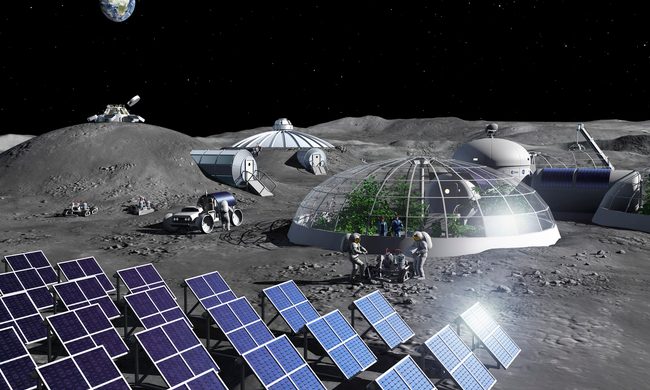
Artist impression of activities in a Moon Base.

For decades, humanity has looked up at the Moon and wondered what it would be like to live on it. Think sprawling cities, factories, research centers, and permanent human settlements. Unfortunately, there is one fairly fundamental problem with that vision.

A new study published in Frontiers in Space Technologies argues that even the Moon's potentially enormous reserves of frozen water may be nowhere near enough to support city-sized populations sustainably. Researchers Martin Elvis and Jonathan McDowell estimate that the permanently shadowed regions near the lunar poles could contain roughly one billion tons of water. It sounds like an extraordinary amount until you put a million thirsty humans next to it.

Read more