  1. Home
  2. Space
  3. Photography
  4. News

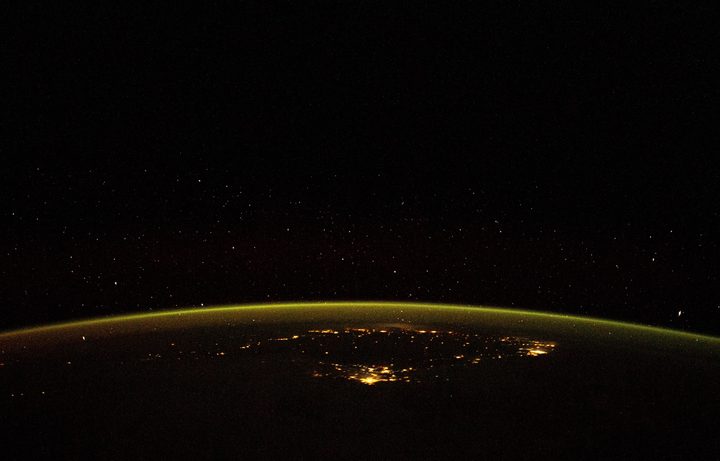
Homeward bound private astronaut shares gorgeous night shots of Earth

Add as a preferred source on Google

Earth as seen from the International Space Station.
Earth as seen from the International Space Station. Marcus Wendt/Axiom Space/NASA

Axiom Space’s third private mission to the International Space Station (ISS) was supposed to last two weeks, but the all-European crew stayed for a few extra days while it waited for the weather conditions to improve at the splashdown site off the coast of Daytona, Florida.

Recommended Videos

Having finally undocked from the space station on Wednesday, Ax-3 crewmembers Walter Villadei, Alper Gezeravcı, and Marcus Wandt, and professional astronaut Michael López-Alegría are now on their way home in a SpaceX Crew Dragon spacecraft that’s set to splash down on Friday morning.

During the extra time aboard the orbital outpost, Wandt, who’s shown himself to have a keen eye during his stay, shared a final set of stunning Earth photos captured from the ISS about 250 miles up.

Something in the things she shows me… 🎶#Muninn #Earth #NoFilter pic.twitter.com/jXwh3wnUCO

— Marcus Wandt (@astro_marcus) February 8, 2024

Wandt doesn’t say what camera he used for the images, but the space station is known to have a large collection of professional-grade camera bodies and lenses for visitors to use. In fact, NASA is in the process of updating its ISS camera equipment from older DSLR bodies to mirrorless Nikon Z9 cameras after delivering a consignment of them last month.

During breaks from science research, astronauts aboard the ISS often head for the Cupola, a seven-window module that offers panoramic views of Earth and beyond. It’s the ideal vantage point to capture pictures of our planet.

And with the station orbiting Earth about 16 times every 24 hours, the canvas is always changing when you do have a chance to peer out from the confines of the Cupola.

Trevor Mogg
Contributing Editor
Not so many moons ago, Trevor moved from one tea-loving island nation that drives on the left (Britain) to another (Japan)…
China’s answer to SpaceX’s reusable rockets literally catches boosters in a net
SpaceX catches boosters on legs. China just used a net.
Ammunition, Missile, Weapon

SpaceX's playbook for recovering a rocket booster generally involves legs, a precisely controlled vertical landing, and either a concrete pad or a drone ship. 

China just managed to pull off something similar, but in a slightly different way, and on July 10, it tested the method as well.

Read more
Dimming the sun sounds unhinged, but this new study on El Niño makes a surprisingly good case for it
A natural test case, Australia's worst-ever wildfire season, suggests the idea deserves serious consideration.
Nature, Outdoors, Sky

When I first saw "scientists propose dimming the sun," I rolled my eyes. It sounds like a science fiction movie cooked up after watching many climate documentaries. But a new study, published on July 8, 2026, in the journal Science Advances, seems to have a genuinely compelling argument.

A Super El Niño is currently forming in the Pacific, feared to be the most intense in decades. It could escalate floods, wildfires, and extreme heat events worldwide. However, Researchers at UC San Diego's Scripps Institution of Oceanography, led by climate scientists Kate Ricke and Jessica Wan, are now proposing one of the most interesting solutions I’ve come across.

Read more
You can now walk through space and gaze into a black hole at this VR exhibit
Smithsonian Starstruck lets you drift past dying stars and see the origin point of the universe for as little as $18 a person.
Smithsonian Starstruck featured

Most planetarium shows ask you to sit still and look up. The Smithsonian's new VR exhibit takes a different approach, letting visitors walk through the vast expanse of the universe, drifting past stars, planets, and a black hole to get a physical sense of its true scale.

A $29 ticket to the edge of the galaxy

Read more