1. Home
  2. Space
  3. News

Virgin Galactic to launch first crewed test flight from New Mexico this month

Add as a preferred source on Google

Virgin Galactic is coming one step closer to its goal of bringing paying tourists to the very edge of space, with the company announcing it will perform its first crewed test flight from Spaceport America later this month.

The spacecraft VSS Unity, a SpaceShipTwo model, will take off from Spaceport America in New Mexico, from where customers will launch to the edge of space. The company has previously performed a number of test flights from Mojave Air and Space Port in California, but now it will perform another test with crew aboard from New Mexico.

Recommended Videos

As reported by AP, the VSS Unity will be taken into high altitude by a carrier jet and then released, from where its rocket engines will carry it onward to an altitude of at least 50 miles. The craft will then descend and glide back to earth, landing on a runway.

There’s some debate about where high altitude ends and space begins, but a commonly used delineator is the Kármán Line, which sits 62 miles above sea level. This means the flight will technically be considered sub-orbital.

Crew members who be will onboard include Virgin Galactic Pilot CJ Sturckow and Chief Pilot Dave Mackay, however, the arrangement will be a little different from how it will unfold when actual passengers are on board.

“One thing to note about this flight is that once we are in space, we will be flying slightly differently than how we plan to fly with our Future Astronauts,” the company explained in a statement.

“This is because we’ll have three NASA payloads in the cabin, flown through NASA’s Flight Opportunities Program. Unlike our Future Astronauts, these payloads aren’t on board for the view, so instead of stopping the vehicle pitch in the inverted position for the best views of Earth, we’ll pitch the vehicle 270 degrees following boost to get to the entry attitude as soon as possible. This maneuver will maximize time for the payloads to remain in data-collection mode. Carrying these payloads not only makes this test flight a revenue-generating one, but also demonstrates our commitment to facilitating regular, accessible space-based scientific research.”

The aim is for the test flight to go ahead in the period between November 19 and November 23, according to a statement by the company, following a launch window that opened on October 22.

Georgina Torbet
Georgina has been the space writer at Digital Trends space writer for six years, covering human space exploration, planetary…
SpaceX Starship reaches orbit for the first time but its historic flight ends early
Starship reaches orbit for the first time and deploys 26 Starlink satellites before an early splashdown.
spacex-starship

After 13 suborbital test flights and more than $15 billion in development costs, SpaceX's Starship has finally reached orbit. The 407-foot megarocket, the most powerful ever built, lifted off from Starbase, Texas, on Monday and delivered its first real payload on it's 14th attempt. The celebration came with an asterisk, though, since SpaceX had to cut the planned 10-hour mission to roughly three hours.

https://twitter.com/SpaceX/status/2104601695711904180

Read more
Starship is finally going orbital, and SpaceX has picked September 22
Flight 14 is aiming for orbit, Starlink V3 deployment and a very long day in space.
Starship rocket.

SpaceX is finally ready to give Starship its biggest test yet. The company says the massive rocket's 14th test flight is scheduled for September 22, when it will attempt to put the upper stage into Earth orbit for the first time. The launch is currently pending regulatory approval, with a 75-minute window opening at 7:15 a.m. CT.

Starship has 26 Starlink satellites to deliver

Read more
Want a city on the Moon? Scientists say there’s not enough water
A billion tons still comes up short
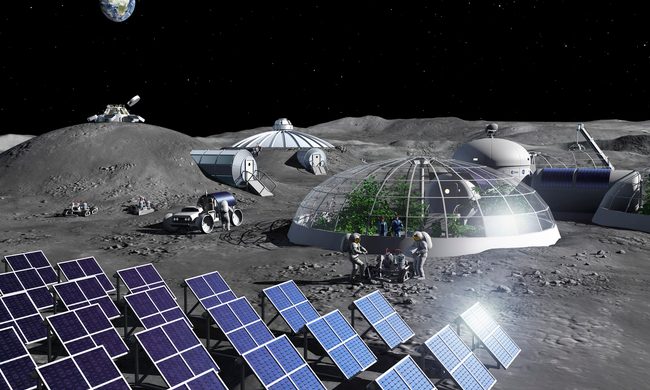
Artist impression of activities in a Moon Base.

For decades, humanity has looked up at the Moon and wondered what it would be like to live on it. Think sprawling cities, factories, research centers, and permanent human settlements. Unfortunately, there is one fairly fundamental problem with that vision.

A new study published in Frontiers in Space Technologies argues that even the Moon's potentially enormous reserves of frozen water may be nowhere near enough to support city-sized populations sustainably. Researchers Martin Elvis and Jonathan McDowell estimate that the permanently shadowed regions near the lunar poles could contain roughly one billion tons of water. It sounds like an extraordinary amount until you put a million thirsty humans next to it.

Read more