1. Home
  2. Wearables
  3. Health & Fitness
  4. Mobile
  5. News

The Polar Loop Crystal adds some pomp and flash to fitness tracking

Add as a preferred source on Google

Sports and fitness technology company Polar has decided its Loop 2 activity tracker was a bit to plain, and perhaps not flashy enough to attract those who want a piece of jewelry as much as a piece of wearable tech. The result is the Polar Loop Crystal, which has 30 Swarovski crystals embedded in the stainless steel edge plates, and a stainless steel buckle.

The Polar Loop Crystal is aimed primarily at women, and combines the same technology found inside the Loop 2, with a high fashion aesthetic. Using flashy crystals to achieve this effect is a well trodden path, and we’ve seen similar examples from Misfit and other companies in the past.

Recommended Videos

The Loop 2 has a very sporty design, thanks to its bright colors and silicone strap, but the fitness-fanatic look has been suitably toned down on the white Loop 2 Crystal. The stainless steel bezels provide the ideal spot for the crystals, making them obvious, but not ostentatious. This, along with the new buckle, makes it look far more like an accessory, rather than a gadget; much like Jawbone’s Up2.

On the tech side, the Loop Crystal’s functionality matches the Loop 2. The LED display shows the usual fitness tracking stats, along with alerts for incoming calls and messages on your synced smartphone. The band counts your steps, follows workouts, and keeps track of calorie burn, plus if you wear it all the time, it’ll add sleep data too. All this is presented in the Polar Flow app. It doesn’t have its own heart rate sensor, but like the Loop 2, it’ll link up with Polar’s H7 Bluetooth Smart heart rate monitor.

Polar will put the Loop Crystal on sale in November through its own website and various retailers around the world. The price has been set at $160, or 160 euros, which works out at $40 more than the basic Loop 2.

  

Andy Boxall
Andy has written about mobile technology for almost a decade. From 2G to 5G and smartphone to smartwatch, Andy knows tech.
Google unveils Fitbit Edge with ECG, GPS, and a replaceable battery for good measure
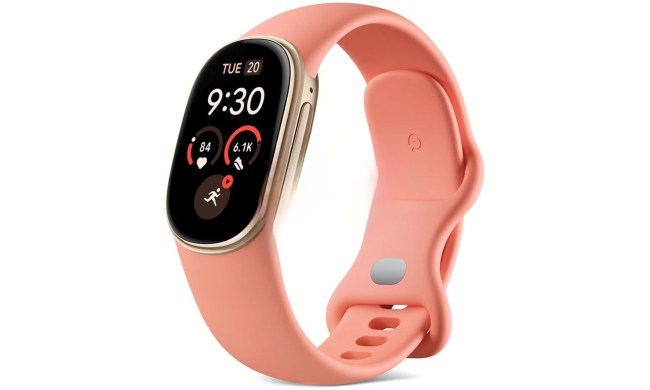
The Fitbit Edge adds a proper display, deeper health tracking, and built-in GPS without giving up week-long battery life.
Google Fitbit Edge launched

Just a few days after teasing the Fitbit Edge, Google has made it official. The new tracker is essentially a middle ground between the screenless Fitbit Air and a full Pixel Watch, and Google is packing a lot into it.

The Fitbit Edge costs $179.99 and is available for pre-order now. It goes on sale October 27 and comes in Obsidian, Fog, Olive, and Canyon finishes. Google is also selling a Stephen Curry Special Edition for $219.99.

Read more
Google just teased its most interesting Fitbit in years, and it’s merely days away
Google’s next fitness band, the Fitbit Edge, is set to arrive on October 12 with ECG, GPS, and an OLED display
Google Fitbit Edge

Google has just released a cryptic teaser for its next wearable device. “Get an Edge on your health,” says the X post by the company's health division. In case you haven't been following the news or the rumor mill, the device in question appears to be the upcoming Fitbit Edge, a fitness band with a screen. Over the past couple of weeks, the device has appeared in leaks showing it from all angles. 

https://twitter.com/googlehealth/status/2108590030050541579?s=46

Read more
A new sweat-sensing smartwatch could help workers stay hydrated in the heat
The watch tracked electrolyte levels for nearly three hours, showing promise for real-time hydration monitoring.
man wearing a smartwatch

If you have ever worked outside on a hot day, you know how much you sweat. In 2023, Associate Professor Isao Shitanda and his team at Tokyo University of Science built a chloride sensor that could be heat-pressed onto T-shirts and wristbands. Their latest device, detailed in a study published online in ACS Omega, is a wristwatch that measures sodium and potassium in sweat in real time.

Why is reading sweat harder than it sounds?

Read more