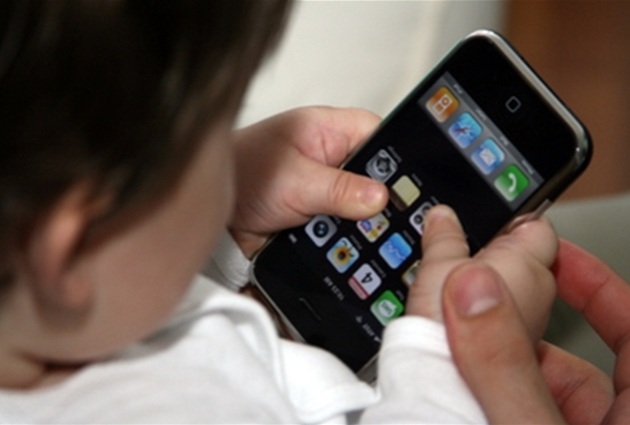
Nokia and Microsoft might be getting a little too close. It seems that the Finnish phone maker is picking up Microsoft’s bad habit of trashing the competition. During an interview with Pocket-Lint, a Nokia executive claimed that kids no longer like the iPhone and that Android is too confusing for the youth. This is despite piles of sales charts that say the exact opposite.
“What we see is that youth are pretty much fed up with iPhones. Everyone has the iPhone,” said Niels Munksgaard, director of Portfolio, Product Marketing, and Sales at Nokia Entertainment Global. “Also, many are not happy with the complexity of Android and the lack of security. So we do increasing see that the youth that wants to be on the cutting edge and try something new are turning to the Windows phone platform….The marketplace is extremely crowded. I refer to it as the sea of sameness. When you walk up to a retail shelf at Phones4U and see the number of black mono-blocks sitting on the shelf, it is very confusing to the consumer. We want to deliver services and phones that are different.”
There is so much wrong with this quote that we’ve decided to break it into sections and rip it apart, bit by bit.
Everyone has the iPhone…thus making it uncool
First, let’s talk about Munksgaard’s statement on the iPhone: “What we see is that youth are pretty much fed up with iPhones. Everyone has the iPhone.”
This statement is reminiscent of one HTC America’s Michael Fichter tried to make back in September. “I brought my daughter back to college — she’s down in Portland at Reed — and I talked to a few of the kids on her floor,” said Fichter. “And none of them has an iPhone because they told me: ‘My dad has an iPhone.’ There’s an interesting thing that’s going on in the market. The iPhone becomes a little less cool than it was. They were carrying HTCs. They were carrying Samsungs. They were even carrying some Chinese manufacture’s devices. If you look at a college campus, Mac Book Airs are cool. iPhones are not that cool anymore. We here are using iPhones, but our kids don’t find them that cool anymore.”
At least Fichter had a story to tell. Where is the data to support Munksgaard’s claims? The iPhone 4S recently launched and, from early estimates, it has increased iPhone sales by as much as 50 percent, maybe more, since its debut in October. Until March of this year, I lived next to a college campus and I have only seen an increase in iPhones, and all smartphones. We have seen no evidence of a youth uprising or mass exodus against Apple. The company seems more popular than ever with those college-age and younger.
Android is too complex for regular people
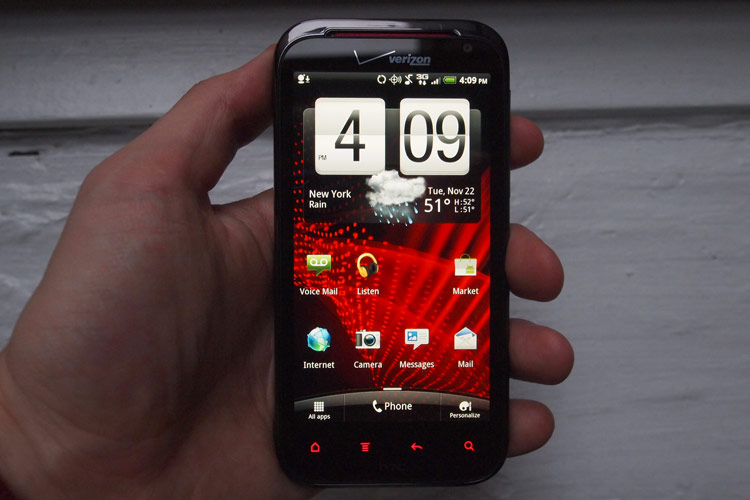 Moving on to the Android bashing section of Munksgaard’s quote: “Also, many are not happy with the complexity of Android and the lack of security.”
This quote too is similar to a statement Microsoft CEO Steve Ballmer made in October. At the Web 2.0 Summit, Ballmer joked that you need a degree in computer science to operate an Android phone. “You don’t need to be a computer scientist to use a Windows Phone. I think you do to use an Android Phone…It is hard for me to be excited about the Android phones.”
I’ll be the first to admit that Android is not the prettiest or best operating system I’ve ever seen, but it’s not much more complex than an iPhone (and certainly much easier to learn than Windows 7). The biggest problem with Android is that manufacturers tinker with the OS, making each version slightly different.
But if Android is too insecure and complex, why are companies like Samsung, whose 2011 financials have been bolstered by Android sales, encroaching on Nokia’s dominant sales position? Samsung phone sales have already exceeded 300 million units this year. Similarly, Android has turned HTC into a household name and helped bring Motorola back from the dead. The OS continues to gain momentum and has more than 40-50 percent of the smartphone market now. If it’s so complex, then why is it continuing to sell so astronomically well?
Windows Phone is on “the cutting edge”
Finally, Munksgaard addresses how the youth is moving toward Windows Phone, the physical design of phones, and how they all look the same: “So we do increasing see that the youth that wants to be on the cutting edge and try something new are turning to the Windows phone platform….The marketplace is extremely crowded. I refer to it as the sea of sameness. When you walk up to a retail shelf at Phones4U and see the number of black mono-blocks sitting on the shelf, it is very confusing to the consumer. We want to deliver services and phones that are different.”
If “the youth” is clamoring for Windows Phone so they can be on “the cutting edge,” then why does the OS continue to bleed market share? There’s nothing cutting edge about the fact that Windows Phones are behind the curve in a number of areas. Microsoft still does not support important features like 4G LTE, NFC, and dual- or quad-core processors, among other things. If it weren’t for Microsoft’s deep pockets, the OS might not still be around at all.
As for the “sea of sameness,” I agree. This is a fantastic point, except that the Nokia Lumia 710 and Lumia 800, aside from appearing in some fresh colors, are exactly the same as every other phone on the market. They’re rectangular, have a big screen, and touch buttons.
I like Windows Phone. I don’t like distortions.

Don’t get me wrong. Windows Phone is a fantastic platform, and may be more intuitive than iOS or Android, but trying to lie about the competition isn’t becoming of Nokia, which has made a point to say it is a humble company now, trying to make a comeback. The Windows Phone operating system may be my favorite and I’m actually using a Windows Phone as my primary device right now, but this kind of talk isn’t going to win anyone over. Angering fans of Android and iOS will only make it more difficult to get them to give Windows Phone a chance in the future.
Microsoft and Nokia: Instead of trashing the competition, you need to direct your eyes toward 2012 and make sure you get those 4G LTE phones out in the US.


