qualcomm

Qualcomm’s Android-ready hardware and patents may be the solution to the hit-or-miss quality of Android phones and Google’s ongoing intellectual property fiasco.

Google Android has been incredibly successful, but it has also been wrapped in a series of problems. A good deal of the problems come from Google’s attempt to tear down the software licensing model Microsoft had been using for years. Much like if you try to put a round peg in a square hole, this kind of thing results in problems.

Interestingly enough, Qualcomm has come up with what may be the best, though least well-known, way to make a better Android phone. I was on-site at Qualcomm this week, and I think I can explain why some of the most successful Android phones run Qualcomm technology.

The Microsoft World

In a Microsoft world, Microsoft makes the platform, tends to get most of the profit, and pays for most of the marketing. The way this typically works, Microsoft delivers a very complete and locked-down software product to the OEMs, whether they build PCs or phones. These OEMs pay Microsoft, and Microsoft kicks back a percentage, which goes directly to that OEM’s marketing department to sell the device. In many cases, virtually the entire marketing budget for a new PC or Microsoft phone is sourced from this process.

The OEMs complained up a blue streak that this model didn’t allowed them to differentiate. Basically, rather than Microsoft providing outsourced software for them (effectively serving as their underlings) they had all become outsourced hardware for Microsoft (they were Microsoft’s underlings). In short they really didn’t like working for Microsoft.

qualcomm-develop-phoneThe Android Problem

Google parachuted into this world with Android. The company gave it away for free, didn’t lock it down, and left it unfinished in order to address this huge concern about differentiation. However this became, particularly for tablets, the round peg in a square hole. The OEMs didn’t have the skill set to finish the product, because in a Microsoft world, they didn’t need it. Smartphones and tablets were more like PCs then they were like regular phones. Google didn’t kick back marketing money because it wasn’t being paid. The savings should have allowed the OEMs to fund marketing themselves, but instead they went for more aggressive pricing, leaving nothing for marketing.

So instead of getting better differentiated products, we generally ended up with very similar, less reliable, under-marketed products. There were exceptions. Motorola’s Xoom tablet got a lot of marketing, but was both unfinished and overpriced — to pay for that marketing. Verizon stepped and did the marketing for Motorola and HTC on the Droid phones, but created a new problem for the OEMs because the Droid branding belonged to Verizon – the OEMs were back to being “outsourced hardware” again.

Some of the Android phones are good, many aren’t, and no Android Tablet has even worried Apple yet. More troubling is that Android typically does better with carriers who don’t have the iPhone, suggesting it is just a placeholder until the iPhone gets to that carrier in the latest version.

Google had a good idea, the market just wasn’t ready for it, and Google didn’t know how to fix that problem. Oh, and there is the little problem of 37 ongoing lawsuits, most of which are against the OEMs because the intellectual property in Android isn’t properly protected. Or more accurately put, because folks like Steve Jobs think Google stole it.

In short, under Google, OEMs aren’t subservient to Microsoft anymore, but they are still screwed.

Qualcomm’s fix

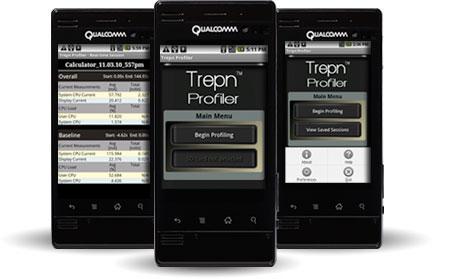
Qualcomm is one of a handful of vendors that have a complete hardware package for Android — all of the components from processors, to graphics, to modems and radios. It is even developing screen technology that could be used to more positively differentiate some phones with better battery life and better outdoor view ability.

Qualcomm also has one of the largest patent portfolios in the business, and one of the largest software units. That may mean the company can indemnify more of the phone and better assure the quality of devices that use the full suite of Qualcomm’s offerings. The indemnification part is weak, largely because much of the exposure is sourced in Google and not in anything Qualcomm can do. But the ability to better assure the quality of the phone by helping to complete it is not.
qualcomm-develop-power

What is interesting is that many of the folks who use Qualcomm’s hardware don’t use their software services, so you can’t just say that a Qualcomm-based phone will be better.

The irony appears to be that there is a problem, there appears to be most of a fix, but the industry doesn’t seem to understand either.

Android isn’t working

Selling lots of products that then get wrapped with litigation or don’t sell isn’t being successful. Google came up with an interesting new alternative to the Microsoft world, but didn’t fix the ecosystem to facilitate it. The result is either low quality or rich attorneys, and in some cases both. Qualcomm is taking the interesting path of trying to step in and assure the quality, and at least partially mitigate the litigation risk, but it is having mixed success. Ultimately, it may simply not be able to address the litigation risk effectively. Google’s response this week appears to be to whine about the unfairness of it all, which doesn’t seem to be working.

This leaves the ball in Google’s court. It needs to either embrace Microsoft’s model, or find a way to utilize companies like Qualcomm to modify the ecosystem so that its new model can work. It might also be wise if Google more seriously addressed its intellectual property problem as well.

Guest contributor Rob Enderle is the founder and principal analyst for the Enderle Group, and one of the most frequently quoted tech pundits in the world. Opinion pieces denote the opinions of the author, and do not necessarily represent the views of Digital Trends.

Showing 17 comments

  1. johanvdm at 10:14am 20th August 2011 Dear Digital TrendsI know you say that Rob Enderle was just a contributor and do not necessarily represent the views of Digital Trends. But it looks like Rob is being paid by Qualcomm to create lies about what is going on with Google so that Qualcomm can step in. (see article http://www.digitaltrends.com/mobile/how-the-google-motorola-deal-will-spawn-a-new-os/ aswell) It is so far from reality I am not sure if anyone will fall for it, but his articles are definitely giving Digital Trends a bad name because you accept him as a Guest contributor.Johan
  2. Mike Dunn at 8:24am 7th August 2011 As an Android user (phone and tablet) of I can see both sides of the debate here.Even though it is the number one mobile OS out there doesn't mean it can't have it's flaws. The phone OS evolved a lot from 1.0 to 2.3 where it is today. When the G1 was released it really couldn't compete with the iPhone as a finished product, but it showed the potential of the platform. When the Xoom was released Honeycomb was not ready for show time. As a Xoom owner I learned this first hand. Again the potential is there, but the OS is buggy isn't complete.It also doesn't matter how popular the OS is if all the device makers end up getting sued. Companies are making and selling Android phones because it is making them money, but if the lawsuits keep coming and the companies start to see that they won't be making money anymore you better believe they will start focusing on WP7 devices.That being said I think at this point in the game users of Android phones aren't getting a lesser phone experience vs the iPhone. With 2.3 on phones and the great phones being made by HTC, Samsung, and Motorola Android users aren't getting the short end of the stick anymore.
  3. Chris McCune at 2:14pm 6th August 2011 I am pleased, thank you for adding it so quickly!!
  4. Chris McCune at 2:02pm 6th August 2011 My latest reply doesn't seem to be showing to Ian so I will make a new comment... THANK YOU for paying attention to the comments! My main concern is the lack of diversity in the opinion stories and more importantly how they are featured on the front page banner just like the typically respectable news articles posted on DigiTrends. CNN does not feature them on their front page news banner that I've seen. Moving the opinion disclaimer to the top is a logical first step IMO.
    1. Chris McCune at 2:05pm 6th August 2011 ...but when the title is so biased, claiming a problem, it shouldn't be promoted as fact like anyone just browsing the main front page would see. The fact that there is a problem is a mere opinion, yet it is the first thing splashed on the news banner. You have to read the whole biased thing just to get the disclaimer... annoying. :(
      1. Ian Bell at 2:10pm 6th August 2011 I just checked CNN, and they have an opinion piece featured on the frontpage. What they do is put "opinion" in the title."Opinion: Put a millennial in charge"I think we should do something like that.
      2. Ian Bell at 2:11pm 6th August 2011 There, just added Opinion to the title.
    2. Ian Bell at 2:08pm 6th August 2011 The system takes a while to approve comments. Sorry for that. Maybe for opinion pieces featured on the home page we can do "Opinion: Article Title" to set a clear differentiation. I will talk with editorial on Monday about this, and ask them about moving the bio to the top of the article as well. I think that would help a lot.
      1. Chris McCune at 2:14pm 6th August 2011 thanks again, I really do like the site since it was beta and love the fact it's still evolving and improving like you're demonstrating. I do believe just that simple "opinion" line in the main title versus a small tag & footer would make a world of difference too.
  5. Chris McCune at 1:15pm 6th August 2011 Agree with Kirth. No mention of the Galaxy 10.1 tab? Oh right, based on the looks of it, it didn't exist when this "story" was written. Stop posting these garbage opinion articles before I just forget about DigiTrends.
    1. Ian Bell at 1:19pm 6th August 2011 You don't like guest posts? I think it's good to see what other people/industry insiders/analysts/executives think about the industry. Consumers will always be more educated on products than most of these people. Afterall, consumers are the ones using them."Guest contributor Rob Enderle is the founder and principal analyst for the Enderle Group, and one of the most frequently quoted tech pundits in the world. Opinion pieces denote the opinions of the author, and do not necessarily represent the views of Digital Trends."
      1. Chris McCune at 1:41pm 6th August 2011 I realize it's an opinion, but it's poorly done and denotes a "problem" that most people don't think even exists. An opinion that is obviously biased should at least be better marked as such AND include someone else to counter it and point out things like other people besides Apple make tablets worth looking at. I honestly don't care to have opinions on this "news" site, particularly since they aren't clearly marked as a contributed opinion until the footer that most people ignore.
        1. Ian Bell at 1:44pm 6th August 2011 Lots of news sites (like CNN) have contributors that give opinion pieces.How about if we move the bio to the top, would that help?
          1. Chris McCune at 1:54pm 6th August 2011 That's a start, especially since the front page has this featured and the title alone is biased, lol. It's not just that it's an opinion that's annoying given the great news DigiTrends typically posts, it's that its featured just like that news. CNN doesn't put opinions in their front page news banner that I've noticed. But a big thank you for paying attention to comments! :)
  6. Kirth Gersen at 5:58am 6th August 2011 Why invent an 'Android problem' when there is none ?The only problem of Android is its success.Most issues with Android phones are either the bloatware that come preinstalled by the manufacturer or the telco (sometimes both!) and the lack of OS upgrade for some low-end models.The other problem is that often , people compare low-end $200 Android phone to the $600 IPhone 4 and blame the OS instead of the hardware... It's like comparing a low-end Windows PC and a high-end Mac and blaming that Windows is slow or unresponsive.As of today, in term of hardware, almost only the Galaxy SII can be compared to the IPhone 4 and most people will acknowledge it's better (why do you think Apple did everything to prevent the SII from launching).As for Android on Tablet, it's barely 6 months old and was rushed. Wait another 6 months.
    1. Kapil Malani at 10:20am 6th August 2011 Well, nice reply. I need not write now what I was about to write because you got it all very well covered.There is indeed no android problem than success.Nothing else, literally.And your commerce is more logical than the post itself although the author seems knowledgeable enough, but it looks like he hasn't used a good android phone till date.
      1. Kapil at 10:24am 6th August 2011 comment* (is what I meant) in place of commerce written above... that it.
Close Suggestion AT&T increasing security with voicemail passwords
View Article