“This is one of the first pieces of evidence that social media use really can impact your sleep,” said lead author Jessica C. Levenson, Ph.D., a post-doctoral researcher in Pitt’s Department of Psychiatry. “And it uniquely examines the association between social media use and sleep among young adults who are, arguably, the first generation to grow up with social media.”
The average young adult spends just over an hour on social media every single day, and visits various social media accounts (think Facebook, Snapchat, Twitter, Tumblr, Instagram, and the like) around 30 times a week. And those who were the most frequent users of social media across the week were three times more likely than others to have trouble falling asleep. Similarly, those who spent the most time on social media on a daily basis were twice as likely to have sleeping problems.”This may indicate that frequency of social media visits is a better predictor of sleep difficulty than overall time spent on social media,” Dr. Levenson noted. “If this is the case, then interventions that counter obsessive ‘checking’ behavior may be most effective.”
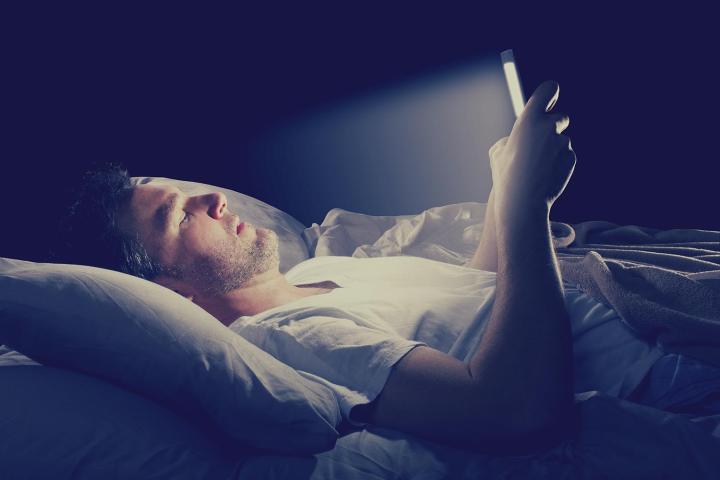
It’s unclear as to just what it is about social media that contributes to sleep deprivation (or whether it’s the use of smartphones in general rather than the sites themselves). It could be that social media is literally taking up a greater amount of some users’ time, or that the blue light emitted by most mobile devices disrupts circadian rhythms during night hours. Or, researchers suggest, social media might promote “emotional, cognitive or physiological arousal, such as when engaging in a contentious discussion on Facebook,” which also would create sleep disturbances.
Ultimately, scientists believe that more research is needed to fully understand the implications of social media on general health (or even vice versa). “Difficulty sleeping may lead to increased use of social media, which may in turn lead to more problems sleeping,” said senior author Brian A. Primack, M.D., Ph.D. “This cycle may be particularly problematic with social media because many forms involve interactive screen time that is stimulating and rewarding and, therefore, potentially detrimental to sleep.”
Editors' Recommendations
- What does a check mark mean on Facebook Messenger?
- Meta already verified me to influence elections — so why do I have to pay for a checkmark?
- Having trouble accessing your Instagram account? You’re not alone
- Reels are about to show up in yet another Facebook feature
- What is a Facebook Pixel? Meta’s tracking tool, explained