1. Home
  2. Emerging Tech
  3. Outdoors
  4. News

‘Drone surfing’ is exactly what you think it is

Add as a preferred source on Google

Drone surfing is now a thing.

You might not think a remotely controlled copter would be strong enough to pull you along on a skim board, but at full power and with calm weather conditions, Freefly’s professional ALTA 8 flying machine will happily replace your kite and tow you rapidly out into the open sea. And hopefully back again.

Recommended Videos

Washington-based Freefly recently shot a “drone surfing” video to demonstrate the power of its heavy-duty ALTA 8 octocopter, which the company has designed to carry “the largest cinema payloads on the market,” or pretty much any object weighing up to 20 pounds.

The water-based fun doesn’t come cheap with this particular kit, however, as Freefly’s machine will set you back a hefty $17,500. Yes, a kite is certainly cheaper – but a lot less fun.

The drone surfer in the video takes a sprint to get started, but once he’s on the water the octocopter takes him along at a decent clip.

Despite a few posters on Freefly’s Facebook page doubting the video’s authenticity, the company’s creative director, Hugh Bell, insisted to Mashable that “the video and clips are indeed 100 percent real,” adding, “The ALTA is the only thing pulling the boarder.”

This isn’t, however, the first time we’ve seen a drone pulling someone along on a board. Back in February, snowboarding enthusiast Kaspars Balamovskis gave the huskies a rest and used a super-sized Aerones flying machine to tow him along instead.

And just to prove that drones don’t have to be expensive and massive to help out with board-based sports, YouTuber Valplushka earlier this year posted a video of a smaller 4-pound quadcopter pulling along a kid in the snow, albeit at a speed likely to send most adrenalin junkies to sleep.


Trevor Mogg
Contributing Editor
Not so many moons ago, Trevor moved from one tea-loving island nation that drives on the left (Britain) to another (Japan)…
Google just canceled its AI Studio mobile app, and it’s not all bad news
Logo, Symbol, Disk

Google AI Studio was on track to make its way to Android and iPhone, giving developers and AI enthusiasts a dedicated place to build prompts and experiment with Google's latest models from their phones.

That's no longer happening. In a post shared by the official Google AI Studio account on X, Google confirmed that it's canceling the standalone AI Studio mobile app before launch. The announcement comes despite the company saying nearly 800,000 people had already pre-ordered the app across iOS and Android.

Read more
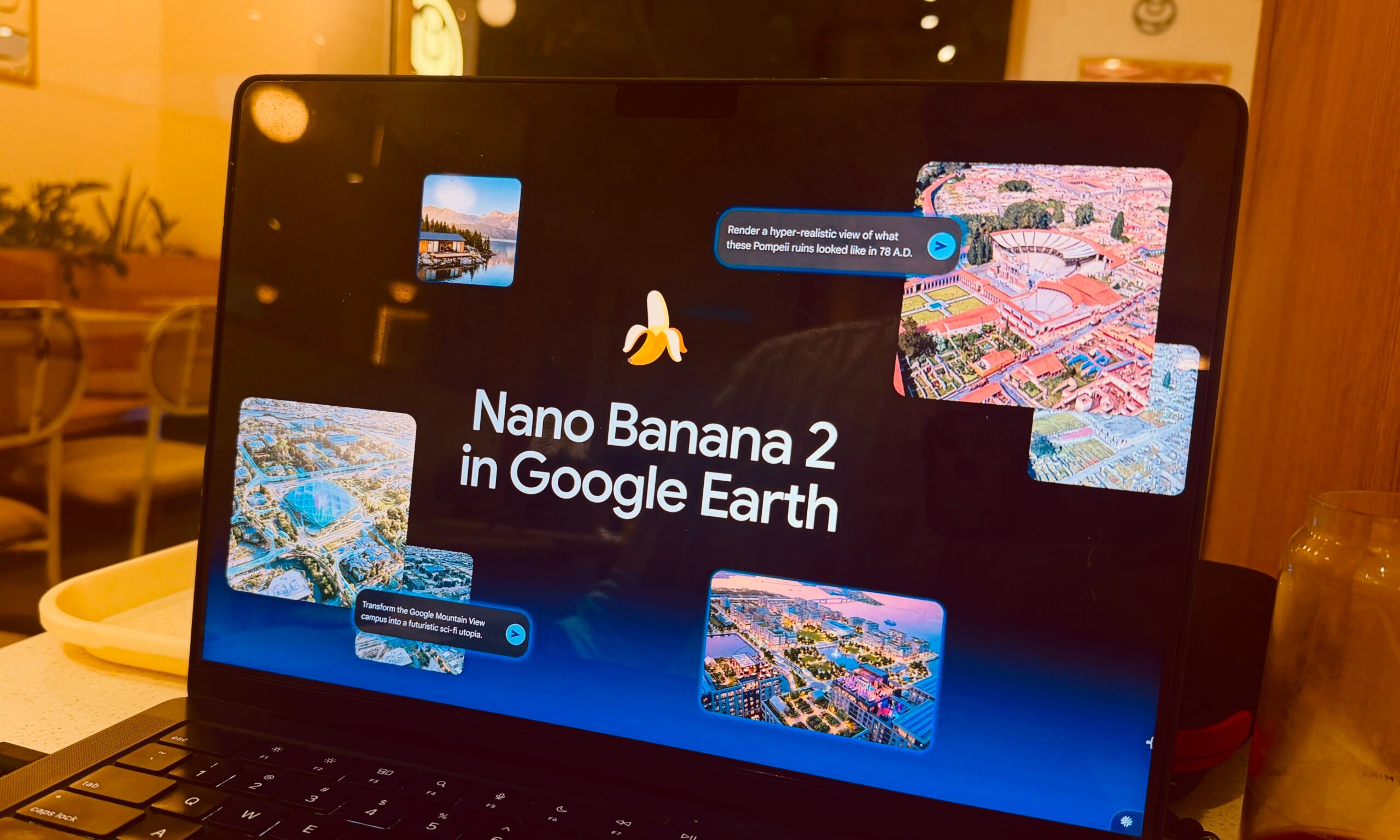
Google Earth’s AI misadventure lasted only a day. It was a tale of dangerous ignorance.
Nuclear reactors, tanks, and historical destruction on a life-like satellite map? Yeah, that's bad.
Nano Banana AI image generator representation.

Technology behemoths are clearly not reading the room, or they are just moving faster than they should when it comes to AI deployment. Google has already stuffed its Gemini AI in every corner of its software stack, from Android to daily productivity tools like Gmail that are used by hundreds of millions of users every day. AI is everywhere. Not all of it is bad, mind you. But in a few places, it just feels forced.

In its latest AI-fication experiment, the company targeted Google Earth. The idea was to let the audience use its Nano Banana 2 AI image generator and make images that can be placed on the map view. On paper, it's a cool idea. What would the Colosseum of Rome look like in your urban neighborhood? Yeah, fun stuff like that.

Read more
Google’s new AI gives robots better balance, smarter hands, and teamwork capabilities
Google just made robots a lot less clumsy and a lot more helpful.
Gemini robotics 2.0

Google DeepMind just brought sci-fi robots closer to reality, and it is very exciting. Building on its original Gemini Robotics model, the company has introduced Gemini Robotics 2, an AI system designed to help robots think, move, and even work together. Unlike most robots today, which rely on pre-programmed routines or someone controlling them remotely, this new system lets robots figure things out on their own when situations get unpredictable.

Can robots finally handle whole-body tasks?

Read more