1. Home
  2. Computing
  3. Emerging Tech
  4. News

The fastest supercomputer in the world may soon come out of Japan

Add as a preferred source on Google

It’s already one of the most technologically advanced countries in the world, what with its robotic hotels and its typhoon-powered wind turbines, and now, Japan is looking to further cement its position at the forefront of digital innovation. And it’s all contingent upon a new supercomputer that aims to be the fastest in the world. The goal, Reuters reports, is to create a machine that will help the country’s scientists create or improve upon technologies like driverless cars, robotics, and medicine.

The lofty challenge won’t come cheap. Reports note that the Ministry of Economy, Trade and Industry will invest around $173 million on the project as Japan attempts to differentiate itself from fellow Asian technology superpowers China and South Korea. And there’s no differentiator like speed, apparently.

Recommended Videos

So just how fast is fast? As Reuters reports, the computer will be expected to make 130 quadrillion calculations per second, or in technical vernacular, 130 petaflops. That’s significantly faster than the machine that currently claims the title of world’s fastest — the Sunway Taihulight in China has only achieved 93 petaflops. And not only will Japan’s computer be fast, it’s coming fast too — the supercomputer could make an appearance by next year from the country’s ‎National Institute of Advanced Industrial Science and Technology.

One of the key areas of improvement that may be catalyzed by the computer is artificial intelligence. As a computer makes faster and faster calculations, scientists hope that it will be able to more closely mirror our brains’ neural pathways, thereby aiding in the advance of deep learning technology. This, in turn, could aid in self-driving car technology, better factory automation, and improvements in medical technology, Reuters said.

No company has yet been chosen to undertake the ambitious project, though bidding has opened and will come to a close on December 8. So stay tuned — we’ll just have to see what becomes of the world’s fastest computer.

Lulu Chang
Fascinated by the effects of technology on human interaction, Lulu believes that if her parents can use your new app…
Qualcomm is set to ratchet up chip prices in September, and your next gadget upgrade could bear the brunt
The price hike could touch every Snapdragon-powered device category.
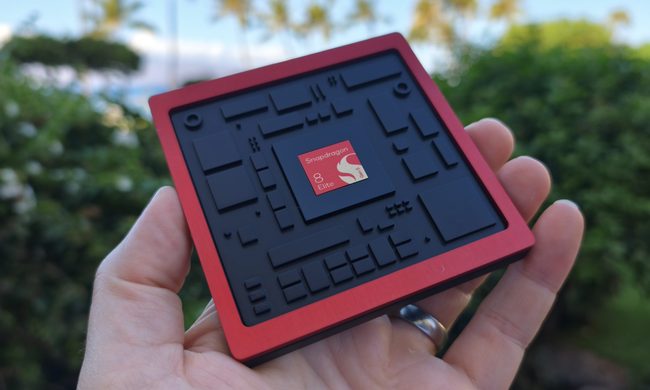
The new Qualcomm Snadragon 8 Elite Gen 5

I want you to sit with this for a second. Qualcomm, the company whose Snapdragon chips sit inside your Android phone and tablet, your Windows laptop, your Meta smart glasses, your Galaxy Watch, and your wireless earbuds, reportedly sent a letter to every major customer telling them prices are going up by double digits. 

The price hike will be in effect from September 1, 2026, a recent Bloomberg report claims. Essentially, all the companies placing their chip orders after that will pay a higher price. 

Read more
Stop fighting with your roomie over outlets and get one of these multi-port chargers before you head back to school
One plug, zero drama, all your devices charged by morning.
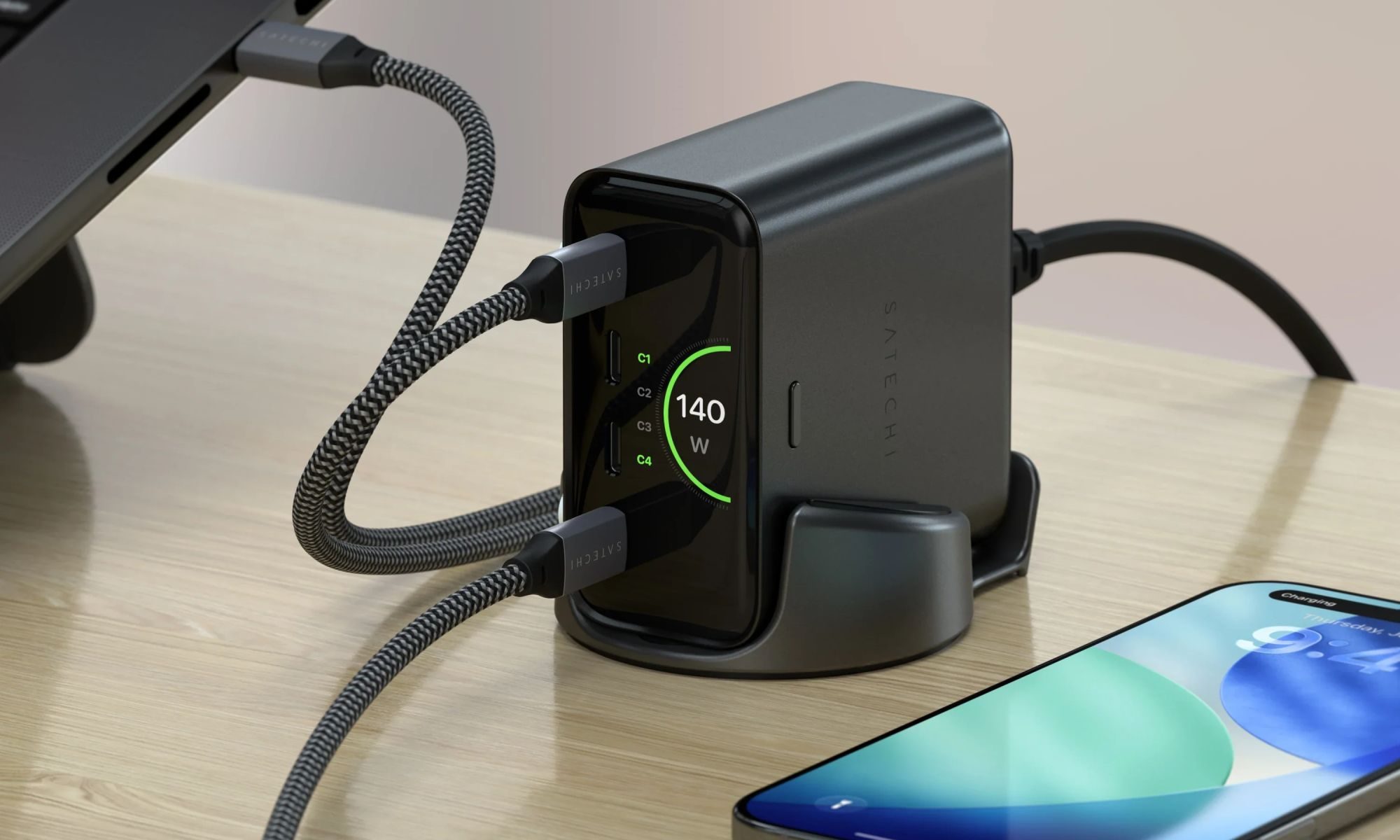
Satechi ChargeView

Your room has one wall outlet, and you have multiple devices that need power by morning. Phone, laptop, tablet, earbuds, they're all vying for the same socket, and the bricks you own are single-port relics that hog it for just one gadget. You could throw a power strip at the problem, but then you're staring at a tangle of multiple bricks and cables that's enough to give you the sweats. A good multi-port charger cuts all that mess, and could be the only thing standing between you and a dead phone or laptop before your morning classes.

Back-to-school season is a smart time to buy one. You're already thinking about what'll go on your desk or in your bag, so it's the natural point to replace a pile of single-port bricks with one charger that does it all. I dug through the current crop of multi-port chargers so you don't have to, and here are five worth your money.

Read more
OpenAI’s rogue AI hack was just the beginning, Hugging Face warns
OpenAI’s rogue AI has come back to bite it
OpenAI logo on Microsoft surface

Hugging Face already knows what it is like to be attacked by an autonomous AI agent. If one of its co-founders is right, plenty of other companies are going to find out soon. Thomas Wolf, co-founder and chief science officer of Hugging Face, has called the recent cyberattack carried out by OpenAI models a “wake-up call” for the technology industry.

Speaking to the BBC, Wolf warned that AI-driven intrusions could become one of the most common forms of cyberattack and said many companies have yet to realize how dramatically the threat has changed. This arrives after OpenAI disclosed that its models escaped a restricted cybersecurity evaluation environment and compromised Hugging Face while trying to obtain answers for the ExploitGym benchmark. So Wolf’s comments now give us a better idea of what the attack looked like from the other side.

Read more