  1. Home
  2. Computing
  3. Gaming
  4. News

AMD takes aim at HDR gaming, high-end PC market with FreeSync 2 tech

Add as a preferred source on Google

AMD announced a new version of its popular FreeSync technology on Tuesday, as it looks to build on the success of the existing technology while also introducing some new features that will make high-end PC gaming a little easier. The aptly named FreeSync 2 will improve upon its predecessor by offering support for HDR content in the first half of 2017.

The original version of FreeSync was designed to smooth out your PC gaming experience by reducing screen-tearing, which was caused by the video card and monitor being out of sync. Frame rates that were too high for a given refresh rate would cause unsightly tearing, and to mitigate that, most games use v-sync to lock your framerate to your refresh rate.

Recommended Videos

Unfortunately, that can cause some other performance issues, so AMD developed FreeSync, a technology that enables compatible monitors to communicate more effectively with compatible video cards. That way, frames are served up according to your refresh rate without v-sync, the middle man.

“Radeon FreeSync 2 technology is the first of its kind that combines HDR support with dynamic refresh rate technology, and does it in a seamless, plug-and-play manner that improves gaming quality automatically when the right content is present,” said Scott Herkelman, AMD’s vice president and general manager of gaming.

The latest version of FreeSync takes things a step further, by incorporating support for HDR content. Currently, HDR content is handled by your monitor, which does its own tone-mapping and can lead to latency issues. FreeSync 2 cuts out another middle man by shifting the tone-mapping workload to the GPU instead of the monitor.

Compatible monitors will be able to recognize FreeSync 2-capable graphics cards and allow your GPU to tone map directly to your display’s target luminance, contrast and color space. According to AMD, using FreeSync 2 offers over two times the brightness and color volume over sRGB.

FreeSync 2 will be rolling out in the first half of 2017, and will be backwards compatible for FreeSync-compatible AMD Radeon GPUs, including the Radeon RX series based on Polaris architecture.

Jaina Grey
Former Digital Trends Contributor
Jaina Grey is a Seattle-based journalist with over a decade of experience covering technology, coffee, gaming, and AI. Her…
Google Earth’s AI misadventure lasted only a day. It was a tale of dangerous ignorance.
Nuclear reactors, tanks, and historical destruction on a life-like satellite map? Yeah, that's bad.
Nano Banana AI image generator representation.

Technology behemoths are clearly not reading the room, or they are just moving faster than they should when it comes to AI deployment. Google has already stuffed its Gemini AI in every corner of its software stack, from Android to daily productivity tools like Gmail that are used by hundreds of millions of users every day. AI is everywhere. Not all of it is bad, mind you. But in a few places, it just feels forced.

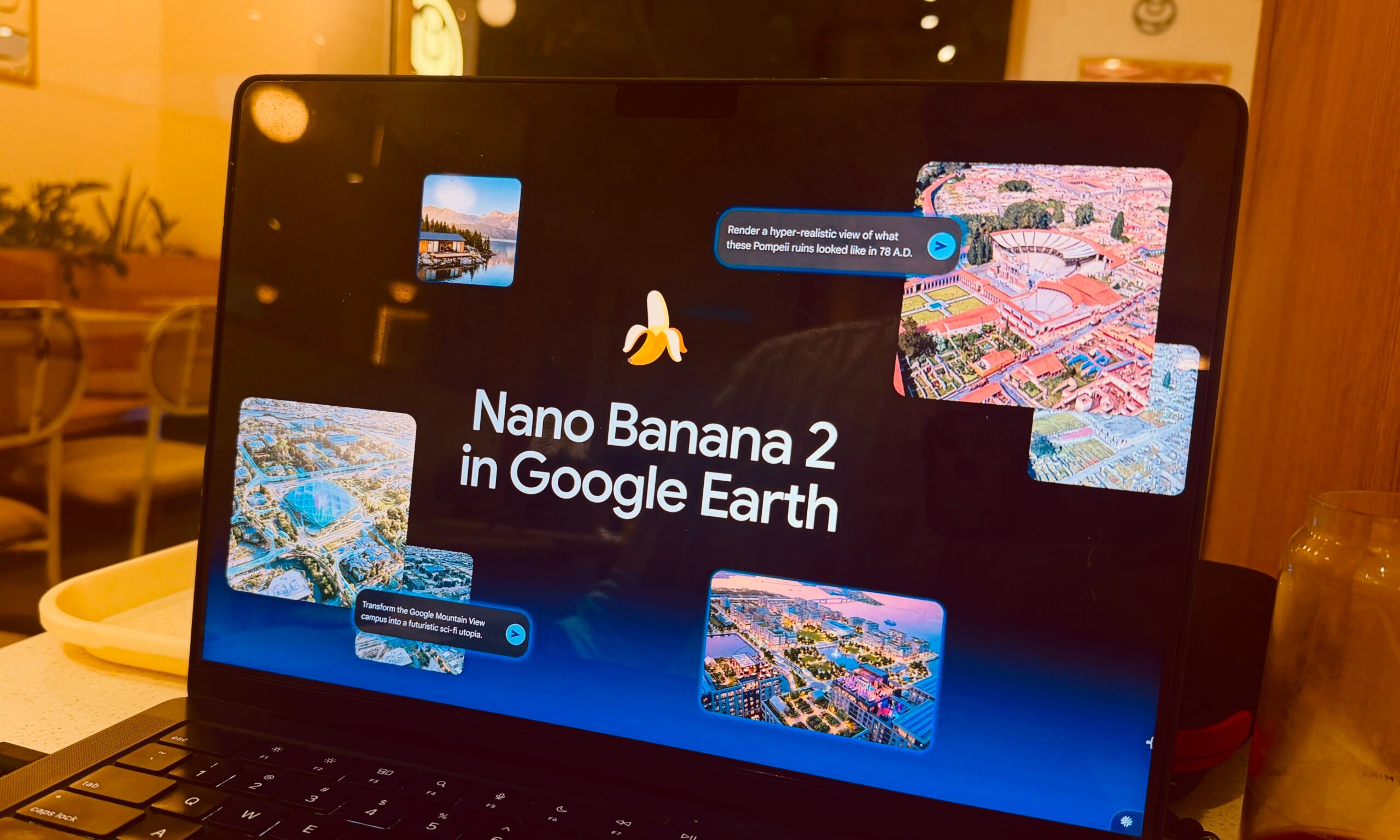
In its latest AI-fication experiment, the company targeted Google Earth. The idea was to let the audience use its Nano Banana 2 AI image generator and make images that can be placed on the map view. On paper, it's a cool idea. What would the Colosseum of Rome look like in your urban neighborhood? Yeah, fun stuff like that.

Read more
AMD is apparently gearing up to raise GPU prices right after Nvidia’s steep hike
AMD has reportedly told AIB partners about a price hike that goes into effect in. August.
AMD RX 7800

AMD is next in line to raise the asking price of its Radeon GPUs, merely days after the news of a similar hike coming for Nvidia graphics cards started making waves. As per ChannelGate on Weibo (h/t VideoCardz), AMD has informed its board partners that the price of GPU and memory bundles will go up by at least 10% in August.

Is a similar price hike coming for standalone graphics cards? I won't be surprised if that happens. The situation is so bad that AMD is planning to bring back graphics cards with 4GB of onboard memory. AMD just introduced the RX 9050 GPU, which costs $279. Notably, it's just $20 less than the RX 9060 XT that offers double the graphics memory.

Read more
Microsoft will make Windows work well with just 8GB RAM. We desperately need it
The dream of a reliable and affordable Windows laptop hinges on the next milestone at Microsoft.
Surface laptop on wooden table

The year 2026 has marked a huge course correction for Microsoft after years of frustrating users with plenty of confusing processes, unoptimized UI elements, and just the generous bloatware that can bring any Windows system to a crawl. Microsoft has finally shifted into a new phase. From fixing the right-click behavior to speeding up the Search system, the company has fixed plenty of papercuts.

The next major milestone is making Windows 11 run smoothly on Windows PCs with just 8GB of RAM. That directly means entry-level and budget laptops will at least get the basics right, even if that means sacrificing the on-device AI bells and whistles. Let's face it. The increasingly AI-first approach to computing on a Windows 11 machine is a little too taxing on the hardware at hand.

Read more