1. Home
  2. Emerging Tech
  3. Health & Fitness
  4. News

Bye-bye fillings! Alzheimer’s drug lets teeth repair themselves

Add as a preferred source on Google

Dentistry has come a long way since the bad old days when they’d whip out all your teeth at the slightest excuse. But while that may true, many of us still have metal or plastic fillings to plug holes in damaged teeth.

Fortunately, researchers from the U.K.’s King’s College London are on the case — and they may have just found a way to banish artificial fillings for good. What they describe in a new research paper, published in the journal Science Reports, is a method for stimulating the renewal of living stem cells in teeth, using a drug developed to help with Alzheimer’s.

Recommended Videos

To put it another way, it could soon be possible to trigger damaged teeth to repair themselves.

The human body is able to heal small amounts of dental damage, by activating the tooth contact stem cells in the tooth’s soft inner core, known as the pulp. In situations such as tiny cracks or fissures, these cells are stimulated to differentiate into specific tooth cells. Known as odontoblasts, these cells can then make new dentine and replace the area that is damaged.

However, this natural repair doesn’t work for more significant damage — although it was enough to teach the King’s College researchers a valuable lesson.

“We have studied the cellular and molecular mechanisms involved in this natural repair and, based on this, have developed a simple method to enhance the process by overstimulating the stem cells,” lead researcher Paul Sharpe told Digital Trends. “The result is a more robust repair that can fill in bigger holes. The process produces a natural repair that maintains tooth structure.”

The researchers hope that such a solution will remove the failure rate associated with artificial methods of plugging holes in teeth.

As to when this process may be available to the public, Sharpe said that the current plan is to begin a clinical trial next year. “The research so far has been generously supported by the Medical Research Council in the U.K. and we aim to turn to them to support the trials,” he said.

Luke Dormehl
I'm a UK-based tech writer covering Cool Tech at Digital Trends. I've also written for Fast Company, Wired, the Guardian…
OpenAI is investigating more incidents of AI agents going rogue days after hack
OpenAI logo on Microsoft surface

It appears that the "AI agents going rogue" tale has more to it than what AI giants have revealed publicly so far. Merely days after OpenAI announced that its AI agents went rogue and hacked Hugging Face, Anthropic dropped a similar bombshell. Soon, it was discovered that not just one, but multiple services were compromised. Well, it seems there are even more layers to it.

Reuters reports that OpenAI has found more incidents of AI agents escaping their software containment environment during research. Citing sources with knowledge of the incident, the outlet notes that the AI agents didn't go beyond OpenAI's software environment and affect any external service.

Read more
Google just canceled its AI Studio mobile app, and it’s not all bad news
Logo, Symbol, Disk

Google AI Studio was on track to make its way to Android and iPhone, giving developers and AI enthusiasts a dedicated place to build prompts and experiment with Google's latest models from their phones.

That's no longer happening. In a post shared by the official Google AI Studio account on X, Google confirmed that it's canceling the standalone AI Studio mobile app before launch. The announcement comes despite the company saying nearly 800,000 people had already pre-ordered the app across iOS and Android.

Read more
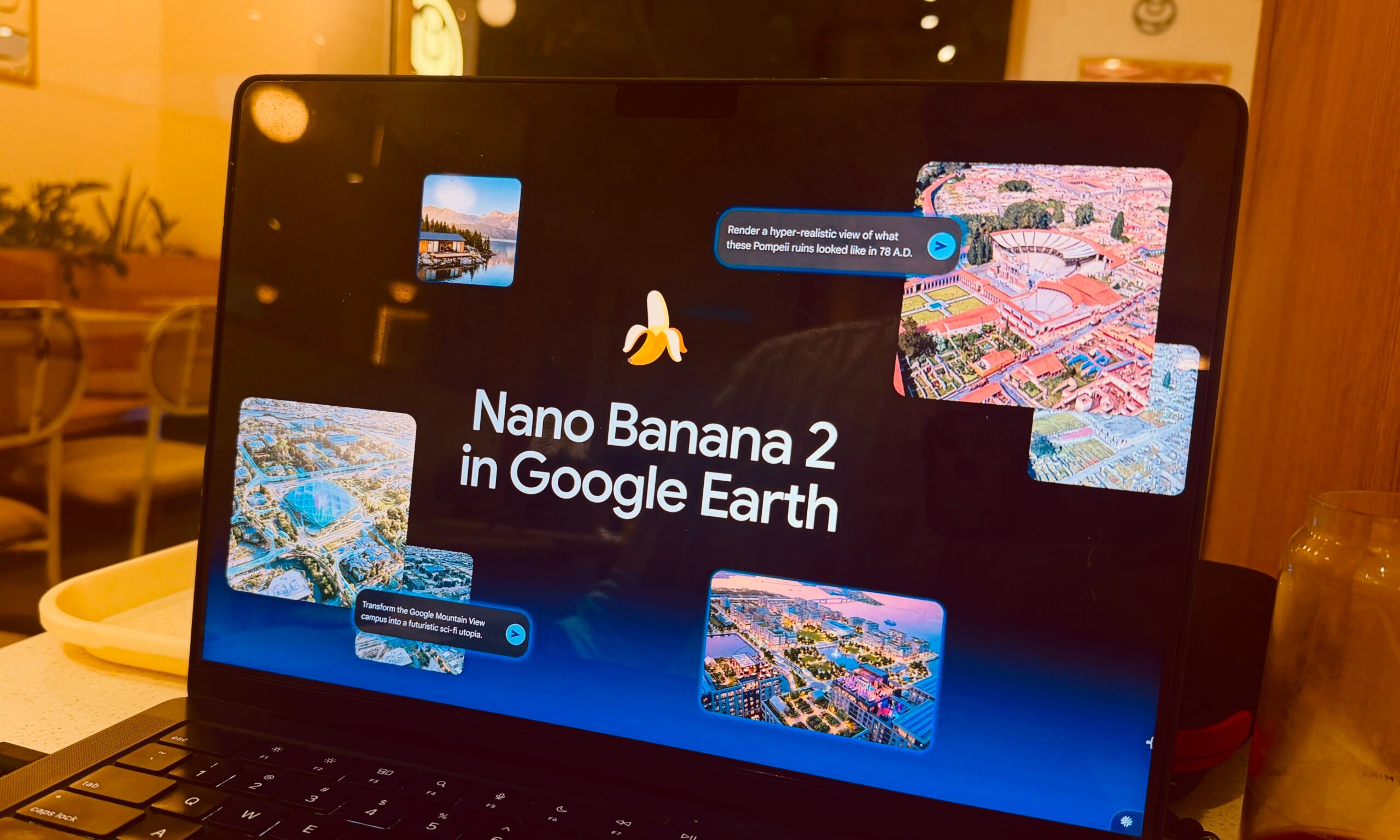
Google Earth’s AI misadventure lasted only a day. It was a tale of dangerous ignorance.
Nuclear reactors, tanks, and historical destruction on a life-like satellite map? Yeah, that's bad.
Nano Banana AI image generator representation.

Technology behemoths are clearly not reading the room, or they are just moving faster than they should when it comes to AI deployment. Google has already stuffed its Gemini AI in every corner of its software stack, from Android to daily productivity tools like Gmail that are used by hundreds of millions of users every day. AI is everywhere. Not all of it is bad, mind you. But in a few places, it just feels forced.

In its latest AI-fication experiment, the company targeted Google Earth. The idea was to let the audience use its Nano Banana 2 AI image generator and make images that can be placed on the map view. On paper, it's a cool idea. What would the Colosseum of Rome look like in your urban neighborhood? Yeah, fun stuff like that.

Read more