1. Home
  2. Wearables
  3. Business
  4. Health & Fitness
  5. Mobile
  6. Outdoors
  7. News

Fitbit slashes 110 jobs, but new wearables are on the way

Add as a preferred source on Google

Fitbit is cutting 110 jobs — roughly 6 percent of its workforce — after a fourth quarter which fell short of expectations, according to a news release from the company. In 2017, Fitbit will update its current lineup and introduce new products in hopes of regaining position in the wearable market.

The wearables leader reported Monday that preliminary data suggests it sold 6.5 million devices between October and the end of 2016, earning somewhere between $572 million and $580 million in revenue. This is well below the target of $725 million to $750 million, which Fitbit attributes to “softer-than-expected holiday demand” in the company’s most mature markets.

Recommended Videos

More: Fitbit upgrades its software with new social features and personalized workouts

The shortfall translates to 17 percent in annual growth, compared to the 25 percent estimated last year. James Park, Fitbit co-founder and CEO, says that despite the stagnation over the holidays, the wearables industry continues to evolve, and new product segments provide venues for expansion.

“We believe the evolving wearables market continues to present growth opportunities for us that we will capitalize on by investing in our core product offerings,” Park said in a statement, “while expanding into the smartwatch category to diversify revenue and capture share of the over $10 billion global smartwatch market.”

Fitbit hopes leveraging its recent acquisitions will help claw back some ground. Since December, the company has snapped up Kickstarter smartwatch darling Pebble and smartwatch startup Vector. In the spring, it purchased universal credit card maker Coin to assist in its plans to add mobile payment support to new devices later this year.

News of the sales slump and downsizing caused Fitbit’s shares to plunge as the stock market opened Monday morning. At the time of this writing, the company’s shares are down roughly 11 percent to $6.41, after closing at $7.21 on Friday.

Still, there is at least one positive takeaway. In spite of Fitbit’s struggles to make headway globally, the company reported it has “continued to grow rapidly in select markets” such as Europe, the Middle East, and Africa, where revenue rose 58 percent in the fourth quarter.

Adam Ismail
Former Contributor
Adam’s obsession with tech began at a young age, with a Sega Dreamcast – and he’s been hooked ever since. Previously…
Qualcomm is set to ratchet up chip prices in September, and your next gadget upgrade could bear the brunt
The price hike could touch every Snapdragon-powered device category.
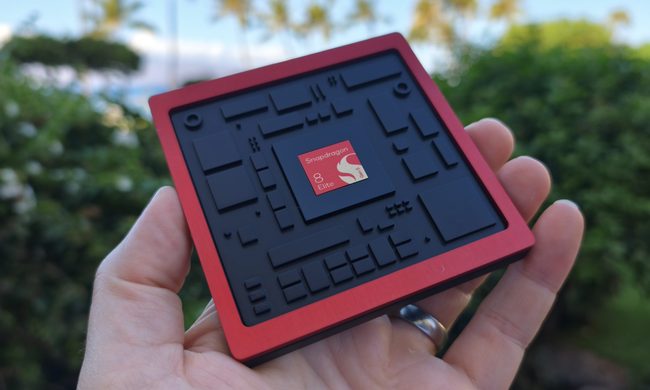
The new Qualcomm Snadragon 8 Elite Gen 5

I want you to sit with this for a second. Qualcomm, the company whose Snapdragon chips sit inside your Android phone and tablet, your Windows laptop, your Meta smart glasses, your Galaxy Watch, and your wireless earbuds, reportedly sent a letter to every major customer telling them prices are going up by double digits. 

The price hike will be in effect from September 1, 2026, a recent Bloomberg report claims. Essentially, all the companies placing their chip orders after that will pay a higher price. 

Read more
Slacked off all summer? Here are 3 fitness trackers that’ll help you stay accountable as you head back to school
Three trackers, three price points, three totally different approaches to keeping you honest about your own goals.
A person wearing the Whoop 5.0.

Summer break did what it usually does. Your sleep schedule drifted, workouts happened less often than you'd hoped, and by the time August rolled around, you were feeling it. You've got a plan to get back on track once the school year starts and your days have more structure, but you know how that usually goes. The first two weeks are solid, then the routine quietly slips.

A fitness tracker won't get you off your couch. What it will do is put a number in front of you every day, one that makes it obvious whether you stuck to your goal or slacked off. That small bit of visibility is often the difference between meaning to work out and actually doing it. Back-to-school season is a good time to buy in, since you're already resetting more than one part of your routine, and the overlap makes the habit more likely to stick. To keep the odds in your favor, here are three fitness trackers that can help you stay accountable and actually hit your goals.

Read more
Galaxy Watch 9 vs. Watch Series 11: Has Apple finally met its smartwatch match?
From AI-powered health coaching to outdoor fitness tracking, here's how Samsung's Galaxy Watch 9 stacks up against Apple's Watch Series 11.
Wristwatch, Arm, Body Part

These days, the real battleground between smartwatches is who can turn a wrist-worn, sensor-loaded device into something that resembles a personal fitness trainer, and this year's crop of flagship wearables takes that fight more seriously than ever. 

Samsung just refreshed its mainstream Galaxy Watch line with a new silicon and a batch of clinically-backed health tools, landing squarely on Apple's home turf of preventive wellness tracking. Apple, for its part, has spent the better part of a year letting its Series 11 sit as the reigning pick for anyone inside its ecosystem, propped up by a software catalog few rivals match feature-for-feature. 

Read more